Parsippany Elite Roofing has spent more than 20 years on roofing in Berkeley Heights and across our service area, and a large share of that work starts with a phone call after high wind. A limb on the ridge, a row of lifted shingles, a stain spreading across a bedroom ceiling: each one deserves a calm, careful look before anyone talks about price.
Every visit covers two places, the roof surface and the attic beneath it, so we can trace water to the spot where it actually gets in. From there we tell you plainly whether a repair will hold or whether replacement is the honest answer, and we say so before any replacement figure is written down. Nothing gets priced until we know where the problem starts.
This page centers on one dated storm in the township and what it shows about protecting a roof under a heavy canopy. It explains how wind and falling trees damage shingles, what we check after a summer storm, and how to keep a clean photo and paper record for your own insurance claim.
July 1, 2013: A Confirmed Tornado in Berkeley Heights
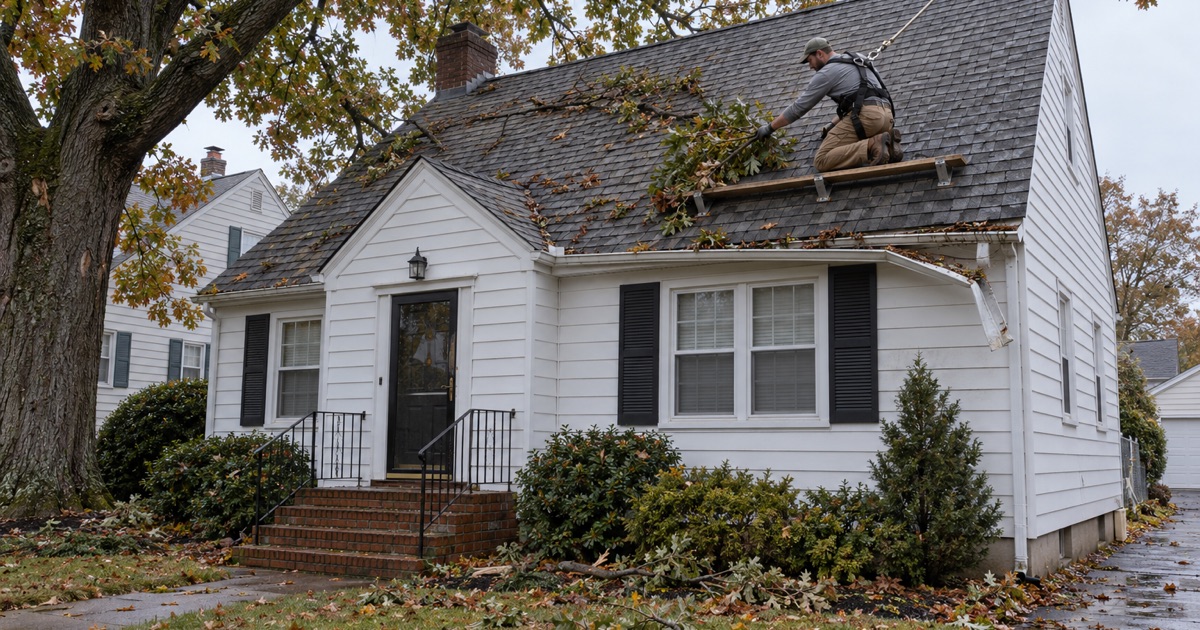
On July 1, 2013, the National Weather Service confirmed by storm survey that an EF0 tornado had touched down in Berkeley Heights. It came down at 9:17 that morning near the Passaic River, just west of Garfield Street. The Storm Prediction Center log files the report under Berkeley Heights, Union County, and it is the only New Jersey tornado row in that day’s log.
The Track from Garfield Street to Summit
From its touchdown point the tornado moved northeast through New Providence and lifted at 9:25 near Evergreen Avenue in Summit. The survey put the path at about 4.8 miles long and nearly 50 yards wide, with estimated winds of 85 mph. Eight minutes, start to finish, was all it took to cross three municipalities.
Patch, quoting the Weather Service statement that evening, reported no injuries. Police closed a stretch of Snyder Avenue several hundred feet long, close to where the survey found the heaviest damage. That closure is a reminder of how much a short storm can bring down along one narrow line.
Where the Survey Found the Worst Damage
The greatest damage the survey described was at the sewage treatment plant near Snyder Avenue, and what it recorded along the path was extensive tree damage. That detail matters for homeowners. An EF0 sits at the bottom of the Enhanced Fujita scale, and at that strength the most destructive thing in a wooded township is usually the trees standing over the houses.
We have no count of local roofs damaged that day, and we will not guess at one. What the record does show is a short, fast storm that brought trees down along a narrow line through a heavily wooded area. That is exactly the pattern we plan for when we inspect roofs in this township.
Why One Storm Still Matters
A single tornado does not make a weather pattern, and nobody should read this event as a forecast. Its value is as a dated, documented example of the sudden summer wind that can cross this part of Union County with little warning. It also shows how much of that wind’s force reaches houses through the trees around them.
Berkeley Heights sits in National Weather Service forecast zone NJZ107, served by the Upton, New York office that ran the 2013 survey. Watching warnings for that zone is a sensible habit for anyone with big trees near the house, because a few minutes of notice is enough to move a car or close the skylights.
Looking for roofing closer to Wanaque? See Roofing Services in Wanaque.
What an EF0 and Straight-Line Wind Do to a Roof
The 2013 survey described two kinds of wind: the rotating tornado itself and straight-line winds observed to the south and east of the entire path. Both reach shingles mainly in the same two ways. Trees fall or shed limbs onto the roof, and gusts get under shingle edges and lift them.
Limbs and Trunks on the Roof
A falling trunk can crack rafters and punch through the decking, while a heavy limb tends to crush shingles, split them along a nail line, or bend the flashing at a valley or chimney. Smaller branches dragged across the surface by wind scour off granules and leave bare spots that age faster than the rest of the roof.
Much of the township’s housing went up in the 1950s and 1960s: Census estimates count 1,453 units built from 1950 to 1959 and 1,053 more from 1960 to 1969. On lots from that era, surrounding trees have had decades to grow, and limbs often reach over the ridge of a ranch, cape or split-level.
Wind-Lifted Shingle Tabs and Edges
Wind damage that never involves a tree is harder to spot from the driveway. A gust can lift a shingle tab, break the adhesive strip that seals it to the course below, and let it settle back looking almost normal. Once that seal is broken, the next storm has an easier time folding the tab back or tearing it off.
Eaves, rakes and ridge lines take the most uplift, because wind speeds up as it passes over those edges. We look for creased tabs, missing ridge caps, drip edge pulled away from the fascia, and shingles that lift under light hand pressure. Most of those findings call for a repair, not a new roof, and we say so.
Straight-Line Wind Beside the Track
Homeowners often assume that only houses directly on a tornado path need checking. The 2013 survey said otherwise, noting straight-line winds south and east of the whole track. Those gusts do not rotate, but they can still drop limbs and lift shingles on streets well away from a path barely 50 yards wide.
That is why we treat any strong summer wind as a reason for a look, whether or not a tornado was confirmed. A roof that seems fine from the ground can still hide broken shingle seals or a loosened flashing edge that only shows itself as a ceiling stain months later.
Checking the Roof and the Canopy After a Summer Storm
After a wind event, a useful inspection covers three things: the trees over the house, the roof surface, and the attic. Looking at only one of them is how damage gets missed. We work through them in that order, because a hanging limb is a safety question before it is a roofing question.
Start with the Trees Overhead
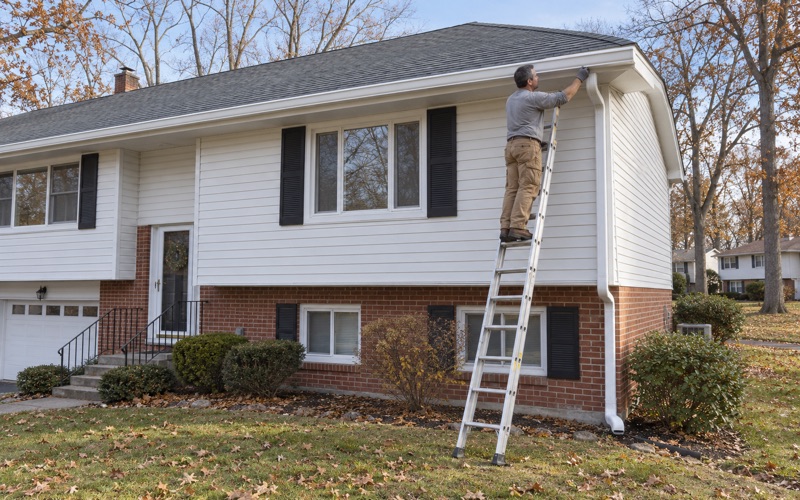
Before anyone climbs a ladder, we look up. A cracked limb hanging over the roof, a split trunk, or a branch resting on wires changes how and when a crew can safely work. Hazardous limbs over a house are a job for a tree company, and taking a tree down here can require a township tree permit, so that call often comes first.
We also note what the canopy means for the roof over the long term. Leaf-packed valleys, shaded slopes that stay damp and mossy, and limbs brushing the shingles are written into our estimate. That way you can plan trimming alongside the repair instead of finding the same problem after the next storm.
The Roof Surface, Slope by Slope
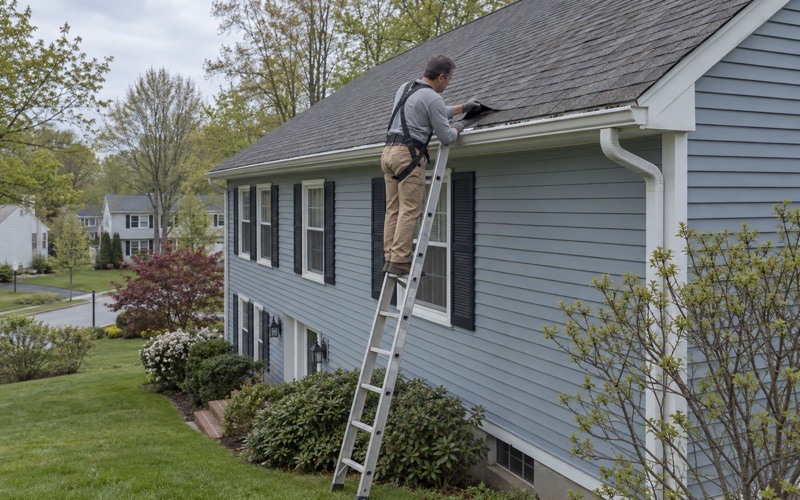
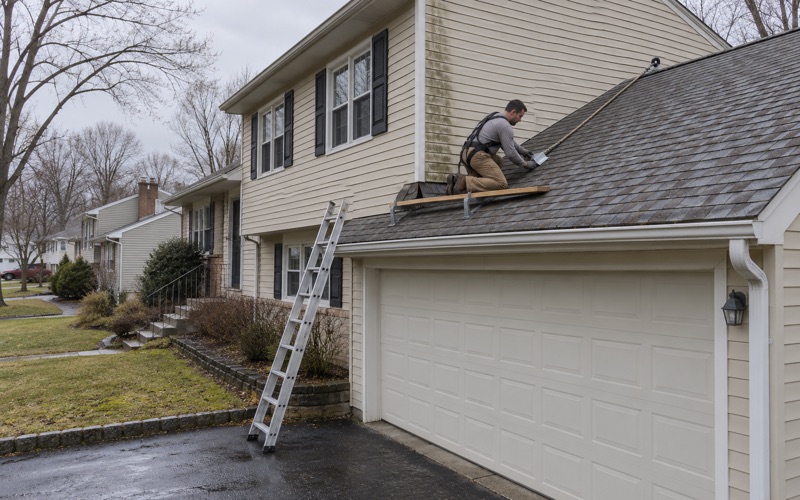
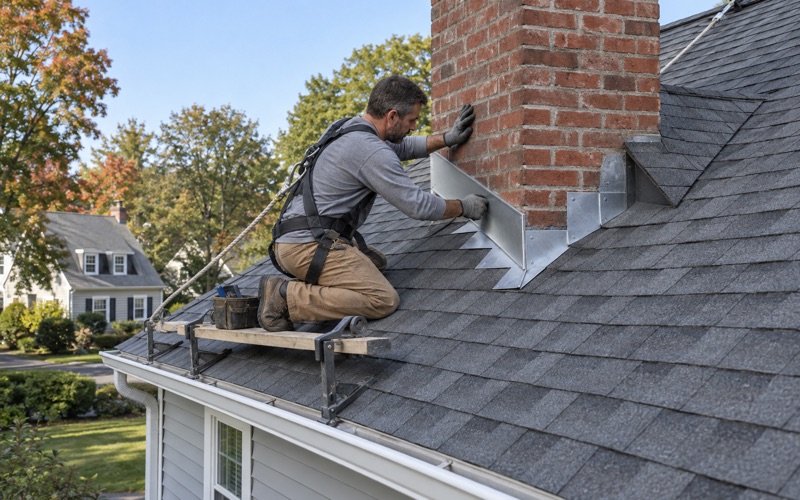
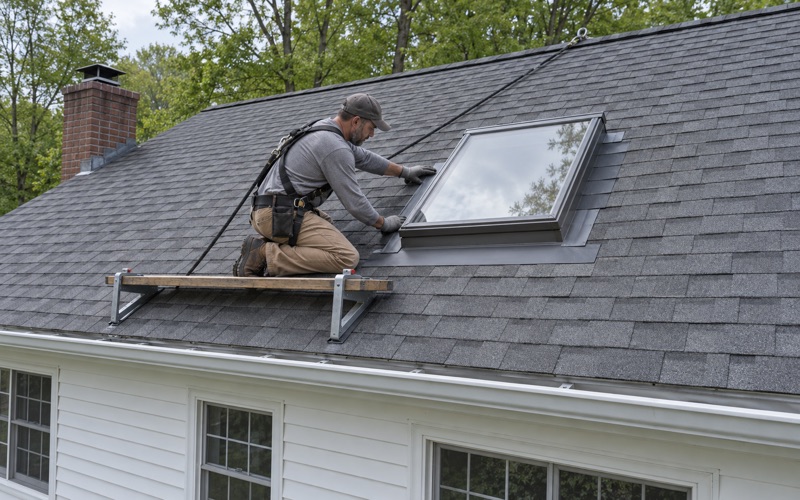
On the roof we check every slope, not only the side that faced the storm. We look for punctures and crushed shingles where wood landed, granule loss where branches dragged, and flashing pulled loose at chimneys, walls and skylights. Gutters get checked as well, because a limb that strikes the eave often bends the gutter and the drip edge behind it.
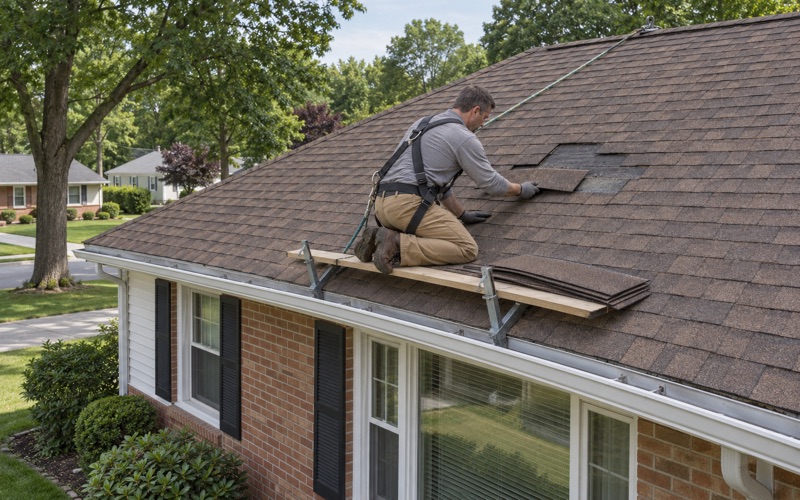
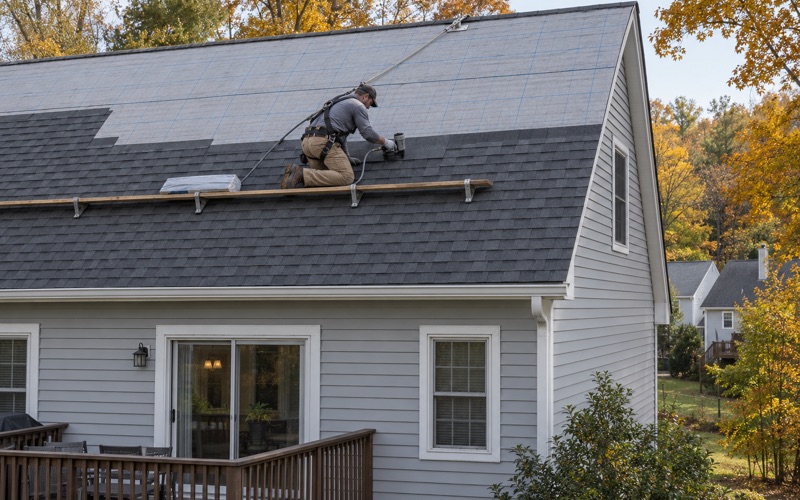
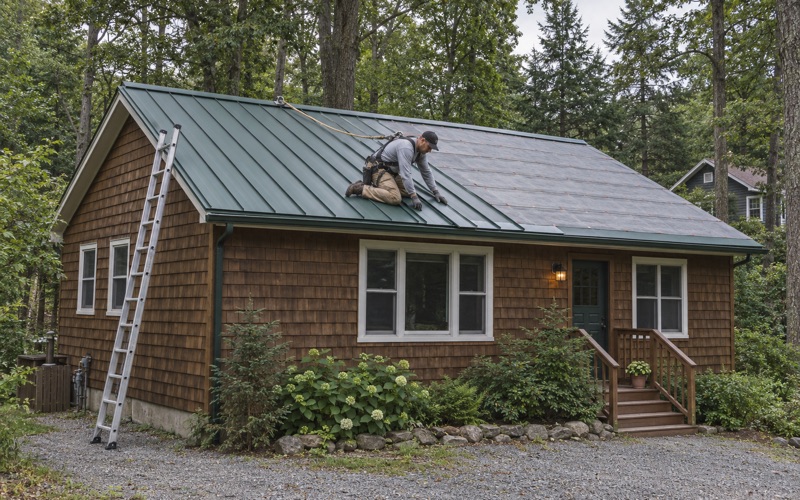
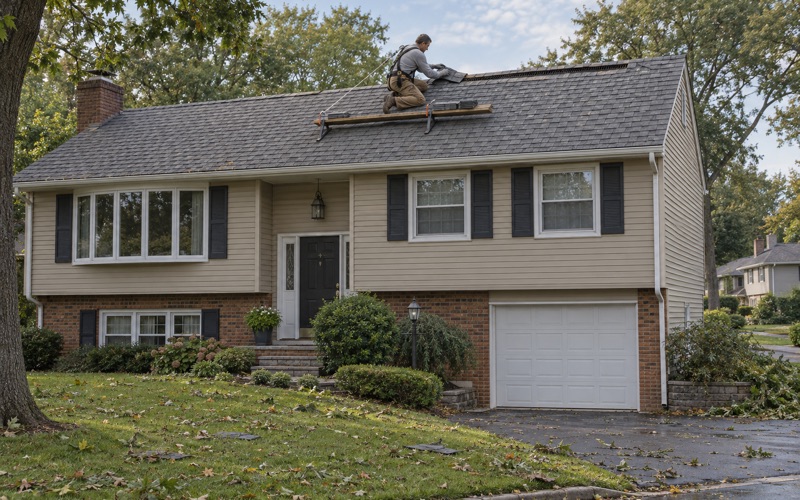
Roof work more than six feet up calls for fall protection under OSHA rules, so we set anchors before walking a storm-damaged slope. That precaution matters even more after wind, when decking can be cracked beneath shingles that look intact from above.
The Attic Underneath
The attic often tells the clearest story. Daylight through the decking, a fresh stain on the sheathing, or damp insulation shows where water is getting in, sometimes well away from the visible damage outside. A leak that appears over a hallway ceiling can start several feet upslope.
Checking from inside also tells us whether rafters or decking cracked under a fallen limb. That answer decides whether a patch is honest or whether part of the roof needs to come off. Either way, you hear which it is before we write a number down.
Same-Day Tarps and Temporary Repairs
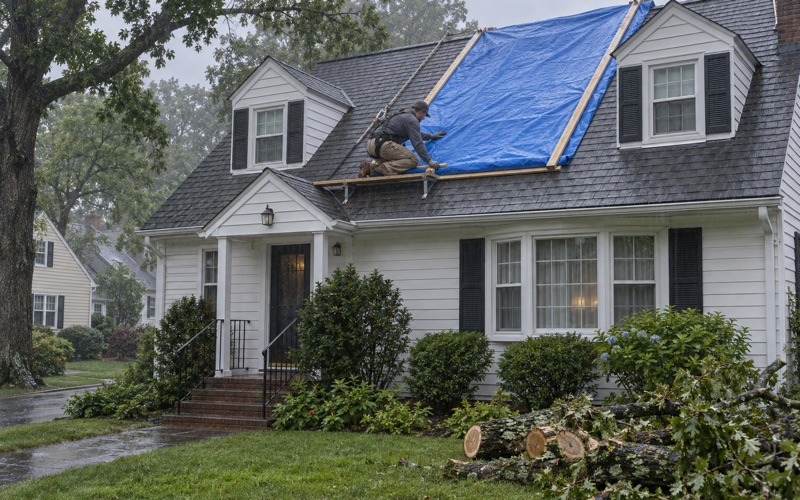
When a storm opens a roof, tarps and temporary repairs go on the same day. Before anything is moved, including the limb that did the damage, we photograph the scene, because those first images are the strongest record of what happened. A temporary repair is meant to stop water until a proper permanent fix can be scheduled.
Storm Photos and Records for Your Own Claim
Insurance coverage after a wind event depends on your policy, and the claim belongs to you. What we provide is a clear, dated record of the damage and what it will take to put right. That record is useful whether you file a claim, pay for the work yourself, or simply want to know where the roof stands.
What We Photograph and Write Up
We take wide shots that show the house and the tree together, then close-ups of every damaged area, labeled by slope and location. The written report describes what we found, the likely cause as far as we can tell, and what we recommend. It is prepared for you to submit with your own claim.
If you ask, our crew will meet the insurance adjuster on site and walk the roof with them, pointing out each item in the report. Questions about coverage, deductibles or settlement stay between you and your insurer, or a licensed public adjuster if you choose to hire one under New Jersey’s Public Adjusters’ Licensing Act.
An Estimate You Can Compare Line by Line
Our written scope lists tear-off, decking, underlayment, flashing, ventilation and gutters as separate lines. That layout lets you, or your adjuster, set our estimate beside any other and compare them item by item instead of weighing two totals with nothing behind them.
If a repair becomes a replacement, any damaged decking found once the old roof is off is photographed and shown to you before it is replaced, at a per-sheet price already set in the contract. Step, counter and chimney flashing are replaced with the new roof rather than reused. Our contracts follow New Jersey’s home improvement rules, including the three-day cancellation notice.
Keeping Your Own Storm File
Start a folder on the day of the storm. Add your own photos, the date and time the damage appeared, receipts for any emergency work, and a copy of our report. Note any National Weather Service warning issued for your area, since a dated record supports the timeline far better than memory does months later.
Keep that file after the repairs are finished. If another storm hits, or you decide to sell, a documented history of what failed and how it was fixed is worth having. For a sale, we can also prepare a written roof condition report that you can hand to the buyer’s inspector.
- 20+ Years on Local Roofs
- Itemized Written Scopes
- Same-Day Storm Tarping