Parsippany Elite Roofing handles roofing in Cedar Grove with more than 20 years of experience behind us, and a good share of the calls we take start with something that came down from above. A limb through the shingles, a trunk across the ridge, or a gutter torn half off the fascia turns a routine roof job into a repair that has to happen in the right order.
That order is what this page is about. Tarp first, then the rafters and sheathing, then the covering that keeps the weather out. Shuffle those steps and a roof that looks finished from the street can hide a cracked rafter or a soft deck under brand-new shingles.
We also give a straight answer on whether a roof can be repaired before anyone talks about replacing it. Every leak call includes a trip into the attic as well as onto the roof, because storm water rarely comes in where the damage looks worst from the yard. You get that finding in writing before any price is put on the work.
When a Tree Comes Down on a Cedar Grove Roof
March 7, 2022: A Storm That Lasted About Two Minutes
On the evening of March 7, 2022, a fast-moving thunderstorm crossed Cedar Grove, and the National Weather Service local storm report logged thunderstorm wind damage in town at 9:20 that night. The source was the fire department, and the remark was four words long: fallen tree on home. It was the only report from Essex or Passaic County in that window.
CBS New York covered the aftermath the next morning. On Fairfield Avenue a tree was uprooted and fell right in front of a home, the owners saw parts of their gutter dangling, and the front door was blocked, so leaving would have meant going through the garage. By that account, the storm came in and out in about two minutes.
What the Storm Report Does and Does Not Say
A storm report is a short record, and it is worth reading for exactly what it holds. It names the town, the time, the source and the remark, and its wind speed field is blank. We found no damage survey for Cedar Grove that night, and nothing on record says whether the house in the report and the Fairfield Avenue house were the same.
For a homeowner, the lesson is narrower and more useful. A storm does not need a name or a long run to drop a mature tree, and two minutes is enough to put a hole in an ordinary roof. The repair that follows is the same whether the wind lasted two minutes or two hours.
A Dangling Gutter Is a Clue
A gutter hanging off the fascia after a tree comes down is easy to treat as the whole problem. More often it is the visible edge of something larger, because a limb that hit the eave hard enough to pull the gutter loose has also stressed the drip edge, the fascia board and sometimes the rafter tails behind them.
When we look at a gutter torn loose by a falling tree, we follow the line of impact back up the roof and into the attic. Seamless aluminum gutters and leaders are simple to replace, but hanging new ones on a cracked fascia or a split rafter tail only hides the damage until the next hard rain.
Looking for roofing closer to Little Falls? See Little Falls Roofing.
Tarp First: What to Do the Night a Tree Hits the Roof
The first hours after a tree strike decide how much of the house stays dry. Our crews put tarps and temporary repairs on the same day after a wind storm, and the sequence below is the one we follow on every call of this kind.
Safety First, Then Photos
Safety comes before the roof. If a tree is resting on the house, nobody should stand under the damaged area or climb onto the roof, and downed wires near the trunk are a call to the utility before they are anything else. Once the scene is safe, we photograph everything before a single limb is moved.
Those photos matter for two reasons. They show how the tree came to rest and what it broke, which shapes the repair plan, and they become part of the written damage report we prepare for the owner’s own claim. Once a crane or a saw has moved the tree, that record cannot be recreated.
The Emergency Tarp
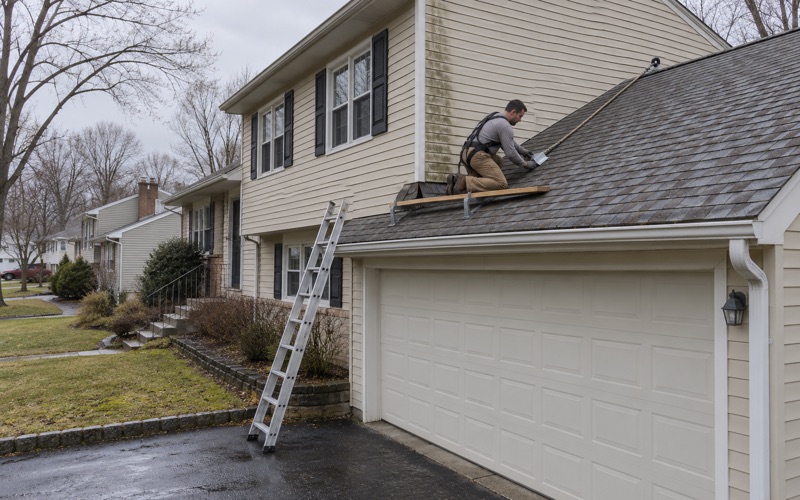
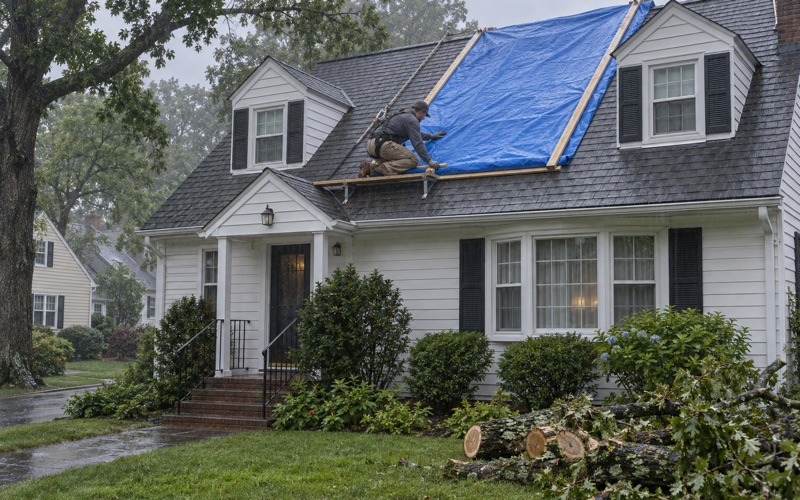
An emergency tarp is a holding measure, not a repair. Once the tree is off the roof, we cover the opening and the damaged area around it with a heavy tarp fastened to sound framing beyond the break, lapped so water sheds over it rather than under it. Sandbags alone rarely hold a tarp through the next gust.
Inside, we check the attic that same night wherever it is safe to do so. Wet insulation, a stained ceiling and a split rafter all show up from below long before anyone can see them from the yard, and knowing where the water is getting in tells us whether the tarp is doing its job.
Your Claim Stays Your Claim
Storm damage is photographed and written up for the owner’s own insurance claim, and when the owner asks, we will meet the adjuster at the house to walk the damage together. The claim itself belongs to the homeowner, and the New Jersey Department of Banking and Insurance storm claims guidance tells policyholders to speak directly with the claim adjuster.
What we bring to that meeting is a clear account of the damage: where the tree landed, what it broke, and which parts of the roof are structural rather than surface. Coverage, deductibles and the limits of a policy are questions for the insurer, and we do not promise answers to them.
Rafters, Sheathing, Then Shingles: Repairing a Tree Strike
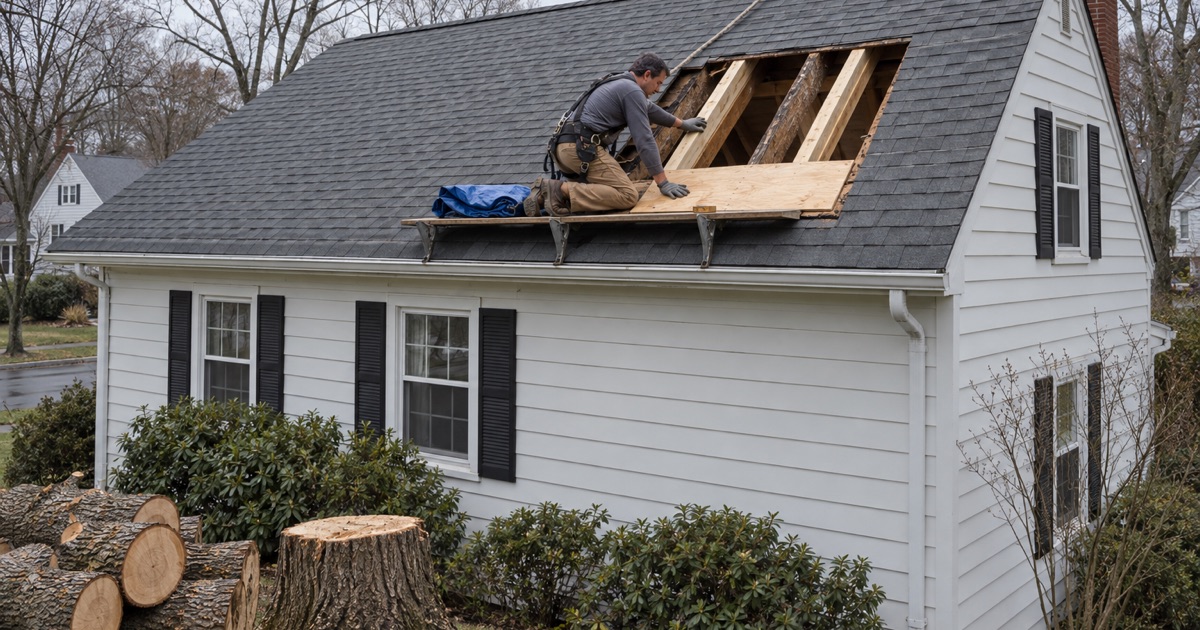
A tree that comes through a roof breaks it from the top down, and it has to be rebuilt from the bottom up. That is the core of a proper tree-strike repair, and it is why our written scope treats the framing, the deck and the covering as separate lines.
Structure Before Anything Else
Rafters and ceiling joists carry the roof, and a falling trunk can crack them, push them out of line or split them where they bear on the wall. We trace every member in the impact zone from the attic side, then sister, repair or replace whatever the tree damaged before any sheathing goes back on.
This is also where the paperwork changes. Re-roofing a detached one- or two-family house is ordinary maintenance under New Jersey Administrative Code 5:23-2.7, but structural repair after a tree strike falls outside that category. The Cedar Grove Building Department says permits are needed for almost everything done to a property, so we confirm what the structural work requires before it starts.
Sheathing and Decking
Once the framing is sound, the broken and soaked sheathing comes off around the opening, and the new deck is tied into solid boards beyond it. Plywood that took a hit and then sat under a leak can look intact while it has lost its grip on the nails, so we check it underfoot and by probing, not by eye alone.
Any damaged decking we find is photographed and shown to the owner before it is replaced, at a per-sheet price already written into the contract. That keeps rotten or cracked boards from becoming a surprise halfway through the job, and it gives the claim file a clean record of what was underneath.
The Covering Goes On Last
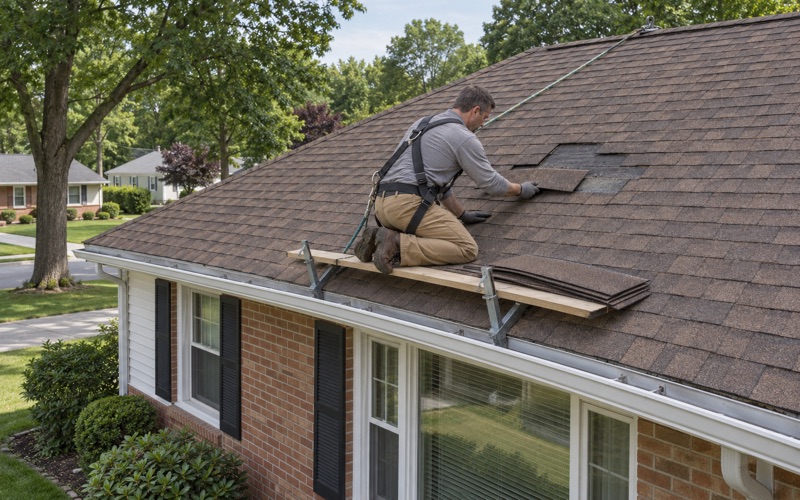
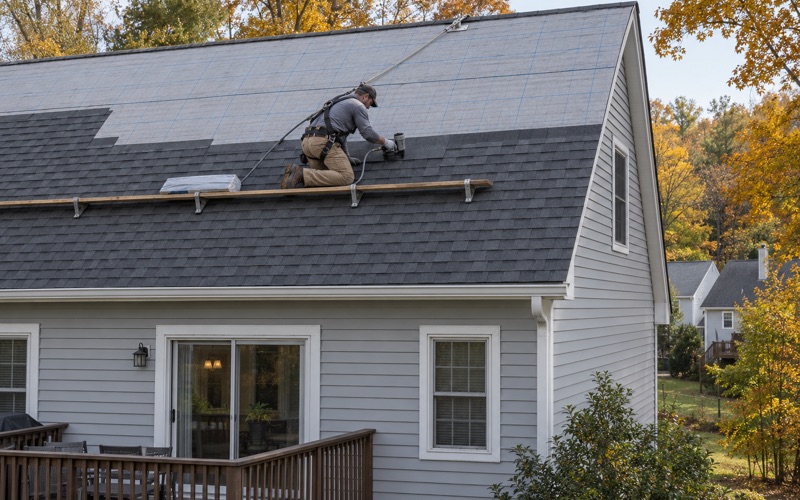
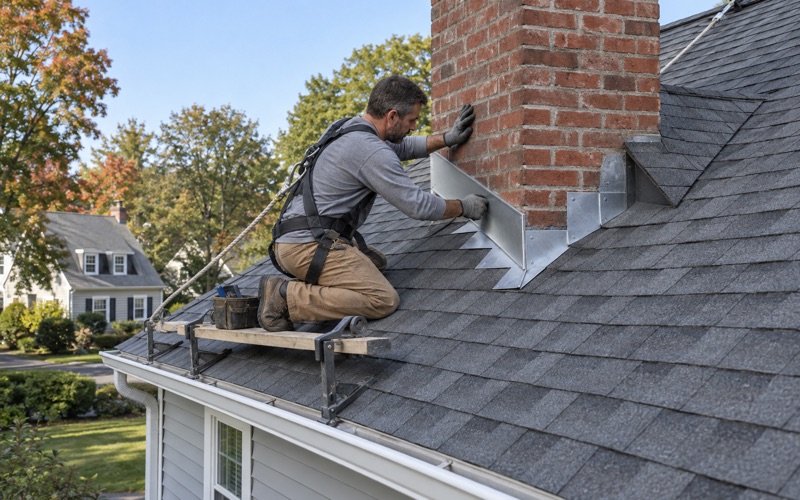
Only after the framing and the deck are right does the covering go back on. We lay underlayment and a self-adhering ice and water barrier at the eaves, then shingles matched as closely as the existing roof allows, and we replace the step and counter flashing in the repair area rather than bending old metal back into place.
Whether a patch or a full replacement makes more sense depends on the age of the rest of the roof and how far the damage spread. We give that answer plainly, with tear-off, decking, underlayment, flashing, ventilation and gutters listed as separate lines, so our scope can be checked item by item against any other estimate.
Heavy, Wet Snow and the Roof It Leaves Behind
March 7, 2018: 16.8 Inches of Heavy Snow
Four years to the day before that thunderstorm, the March 7, 2018 nor’easter loaded Cedar Grove with heavy, wet snow. A trained spotter reported 16.8 inches in town by 9:50 that night, and reports of 7.2 and 8 inches of heavy snow had already come in that afternoon. Neighboring North Caldwell reported 23.0 inches from the same storm.
Wet March snow is a different load from dry midwinter powder. It is dense, it clings to the shingles, and it slides off in heavy slabs that can tear at gutters and stress the eaves. A roof that came through a storm like that without a visible problem may still have taken strain at the overhangs.
A Repair Has to Carry the Next Winter
A tree-strike repair is only finished when it can carry a winter like that one. New rafters and sheathing have to be fastened so the patched area shares load with the rest of the roof, and the eaves need an ice and water barrier plus enough attic ventilation that melt does not refreeze at the edge and back up under the shingles.
We check attic ventilation on every replacement, and on older capes and split-levels that are prone to ice dams we add an eave membrane rather than counting on new shingles alone. A roof that cannot breathe ages from underneath, and a heavy snow is often when that finally shows.
Mature Trees Over 1950s Houses
Most of Cedar Grove’s homes are owner-occupied detached houses, and more houses here date from the 1950s than from any other decade. Older houses on established lots often sit under trees that have had decades to grow, which is how a two-minute storm can end with a trunk across a ridge. Near green space such as Mills Reservation, overhanging limbs are an everyday roof condition.
On wooded lots, our estimates call out overhanging limbs, leaf-packed valleys and shaded, mossy slopes, so you know which branches threaten the roof before the next storm finds them. Taking those limbs down is a job for a tree service, but knowing where they hang tells us where to look first.
Contracts, Cleanup and a Written Record
Our contracts are written to New Jersey’s home improvement rules, including the three-day cancellation notice, and the scope is settled before work begins. After a tree strike the yard is already a mess, so we clean the driveway, yard and gutters at the end of every workday and run a magnet sweep for roofing nails.
If the house is going on the market after the repair, we can provide a written roof condition report the seller can hand to the buyer’s inspector. It records what the storm damaged, what we rebuilt, and the condition of the rest of the roof.
- 20+ Years on Local Roofs
- Itemized Written Scopes
- Same-Day Storm Tarping