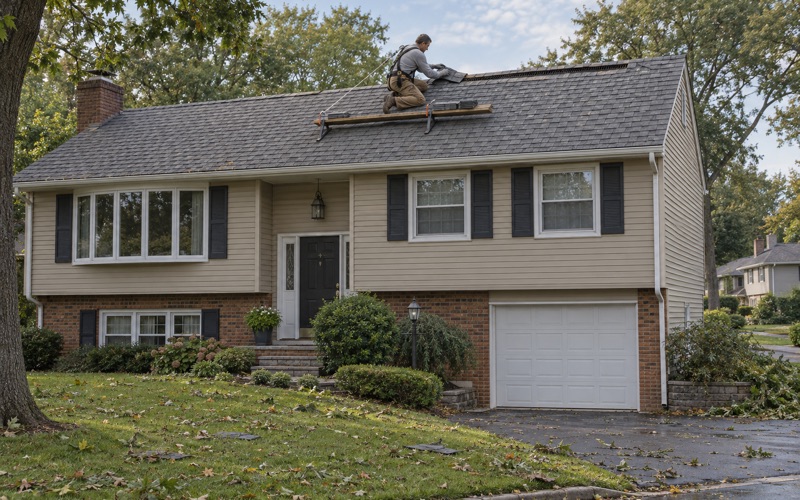
Parsippany Elite Roofing has spent more than 20 years on roofing in Denville and across Morris County, and a good share of that work starts with one question from an owner: did the last storm hurt my roof? Our answer comes from the roof and the attic, not from a guess. We climb, look and photograph, and only then talk about what, if anything, needs doing.
This page is about hail, because hail is the storm damage that hides best. A shingle can look whole from the driveway while its surface is bruised underneath, and the first clue is often sitting in a gutter rather than on the slope. Below we walk through what an inspection checks, how to keep a record your insurer can use, and what an impact-rated shingle really buys you.
We also say plainly where our role ends. We document damage and will meet an adjuster on site when you ask, but the claim belongs to you and your insurer, and we never negotiate it. If the roof can be repaired, you hear that first, well before any conversation about replacement begins.
One Hail Report With Denville’s Name on It
Most talk about hail in northern New Jersey is regional and vague. Denville has something more specific: a single dated line in a federal storm log that names the township. It is worth reading carefully, both for what it records and for what it leaves out.
What the Storm Prediction Center Logged
On September 9, 2023, the Storm Prediction Center’s daily hail log carried a row for Denville, Morris County. The National Weather Service Mount Holly office reported quarter-size hail, 1.00 inch across, and noted that the time was estimated via radar. The row lists a latitude and longitude for the report rather than a street or a neighborhood.
The log records its times in UTC, so the stamp on the Denville line reads as late afternoon local time once converted, and even then it is a radar estimate rather than a clock reading. The wind log for the same day has no Denville row at all. What the record describes is hail, reported once, at one point within the township.
What One Report Can and Cannot Tell You
One report is one observation. It does not map a hail swath, and it names no damaged roof, no house and no street. Hail of that size can fall on one block and miss the next entirely, so the log is a good reason to look closely, not proof that any particular roof was struck.
That is why we treat a storm date as a starting point rather than a conclusion. If you noticed hail at your Denville home that September, or after any storm since, the useful next step is an inspection of the roof itself. A dated public report simply helps you and your insurer line up what you saw with when it happened.
Looking for roofing closer to Florham Park? See Roofing in Florham Park.
After Hail: What a Roof Inspection Looks For
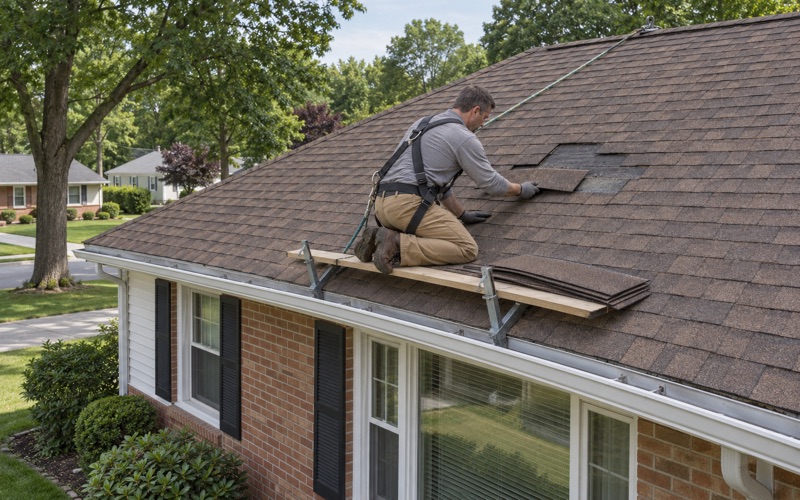
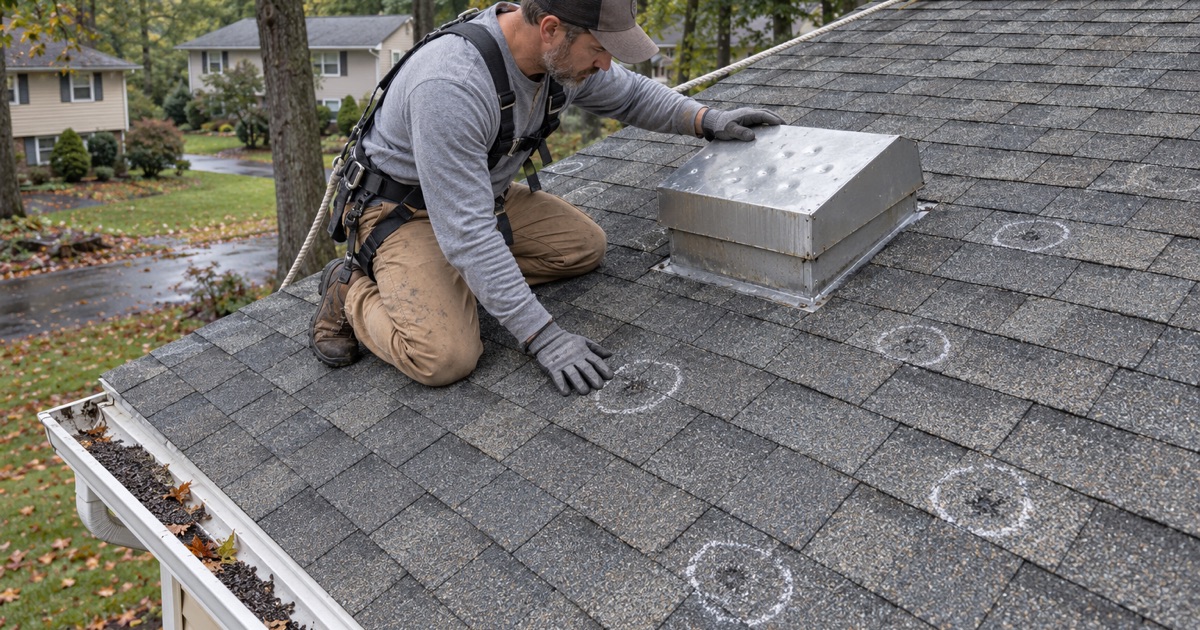
Hail damage is mostly small and scattered, which is exactly why it gets missed. We work the slopes in a set order and check the metal and the drainage as carefully as the shingles, since those parts often show impact first and most clearly.
Bruised and Fractured Shingles
On an asphalt shingle, a hailstone can leave a soft spot where the mat underneath has been crushed. From the ground it is invisible, but under a hand it feels spongy, and the granules over it may be loosened or gone. We mark each suspected hit and look for a pattern across the slope rather than chasing one odd spot.
A fractured shingle is easier to see once you are up on the roof, with a crack radiating from the point of impact or a torn edge. Bruises and fractures matter because the exposed asphalt weathers faster than the surface around it. A shingle that looks fine this month can start breaking down sooner than its neighbors over the following seasons.
Granule Loss in the Gutters and at the Downspouts
Granules are the colored grit pressed into a shingle’s surface, and they shield the asphalt from sunlight. Some shedding is normal on a new roof and on an old one. After hail, though, a sudden heap of granules in the gutters or a gritty fan at the foot of a downspout is often the first sign anyone notices.
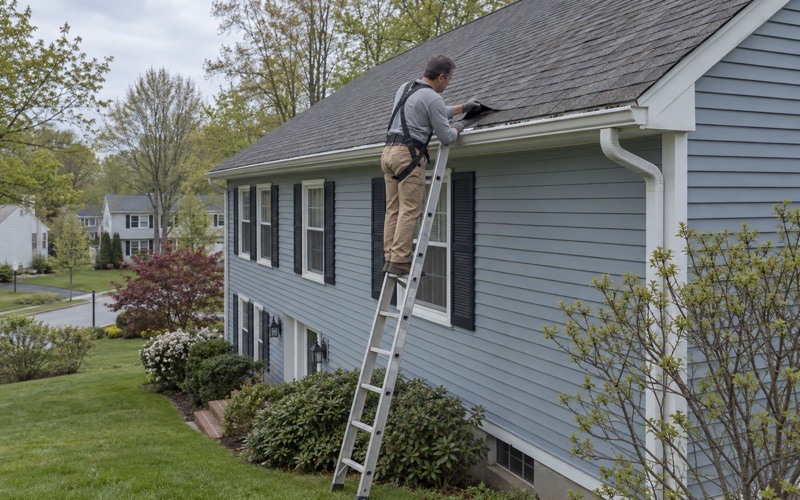
We check the gutters and the splash area at each downspout before we go up, then match what we find to bare patches on the slopes above. Granule loss without visible bruising points one way, while granule loss lined up with soft spots points another. Either way, it goes into the written findings with photos attached.
Dented Vents, Flashing and Gutters
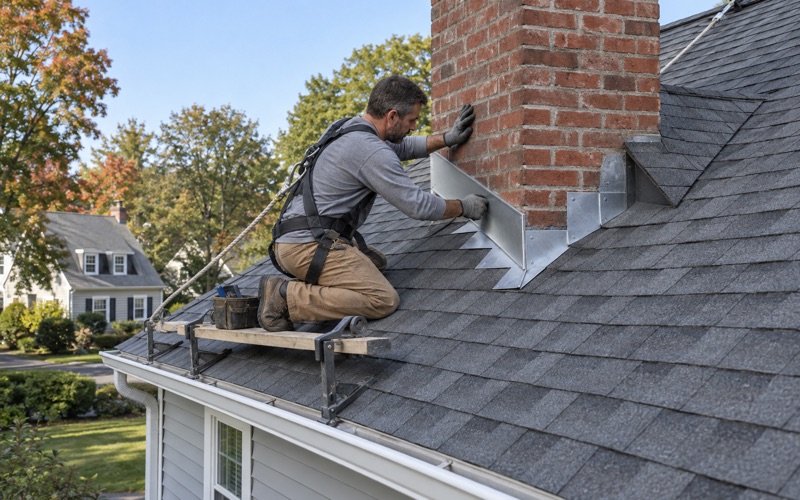
Soft metal records hail better than shingles do. Box vents, ridge vent caps, lead flashing boots, step flashing along sidewalls and the top edges of gutters can all carry round dents where stones struck. Those dents give an inspector a reliable read on where hail landed and which direction it came from.
Dented gutters are often cosmetic, but a crushed lip can hold water or start pulling away from the fascia over time. A split pipe boot or a torn flashing seam is not cosmetic at all, because it is a leak path. We list each piece separately so you can see which damage affects how the roof works and which only affects how it looks.
Tracing Any Leak From the Attic
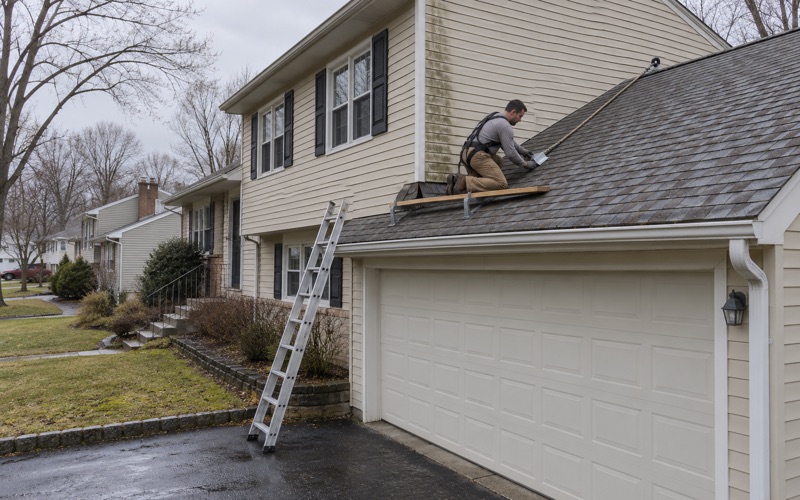
If water has already shown up on a ceiling, we go into the attic as well as onto the roof. A stain rarely sits directly under the opening that caused it, because water runs along rafters and decking before it drips. Tracing it back from inside tells us whether hail opened the leak or something older did.
That distinction matters when you speak with an insurer. Hail damage is a dated event, while a failing flashing joint that has been seeping for years is wear. We write down which one we found and where, and we never stretch one into the other to make a report look stronger than the roof supports.
Photos, Dates and Talking With Your Adjuster
A hail claim rests on records, and the best records are made early. Here is how we help an owner build a file that holds up, and where our part of the process stops.
Building Your Own Record
Start with the date. If you saw hail, write down when, and keep any photos of stones on the lawn or deck with something beside them for scale. Note the published storm date as well; for the 2023 event that is September 9, from the Storm Prediction Center log, which gives your insurer a public reference point to check.
Next come photos of the roof. Our inspection produces dated images of each bruise, the granule buildup, every dented vent and each damaged run of gutter, plus wide shots showing where on the house each one sits. We hand you that set with a written summary, and the file is yours to send to your own insurer.
When the Adjuster Comes Out
If you ask, our crew will meet the insurance adjuster on site and walk the roof alongside them. We point out what we documented and answer questions about how the roof is built and what a repair would involve. That conversation is about facts on the roof, never about the dollar amount of your claim.
Under New Jersey’s Public Adjusters’ Licensing Act, a contractor may speak with an adjuster but may not negotiate, handle or settle a claim on an owner’s behalf. We stay on our side of that line. Coverage, deductibles and settlement remain between you and your insurer, and we make no promise about what any policy will pay.
A Straight Answer on Repair First
Plenty of hail inspections end with a repair rather than a new roof. If a handful of shingles and a pipe boot are the extent of it, we say so and price that work. Replacement only comes up when the damage, or the roof’s existing condition, makes a repair a poor use of your money.
When replacement is the honest answer, the written scope separates tear-off, decking, underlayment, flashing, ventilation and gutters into their own lines. That lets you compare our estimate with another contractor’s item by item, and it lets an adjuster see exactly which parts of the job trace back to the storm.
Impact-Rated Shingles: What the Rating Does and Does Not Do
After a hail scare, many owners ask about impact-rated shingles. They can be a sound choice, but the rating is often described as more than it is, so we explain it clearly before anyone signs a contract.
What UL 2218 Class 4 Measures
UL 2218 is a laboratory test that drops steel balls of increasing size onto a roof covering and then checks it for cracking. Class 4 is the top rating the test awards. A shingle that earns it has shown more resistance to impact than a standard product, under controlled conditions on a test panel.
A lab rating is not a field guarantee. Real hail varies in size, density and angle, and no source we rely on names a hail size at which shingles always fail or always survive. Class 4 means better odds against impact, which is worth something, but it does not make any roof immune to a storm.
A Premium Discount, Not Hail Coverage
The practical value of a UL 2218 Class 4 shingle usually shows up on the insurance side. Some insurers offer a premium discount for roofs with Class 4 coverings, and that discount is the benefit to ask your own agent about. Whether your carrier offers one, and how large it is, only your policy can answer.
What the rating does not do is bring hail under the shingle manufacturer’s warranty. Manufacturers’ limited warranties, including IKO’s, exclude hail damage. A Class 4 roof still relies on your homeowners policy if hail breaks it, and the same documentation process described above applies to it.
Planning the Next Roof After a Hail Inspection
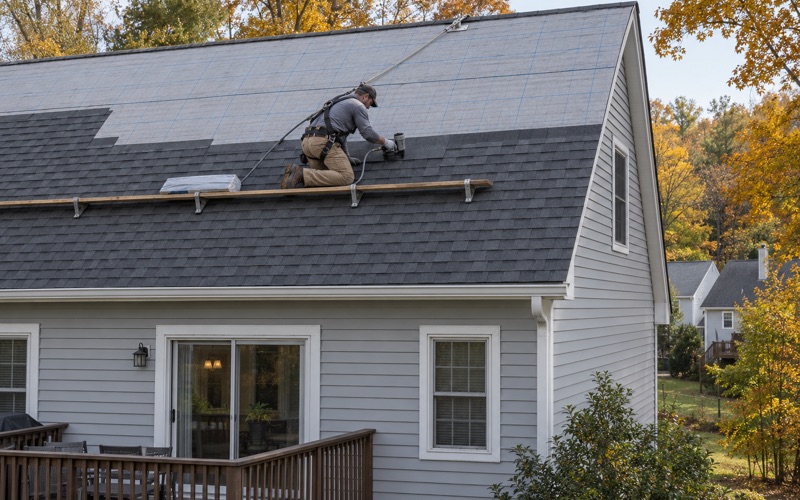
If a hail inspection does lead to replacement, the new roof is a chance to fix what the old one lacked. Flashing at walls and chimneys is replaced with the roof rather than reused, and attic ventilation is checked, because a roof that cannot breathe ages from below no matter how tough its surface is.
Where a lot is wooded or sits beside one of Denville’s lakes, such as Indian Lake, the roof faces its own kind of wear from overhanging limbs, leaf-packed valleys and shaded slopes. We call those out in the estimate alongside any impact-rated option, so you weigh the shingle choice against everything else that shapes how long the roof lasts.
- 20+ Years on Local Roofs
- Itemized Written Scopes
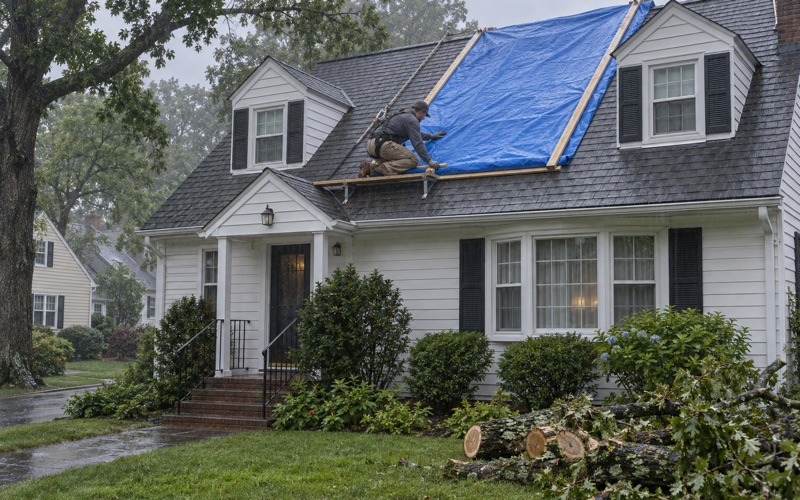
- Same-Day Storm Tarping