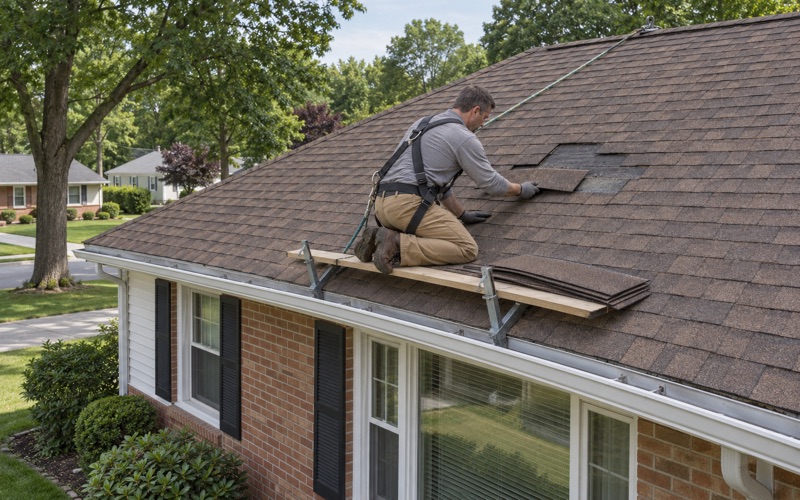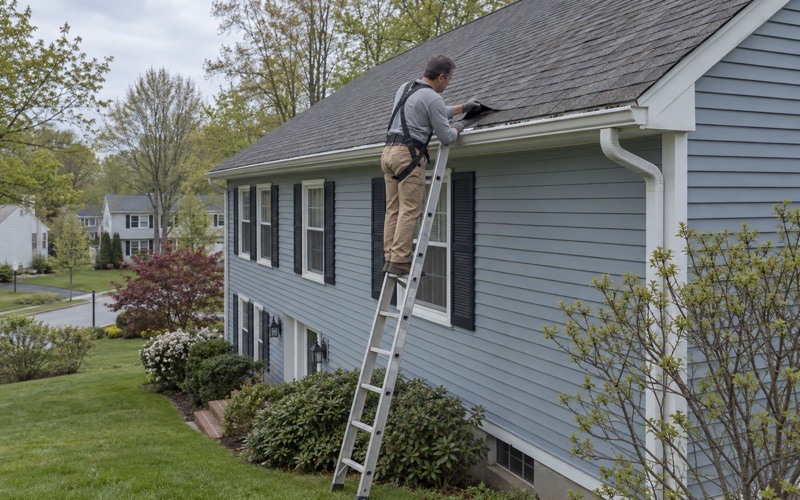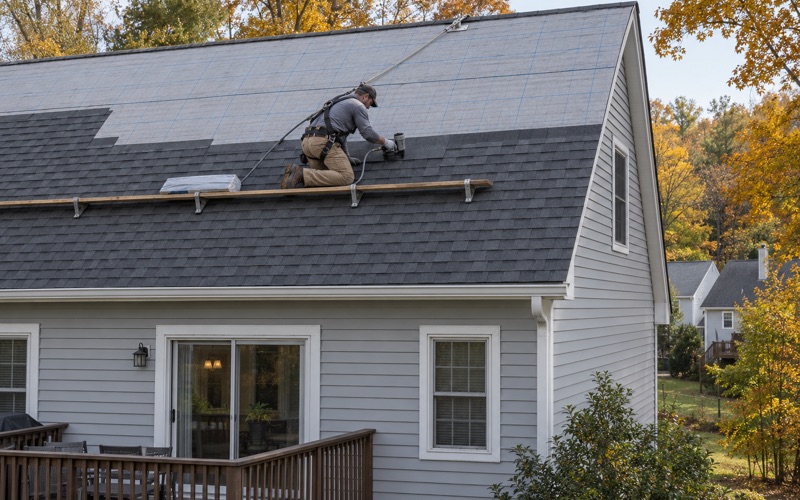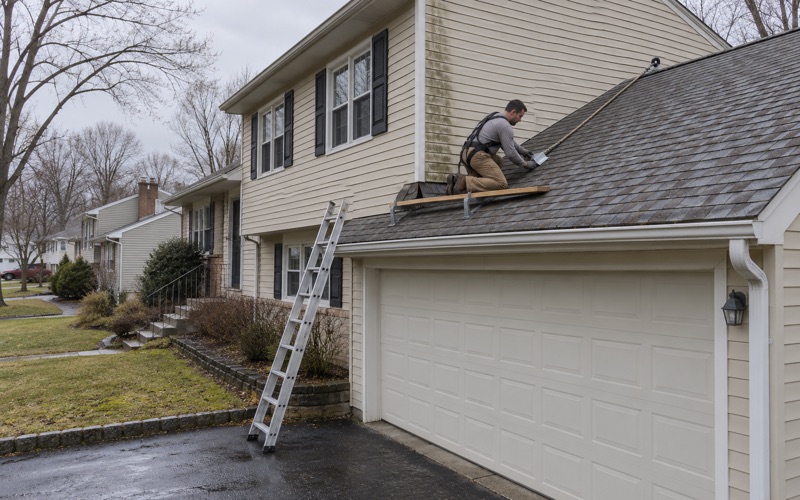
Parsippany Elite Roofing has spent more than 20 years on roofing in East Hanover and the rest of Morris County, and the jobs that go best start with one question: where is the water getting in? We answer that before we talk about price, material or schedule. A roof is the part of a house that protects every other part, so we treat it that way.
Most calls begin with a stain on a ceiling or a few shingles in the yard. We go up on the roof and into the attic on every leak call, because the spot where water shows up indoors is rarely the spot where it enters. Tracing it first keeps you from paying for work aimed at the wrong place.
From there you get a plain answer on whether the roof can be repaired, and only then a conversation about replacement if repair will not hold. That order matters most on an older house, where the roof has been protecting walls, trim and framing for decades. Get the roof right first and everything below it has a chance; get it wrong and the rest of the exterior pays for it.
Roof First: How East Hanover Restored Its Landmarks
The First Presbyterian Church of Hanover was the oldest religious organization in Morris County, established in Whippany during 1718. Its current building went up during 1835 with Greek Revival massing, and the county describes the building and burial ground as significant to the cultural and historical development of Hanover Village. How that building was rescued is a useful lesson for anyone holding an older roof.
The 1835 Church and Its Slate Roof
The work did not start with a ladder. A 2003 Morris County Historic Preservation Trust Fund grant of $15,676 paid for a condition assessment report, a written look at what the building needed and what came first. The next step was the roof: the church replaced its slate roof with help from three grants over the following three years.
The county’s funded-site sheet records the replacement but does not say what material went back on, so we will not guess. What it does show is priority. Before anyone spent money on paint or windows, the people responsible for the building made sure water stayed out of it.
Three Grants Over Three Years
The roof grants came in steps: $96,712 during 2004, $190,320 during 2005 and $130,200 during 2006. Added together, the roof portion comes to $417,232, more than the three exterior restoration grants that followed it combined. That gives a sense of what replacing a large historic roof can involve.
Only after the roof was finished did grants from 2007 through 2009 turn to the exterior: wood siding and trim, windows, foundations and painting on every facade. East Hanover Township acquired the church and burial ground during August 2025, and a 2026 county grant of $330,000 supported that purchase. The building it took on had its roof replaced nearly two decades earlier.
Looking for roofing closer to Denville? See Denville Roofing.
The Cook House: Plan, Drawings, Then Roof
The Cook House tells the same story on a smaller frame. The county describes it as built in the 1750s, and for many years it served as a halfway house for travelers heading from western New Jersey to Newark. Its renovations reflect three different centuries, and a township museum has been proposed there.
Planning Before Any Tear-Off
The recent phase opened with paperwork, not hammers. A 2020 grant of $22,360 paid for a preservation plan, and a 2021 grant of $33,480 completed construction documents covering exterior restoration, interior stabilization, and roof and foundation repairs. Someone had to decide exactly what the building needed before anyone priced the labor.
That habit carries over to any old house. A written scope, prepared before work begins, keeps the job from growing in surprising directions once the old covering is off. It also gives the owner a document to compare against a second opinion.
Exterior Restoration Including Roof, Siding and Trim
A 2022 grant of $227,600 was set aside for exterior restoration including roof, exterior siding and trim. The county sheet does not name the roof material and does not say the roof work is finished, so we only report what the sheet states. The pairing itself is telling: roof, siding and trim are the shell that sheds water.
A 2024 grant of $334,000 then funded Phase II, aimed at foundation framing and masonry repair, structural stabilization, siding and trim repairs and window restoration. Foundation and structural work followed the roof phase rather than leading it, the same order the church had followed with its own grants.
Why Facades and Foundations Came After the Roof
Fresh siding under a leaking roof is money spent twice. Water that gets past a failed roof runs down inside walls, softens framing, stains trim and finds its way toward the sill. Restoring the outside before the top is sound only gives that water something new to ruin.
Two separate grant histories, years apart, landed on the same sequence. Neither record presents it as a rule, but both show what got funded first on buildings that had stood for well over a century. We think homeowners can borrow that judgment without needing a grant to do it.
Applying the Same Order to an Older East Hanover House
East Hanover is mostly owner-occupied detached homes, and some of them are quite old. Census figures count 220 housing units built in 1939 or earlier and another 147 from the 1940s. On houses like these, the roof is usually the first thing to put right before money goes to the rest of the exterior.
Start With What the Attic Shows
Our version of a condition assessment is a look at both sides of the roof deck. From the attic we check for daylight around penetrations, dark rings on sheathing, damp insulation and rusted nail tips, which all point to where water or moisture is winning. Outside we look at shingles, flashing, valleys and the chimney.
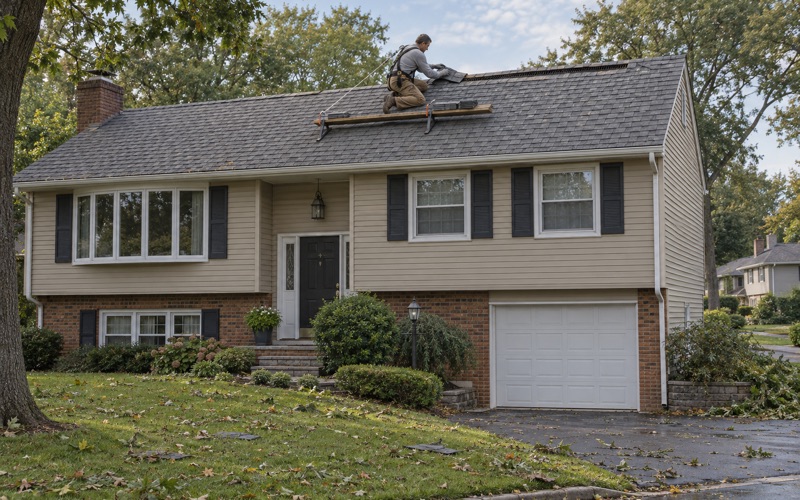
Attic ventilation gets checked on every replacement we quote. A roof that cannot breathe ages from underneath, cooking shingles in summer and trapping condensation in winter. On older capes and split-levels where ice dams form at the eaves, we add an eave membrane and look hard at intake and exhaust rather than just laying new shingles.
Repair or Replace, Answered Honestly
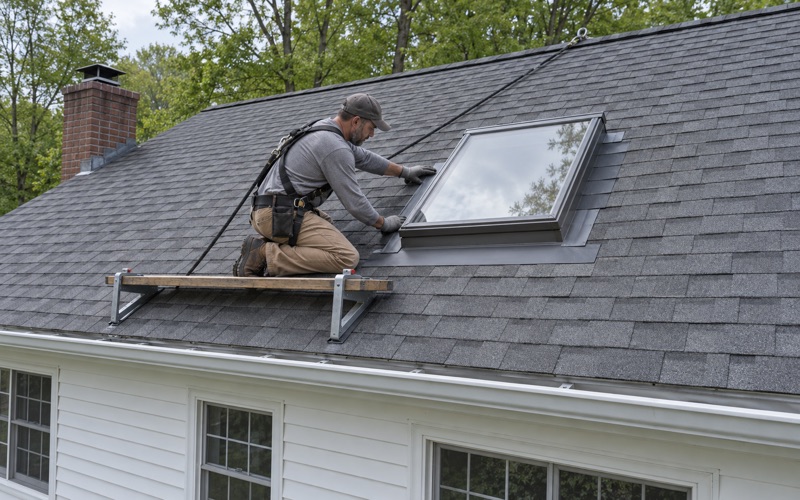
Plenty of older roofs need targeted work, not a full tear-off. A lifted section, a cracked pipe boot or failed step flashing at a dormer can be fixed for far less than a new roof, and we say so when that is the case. Replacement comes up only when repair will not hold.
When replacement is the right call, we explain why in terms you can check yourself. Slipping shingles across several slopes, soft decking felt underfoot and repeated leaks in different spots are signs a roof has reached the end. We would rather show you than ask you to take our word for it.
Flashing and Decking Done Once
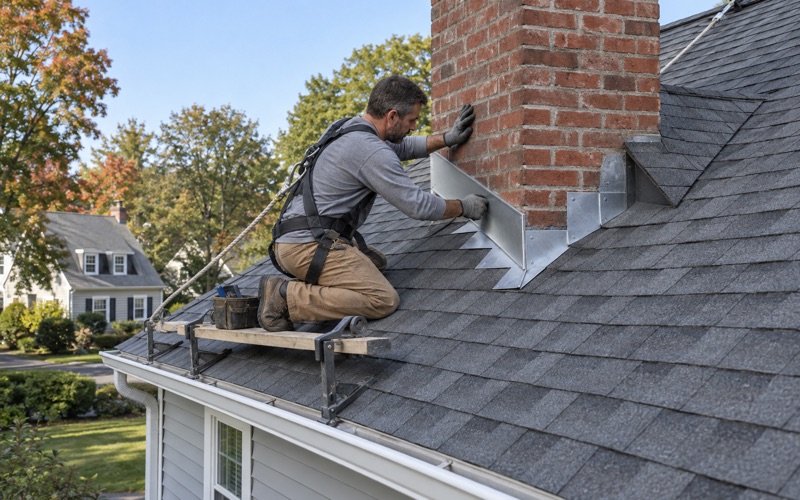
Step, counter and chimney flashing are replaced along with the roof, not bent back and reused under new material. Old flashing has already spent its life, and reusing it is a common reason a brand-new roof leaks within a few seasons. Chimneys on older houses often need a fresh cricket, crown or repointing too.
Decking surprises are normal on an older home. If we find rotted or delaminated sheathing once the old roof is off, we photograph it and show you before anything is replaced. The per-sheet price is written into the contract ahead of time, so a bad board never becomes an open-ended bill.
Choosing Materials That Suit the House
An older house does not have to keep the material it was built with, but the choice should fit the framing and the style. Architectural shingles such as GAF Timberline HDZ, Owens Corning Duration or CertainTeed Landmark suit most houses, while natural slate and slate-look synthetic shingles suit homes built for a heavier, more traditional look. We walk through the tradeoffs in weight, cost and lifespan before anything is ordered.
Underneath, we use an ASTM D1970 self-adhering ice and water barrier at the eaves and along valleys, with synthetic underlayment over the rest of the deck. Drip edge goes on at eaves and rakes, and ridge vent is paired with soffit intake so the attic actually moves air. Those layers are what keep a new roof from repeating the old one’s leaks.
Planning the Work on Your Own House
Both landmarks had a written assessment or plan before work began. A household job deserves the same clarity at its own scale, starting with an estimate you can read line by line and compare with another contractor’s. It should also tell you what happens if the job uncovers something nobody could see from the ground.
A Scope You Can Compare
Our written scopes break out tear-off, decking, underlayment, flashing, ventilation and gutters as separate lines. That way two estimates can be set side by side and compared item by item, instead of judged on a single total. It also shows exactly what is and is not included before you sign.
Contracts follow New Jersey’s home improvement rules, including the three-day cancellation notice. If solar panels sit on the roof, their removal and reinstall go into the schedule from the start. Wooded lots get planned for as well, with overhanging limbs, leaf-packed valleys and shaded, mossy slopes called out in the estimate.
Storm Days and Clean Sites
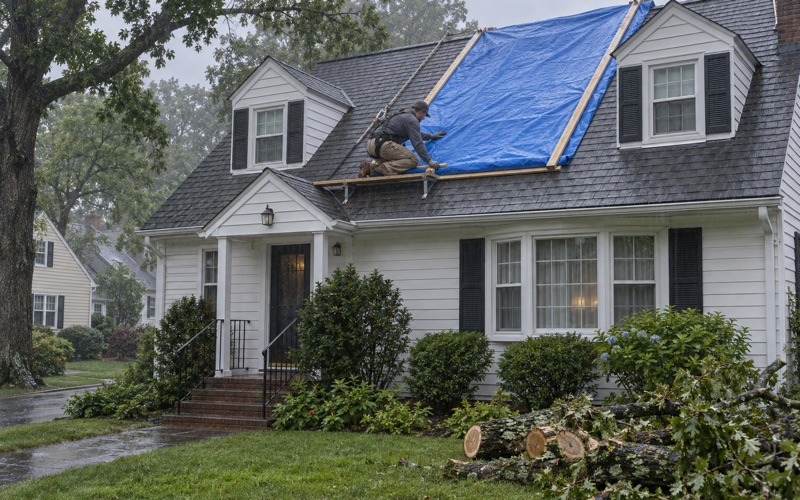
After a wind storm we get tarps and temporary repairs on the same day, and we photograph the damage before anything is moved. We write it up for your own claim and will meet the adjuster on site when you ask. The claim itself stays between you and your insurer.
At the end of each work day the driveway, yard and gutters are cleaned, and a magnet sweep picks up loose roofing nails. On a lot where children and pets use the yard, that daily cleanup is not optional.
Selling an Older Home
If you are selling, we can prepare a written roof condition report you can hand to the buyer’s inspector. It records what the roof is, how it is performing and what, if anything, it needs. A clear report early in the sale tends to settle questions before they turn into renegotiations.
Whether you are keeping the house for decades or passing it on, the order stays the same as it did for East Hanover’s oldest buildings. A sound roof is one less thing for a buyer or a future owner to question. Make the roof sound first, then put money into everything it protects.
- 20+ Years on Local Roofs
- Itemized Written Scopes
- Same-Day Storm Tarping