Parsippany Elite Roofing has spent more than 20 years on roofing in Florham Park and the rest of Morris County, and this borough raises a question many towns never do. A large share of its roofs are still young, and a leak on a young roof starts with dates and paperwork before it gets anywhere near a ladder. Getting that order right protects every option the homeowner has.
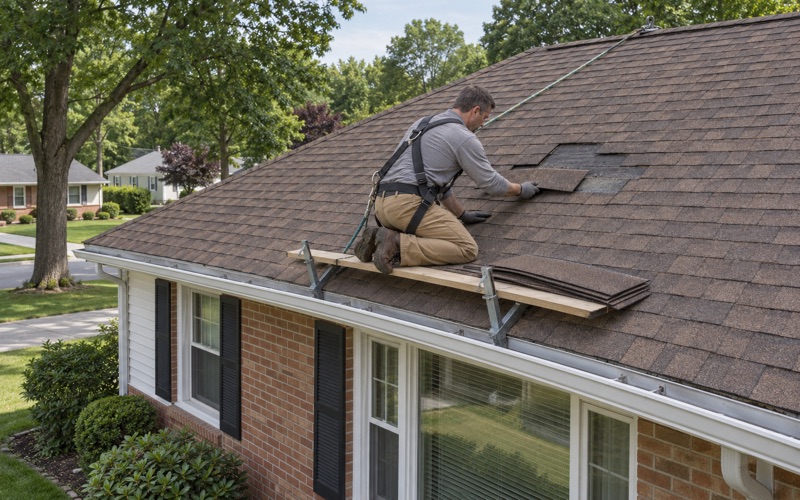
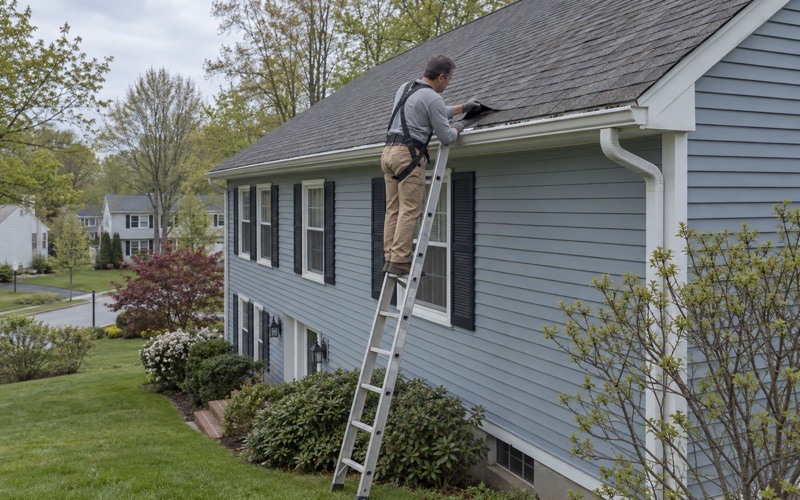
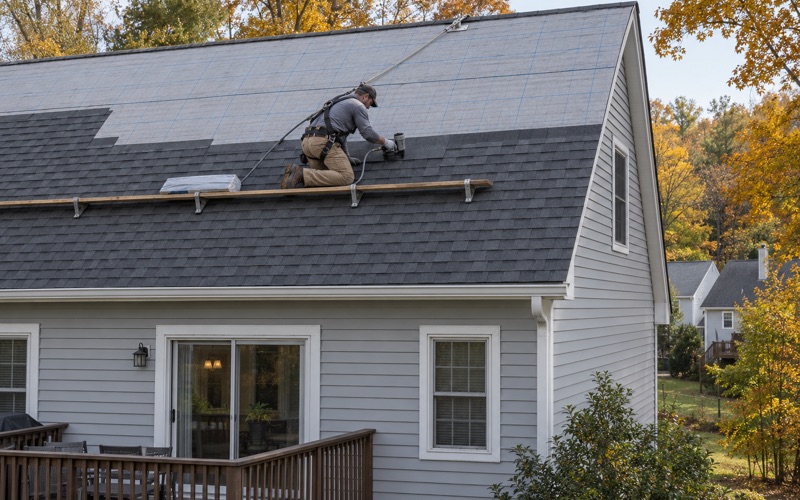
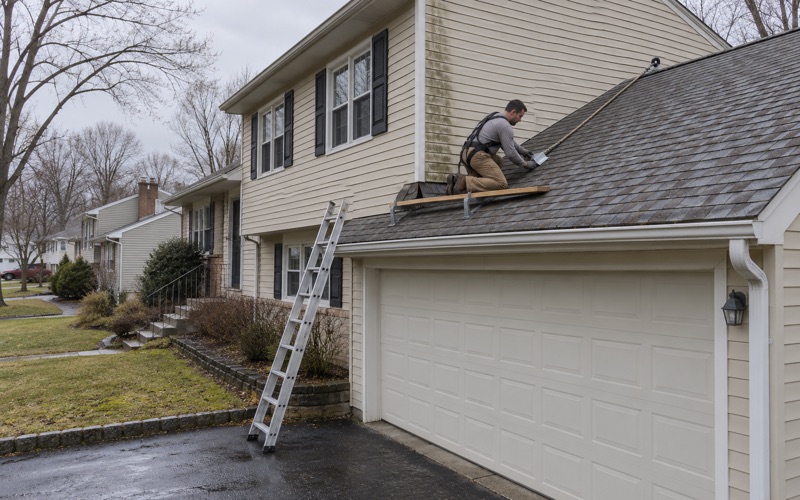
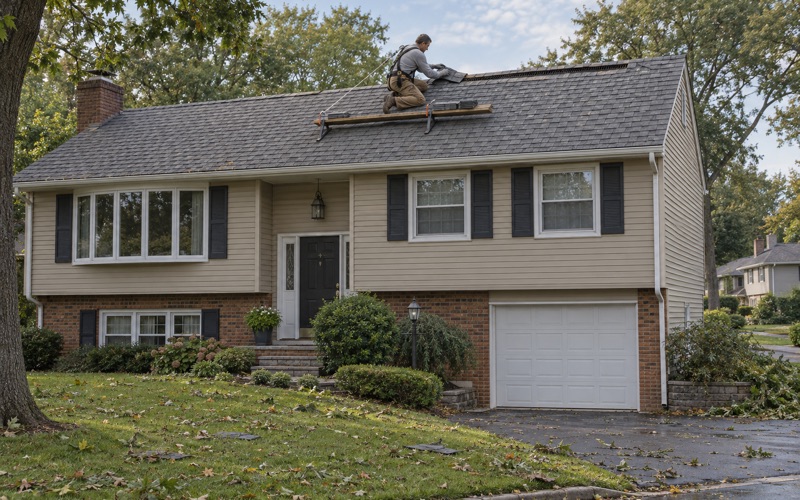
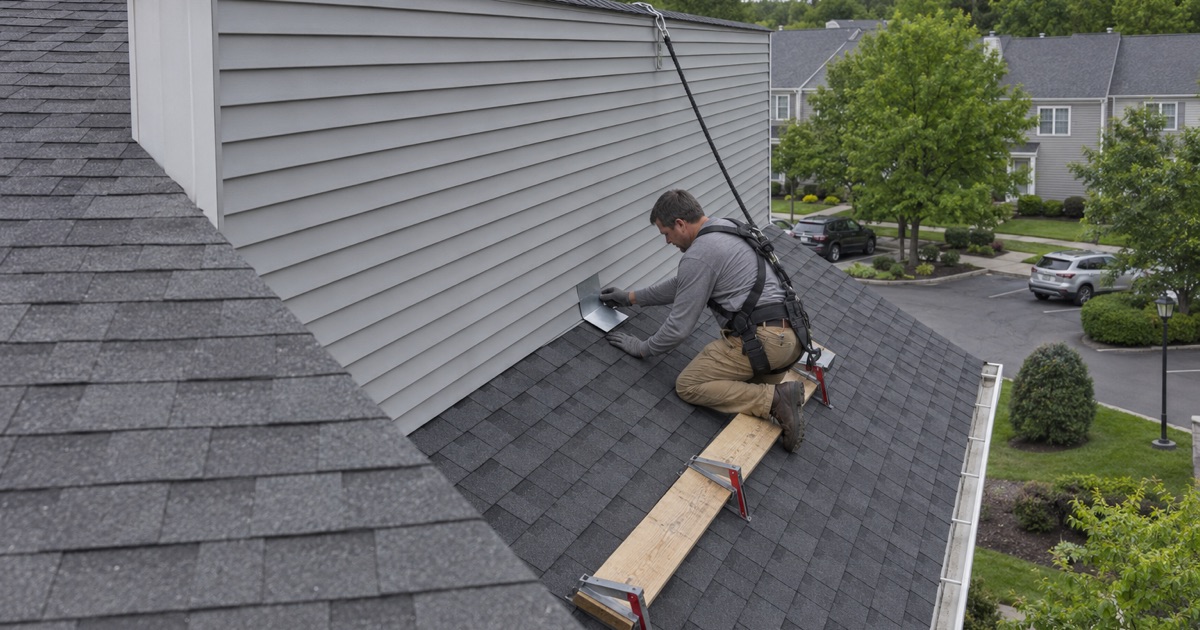
Every leak call we take begins with two inspections, one in the attic and one on the roof, so the water is traced to the point where it really enters. On a newer home that tracing does double duty. It tells us what failed, and it leaves the owner with a dated, photographed record they can put in front of whoever is responsible for the fix.
What follows is how we approach a leak on a roof that is only a few years old: the structure of New Jersey’s new-home warranty, why a condominium’s shared roof can run on its own clock, and which buildings were never inside the program at all. Older homes get what we give everyone, a straight answer on repair before replacement ever comes up.
New Roofs, New-Home Warranty: Florham Park’s Recent Building
A Young Housing Stock for Northern New Jersey
Census estimates put 1,374 of Florham Park’s 5,058 housing units in buildings from 2010 or later, which is young for this part of the state. Only about half of the borough’s units are detached single-family houses; the rest are townhomes and buildings of several units. For a roofer, that mix means more shared roofs, more builder-installed flashing still on its first exposure, and more owners who have never had to ask who fixes a leak.
Two communities account for a good part of that recent building. Del Webb Florham Park went up between 2018 and 2022, and 55places lists 242 homes there across houses, attached homes and condos. Garden Homes’ Parc North, 49 townhomes and carriage homes on Vreeland Road off Hanover Road, launched sales during June 2022 and was reported sold out by February 2024.
Why the Warranty Question Comes First
New Jersey’s new-home warranty rules, N.J.A.C. 5:25, apply to a dwelling unit not previously occupied. Each home’s coverage runs from its own warranty date, defined as the date of first occupation by the owner or the settlement date, whichever comes sooner. Two neighbors on the same street can sit at very different points, and we never assume where a particular home stands.
So when a leak shows up on a roof a few years old, we ask the owner to find their settlement papers and the builder’s warranty documents before we price anything. Our job at that stage is to find the leak and document it clearly. Notifying the builder or the warranty plan, and deciding what to do with our findings, stays with the owner.
Looking for roofing closer to West Caldwell? See Roofing Services in West Caldwell.
One Year, Two Years, Ten Years: Reading the Periods
What Each Period Covers
Under N.J.A.C. 5:25-3.2, a new home must be free of performance-standard defects for one year from the warranty date, along with appliance, fixture and equipment defects, mechanical and electrical defects, and major structural defects. The two-year period narrows to mechanical and electrical systems, manufacturer-covered appliances, and major structural defects. The ten-year period covers major structural defects alone.
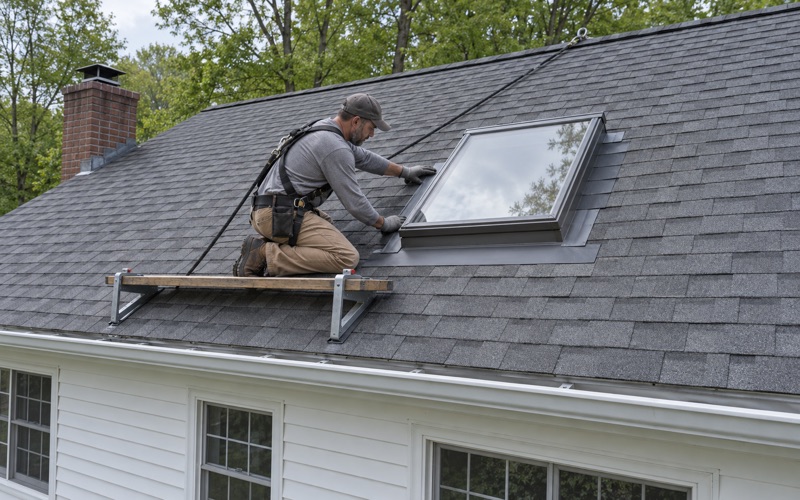
That shape matters for a roof because nearly every problem an owner notices up there is a performance item rather than a structural one. A drip at a skylight, a stain spreading below a valley, a wet spot under a plumbing vent: those fall under the roofing performance standard, which lives in the first-year window. Waiting to see whether a small stain grows can mean waiting past the period that applied.
Roof and Flashing Leaks Under Normal Weather
The roofing standard, N.J.A.C. 5:25-3.5(f)5, treats roof or flashing leaks that occur under normal weather conditions as a deficiency, and the builder must correct leaks verified to have happened that way. Leaks caused by severe weather are excluded, and the rule names ice and snow build-up, high winds and driven rains. Whether a leak counts often turns on the weather that produced it.
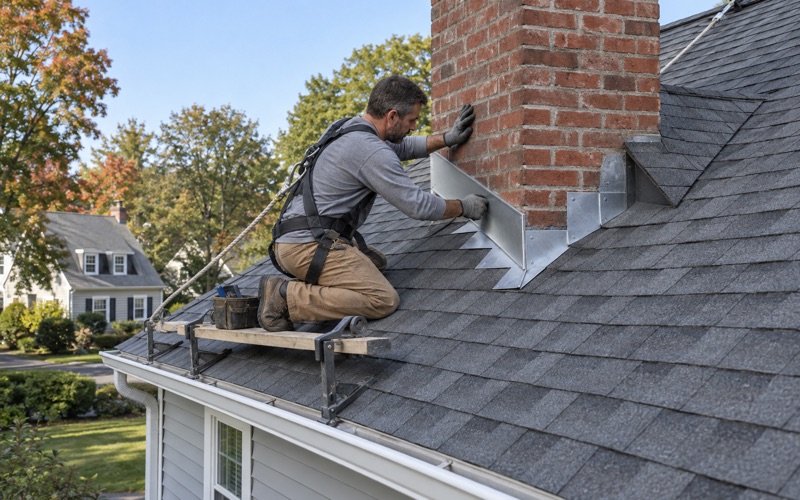
That is why our write-up on a young roof records more than the drip. We note when the owner first saw water, what the weather had been doing, where the attic shows staining, and the condition of the step flashing, counter flashing, pipe boots and kick-out flashing near the entry point. On a new roof, flashing is among the first places we look, and the photographs show what we found.
What Ten Years Does and Does Not Mean
The ten-year period covers major structural defects, which the rules define as actual damage to the load-bearing portion of the home that affects its load-bearing function and vitally affects, or is imminently likely to vitally affect, residential use. A failed roof frame might raise that question. A shingle leak does not.
We say this plainly because owners sometimes read the long period as protection against every leak for a decade, and it is not. Leaks are a first-year performance item under these rules. If a young roof is leaking a few years after settlement, the practical path is usually a repair, and we will tell you whether a repair is enough before any talk of replacement.
Condominium Common Elements and Their Own Start Date
Common Elements Are Covered Too
For a condominium or cooperative, N.J.A.C. 5:25-3.1(c) extends the warranty past the individual units to the common elements serving them. The rules define common elements as those listed in the master deed filed for the development. Where a roof is one of those listed elements, it carries coverage of its own, separate from the coverage on each owner’s unit.
The catch is the start date. The warranty date on a common element is the date that element is first put to use, not the date any particular buyer settles. A building’s roof can start its clock when the first residents move in, so a buyer who closes months later may find the roof’s first year already partly or wholly spent.
When a Later Buyer Finds the Defect
The rules carry a protection for that buyer. A unit owner who takes first occupancy after the common-element warranty has expired may file a notice of defect on a common element directly with the builder, when the defect could not have been found before occupancy. Once one unit in a single condominium or cooperative structure is sold, every remaining unit in that structure is warranted, sold or rented.
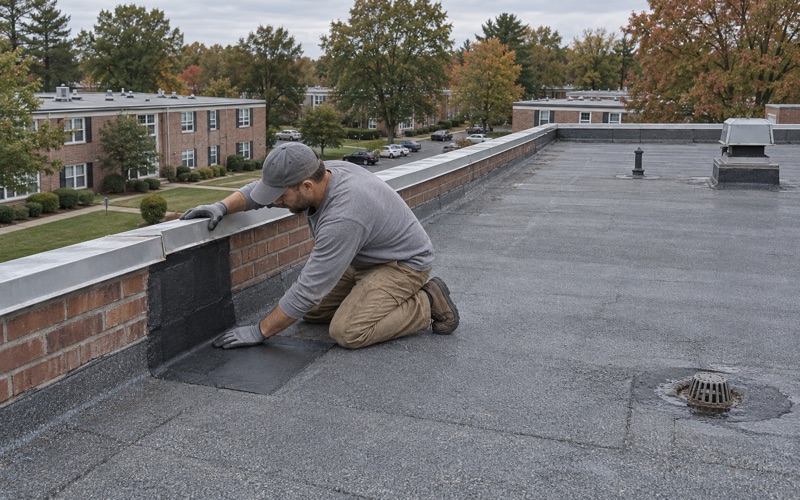
Neither provision settles a case by itself, and we do not settle it either. What we can provide is the evidence: where the water enters, whether it comes through the roof surface or a flashing detail, and what the attic shows underneath. The owner decides what to do with that record and who receives it.
Reading the Master Deed Before an Estimate
Whether a given roof is a common element depends on what the master deed lists, and that varies by development and sometimes by building. We have not read the deed or declaration for any Florham Park community, so we never assume who holds a roof. In townhouse and condominium communities we check the owner’s documents first, then write the estimate.
Owners can usually find the master deed and declaration in their closing file or request them from the community. Bringing them to the first visit saves a second trip. It also means the estimate we write is addressed to the party that actually holds the roof, which avoids work being authorized by the wrong person.
Rental Buildings and Homes Past the Warranty
Buildings Constructed Solely for Lease
The definition of a new home excludes dwelling units constructed solely for lease. That puts Florham Park’s rental buildings outside the program, including 147 Columbia, where Garden Communities replaced a former office building with 126 one- and two-bedroom apartments across two buildings, and the 256 AVE corporate-housing units at The Green. A leak there is a matter for the building’s owner or manager.
Planned building raises the same question before anything goes up. Garden Homes acquired a 55-acre site at 50 Hanover Road, at Vreeland Road, for 305 age-restricted multifamily units, 61 of them designated affordable, according to an October 2025 report. The article does not say whether those units will be sold or leased, so whether the new-home warranty will reach them remains an open question.
When the Warranty Window Has Closed
Most Florham Park homes are well past any builder coverage; the median year built is 1984. For those roofs the work is straightforward: we inspect the attic and the roof, tell you whether a repair will hold, and only then discuss replacement. If replacement is the right call, the step, counter and chimney flashing is replaced with the roof rather than reused.
Our written scopes break out tear-off, decking, underlayment, flashing, ventilation and gutters as separate lines, so two estimates can be compared item by item. Decking found damaged once the old roof is off is photographed and shown to you before it is replaced, at a per-sheet price set in the contract, and attic ventilation is checked on every replacement.
Contracts, Cleanup and Selling a Home
Contracts follow New Jersey’s home improvement rules, including the three-day cancellation notice. At the end of each work day the crew cleans the driveway, yard and gutters and runs a magnet sweep for roofing nails. Owners getting ready to sell can ask for a written roof condition report to hand to the buyer’s inspector.
That report records what we saw on the roof and in the attic, with photographs, and says plainly whether anything needs attention now or can wait. It describes condition rather than pitching a new roof, which is what a buyer’s inspector and a seller both need from it.
- 20+ Years on Local Roofs
- Itemized Written Scopes
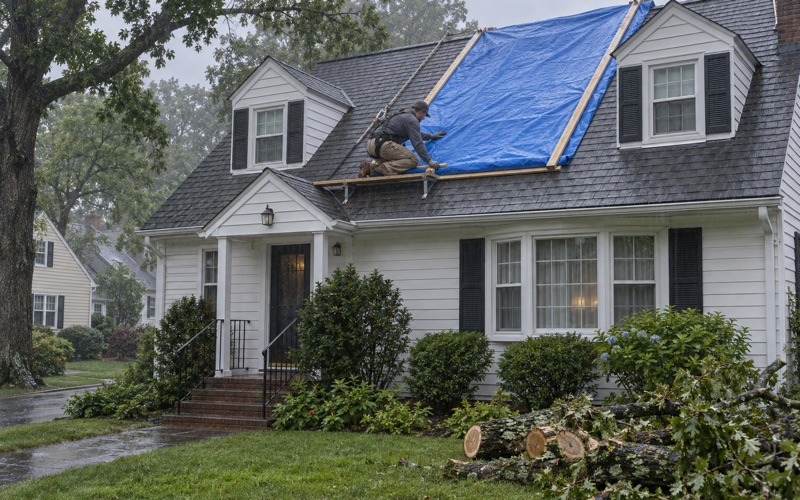
- Same-Day Storm Tarping