Parsippany Elite Roofing brings more than 20 years of work to roofing in Hanover, and the first thing we settle on a job here is how the materials will reach the roof. That sounds like a small detail until you remember what else shares this township. A delivery truck with a boom, or a crane setting bundles, is a tall object for a few hours, and in Hanover that height gets checked before anything is booked.
The rest of the job looks like the roofing we do everywhere. A leak call means we go into the attic as well as onto the shingles, so the water is traced to its real entry point before a price is written. If the roof can be repaired, you hear that plainly first, and replacement only comes up when repair would be money spent twice.
When a replacement is the right call, the written scope breaks out tear-off, decking, underlayment, flashing, ventilation and gutters as separate lines. That lets you lay our number beside anyone else’s and compare item by item. What changes in Hanover is the planning around the lift, and that is what most of this page covers.
Roofing in the Township That Holds Morristown Airport
Hanover Township covers 10.75 square miles of Morris County and takes in the unincorporated communities of Whippany and Cedar Knolls. It also holds Morristown Municipal Airport, which sits in the Whippany section even though the Town of Morristown owns it. That ownership detail confuses people, but the ground, the zoning and the neighbors are all Hanover’s.
The field in Whippany
The airport is a public-use general aviation reliever field run by DM Airports. Its main runway, 5/23, is 5,998 feet long, and a second runway, 13/31, adds 3,997 feet. The field elevation is 187 feet, and it handled 110,939 operations in the year ending July 31, 2022.
Those numbers matter to a roofer for one reason. Federal notice rules key off the length of an airport’s longest runway, and a main runway near 6,000 feet puts this field squarely in the category the rules are written for. Every reach of a boom on a nearby roof job sits inside that framework.
Hanover’s A Airport District
The township zones the field as its own A Airport District, described in Code section 166-208 as a district designed for the operation of an airport for general aviation. Permitted uses are limited to things like the landing strip, control tower, hangars and aircraft fuel and maintenance, and section 166-209 prohibits the rest.
Section 166-210, amended in 1990, says every height, yard and area requirement in that zone is set by the Federal Aviation Agency’s requirements. It also says those requirements must comply with New Jersey’s Air Safety and Zoning Act of 1983. In plain terms, the township points height questions near the field to federal and state aviation rules rather than writing its own.
What the district does not do to your house
Homeowners sometimes assume the airport limits how tall a new roof can be. The state rules under the Air Safety and Zoning Act say an ordinance cannot require an existing structure or tree to be removed or lowered just because it did not conform when the rules arrived. We have not read any Hanover safety-zone map, so we make no claim about house heights at all.
Re-roofing a detached one- or two-family house in New Jersey is treated as ordinary maintenance under the Uniform Construction Code. An FAA notice is a different thing entirely: a federal airspace filing about equipment, not a township building permit about your shingles. Keeping those two ideas apart is the first step in planning a Hanover job correctly.
Looking for roofing closer to East Hanover? See Roofing Services in East Hanover.
The 100-to-1 Surface and the 45-Day Notice
The federal rule that matters here is Part 77 of the FAA’s regulations, which covers objects that could affect navigable airspace. It asks whoever proposes construction or alteration to notify the FAA when an object crosses certain heights. Two of its tests come up on a roof job near the field.
How the slope works
The simple test is height: anything more than 200 feet above ground at its site needs notice. No residential roof job gets near that, so the second test is the one we watch. It draws an imaginary surface rising 100 to 1, extending 20,000 feet outward from the nearest point of the nearest runway at a public-use airport whose longest runway is more than 3,200 feet.
The arithmetic is what surprises people. At 3,000 feet from a runway, that surface is only 30 feet above runway elevation, and at 10,000 feet it is 100 feet up. A boom extended over a ridge line can reach 30 feet without trying, which is why the slope is a working concern rather than an abstract one.
The 45-day lead time
When notice is due, the form is FAA Form 7460-1, the Notice of Proposed Construction or Alteration. The rule says it must be submitted at least 45 days before the start of the proposed work, or before a construction permit application is filed, whichever comes first.
That lead time is the real scheduling issue. A homeowner who calls about a tired roof in late spring is usually hoping for a start date within a few weeks. If a particular lift at a particular address would cross the surface, a 45-day clock changes the calendar, so we find out early rather than on the morning the truck arrives.
The narrow exceptions
Part 77 lists a few situations where notice is not required. One covers an object shielded by existing permanent structures or terrain of equal or greater height in a congested area, where the shielded object will not affect air navigation. Others cover certain navigation aids, work already noticed under another FAA rule, and antennas of 20 feet or less.
Those exceptions are narrow, and we do not lean on them to skip a check. Whether a house next door or a stand of trees truly shields a lift is a judgment the rule frames carefully. Our habit is to run the question properly instead of assuming an exception applies.
Cranes and Boom Lifts Are What Gets Checked
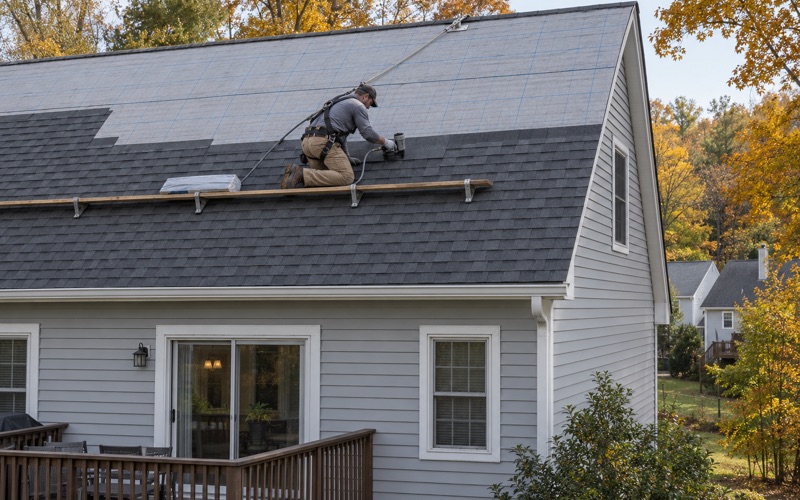
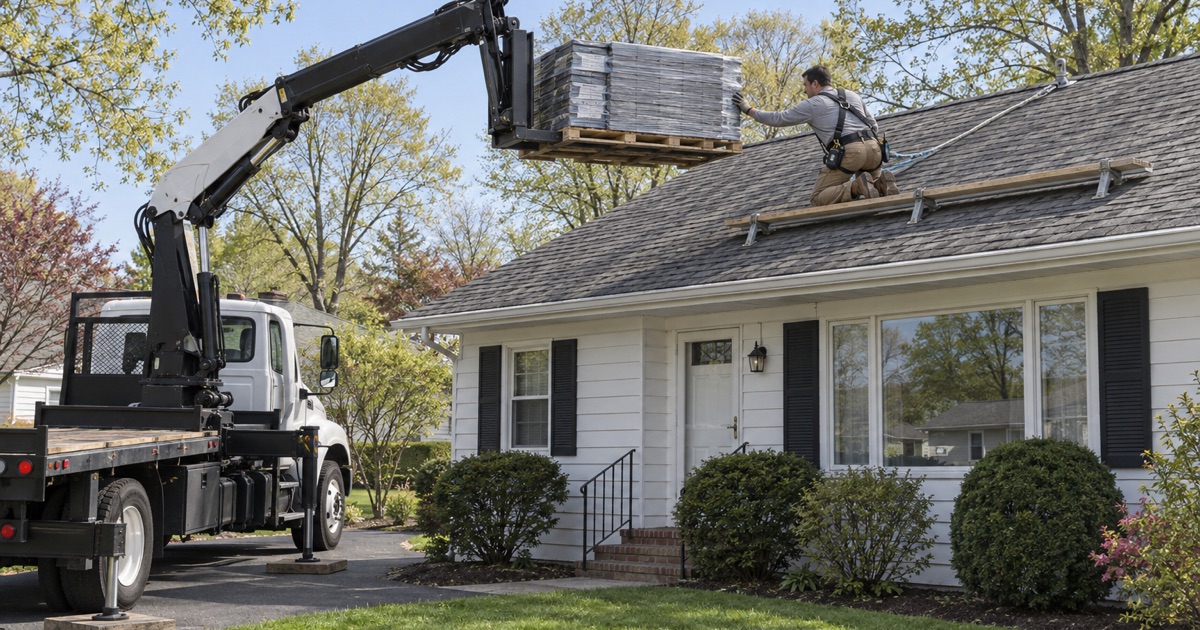
A finished roof rarely rises much above the old one, so on a re-roof the height question is almost never about the house. It is about the equipment that sets the materials. Shingle bundles are heavy, and the fastest way to put a full load on a roof is a boom delivery truck or a crane lifting pallets to the ridge.
Equipment counts as a temporary structure
Airport and agency guidance applies Part 77 notice to temporary construction equipment. San Jose’s crane policy, for example, requires a filing for any proposed temporary structure, construction equipment included, that exceeds the 100-to-1 or 200-foot criteria. Oklahoma’s transportation department applies the same test to a temporary crane, and Jefferson County, Colorado uses the 100-to-1 test near its airport.
None of that guidance is about Morristown Municipal Airport, and we say so plainly. What it shows is how airports and agencies read the federal rule: a crane is treated as a temporary structure for as long as it stands. A boom lift raised beside a Hanover house fits the same description.
Why the address and the reach both matter
Whether a given lift crosses the surface depends on two things we cannot guess: the distance from that address to the nearest runway end, and the ground elevation at the site compared with the field. Neither can be read off a street name. Some houses near the field will clear easily with a short boom, and others may not.
The tool that answers the question is the FAA’s own Notice Criteria Tool. You enter the location and the height of the proposed object, and it reports whether notice is required. We would rather run that check on every Hanover address with a planned lift than rely on a rule of thumb about which streets are close.
Lower-reach ways to load a roof
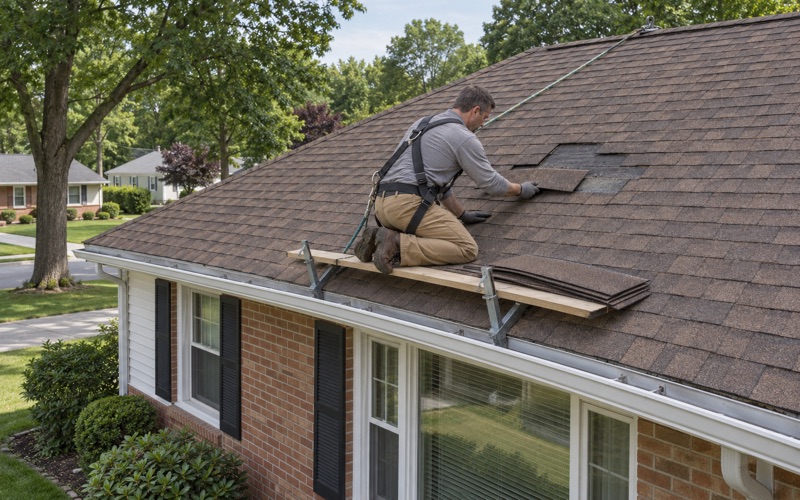
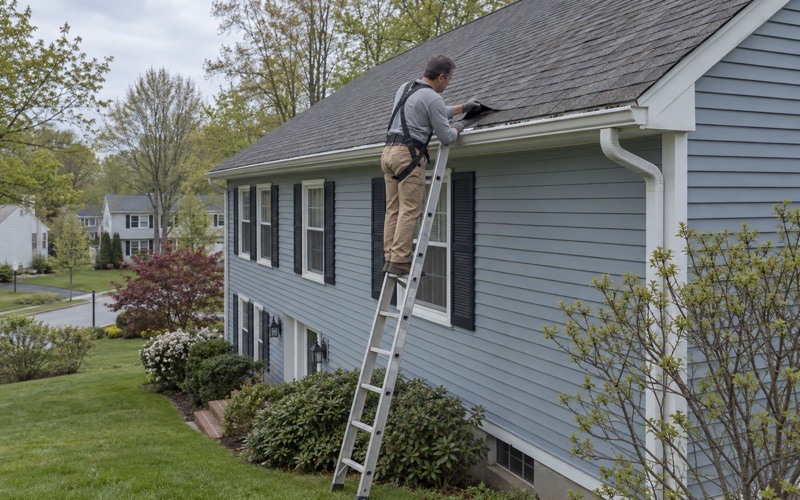
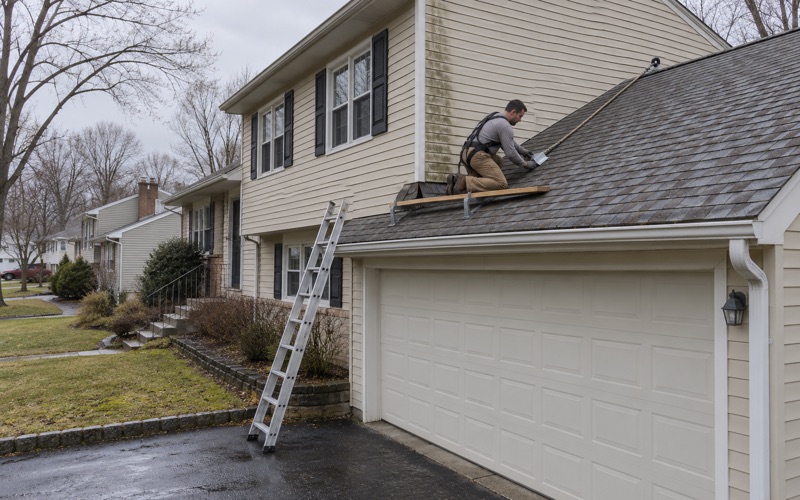
When a high boom is not a good fit, there are ordinary ways to get material up. A ladder hoist or a shorter conveyor can carry bundles along the eave, and crews can stage materials in smaller loads. Each of those keeps the equipment closer to the roof line.
The tradeoff is time and labor, which shows up in the schedule and sometimes in the price. We explain that choice in writing rather than letting it appear as a surprise on the invoice. On many jobs the answer is simply a boom delivery booked after the check comes back clear.
Planning a Roof Delivery Near the Field
The practical result of all this is a different order of operations. On most jobs a supplier delivery is the last thing scheduled. In Hanover, near the field, it is one of the first things we look at, because it can set the start date.
Check first, book second
Before a delivery is booked, we note the planned lift height for the truck or crane and run the Notice Criteria Tool for the address. If it says no notice is required, the job is scheduled like any other. If it says notice is due, the 45-day lead time is built into the plan before a start date is promised.
You get that answer in writing alongside the estimate. We never tell a homeowner that a street is exempt or that a whole neighborhood needs a filing, because the rule does not work by street. It works by distance, elevation and the height of the equipment on the day.
Who holds the roof on attached homes
Hanover’s housing is more mixed than many people expect. The census survey counts 745 single-unit attached homes beside 3,782 detached houses, and more than a thousand units sit in buildings of five or more. On those properties the delivery question comes after a more basic one.
In a townhouse or condominium community, we check the association’s documents to see who is responsible for the roof before any estimate is written. Re-roofing attached and multifamily buildings also falls outside the ordinary-maintenance rule that covers detached one- and two-family houses, so that conversation happens early too.
What stays the same on every Hanover job
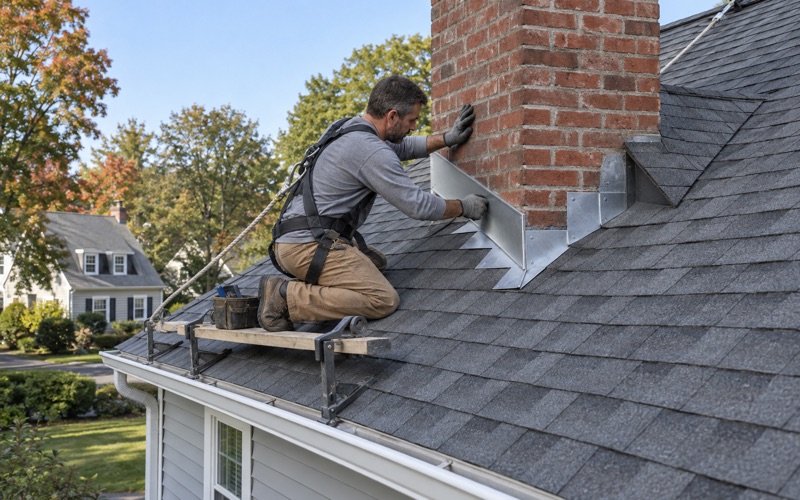
Once the roof is open, the work follows the same standards we hold everywhere. Damaged decking is photographed and shown to you before it is replaced, at a per-sheet price already set in the contract. Step, counter and chimney flashing is replaced with the roof rather than reused, and attic ventilation is checked on every replacement.
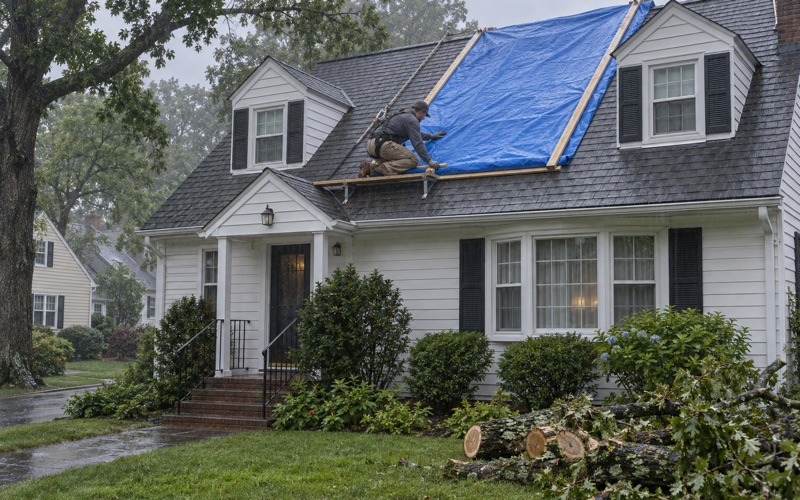
At the end of each work day the driveway, yard and gutters are cleaned, including a magnet sweep for roofing nails. Contracts are written to New Jersey’s home improvement rules, including the three-day cancellation notice. If a wind storm opens a roof, tarps go on the same day, with photos taken before anything is moved.
- 20+ Years on Local Roofs
- Itemized Written Scopes
- Same-Day Storm Tarping