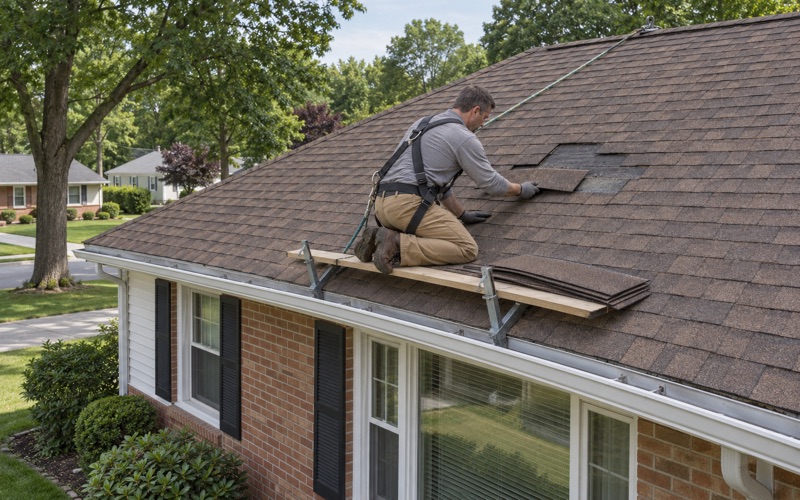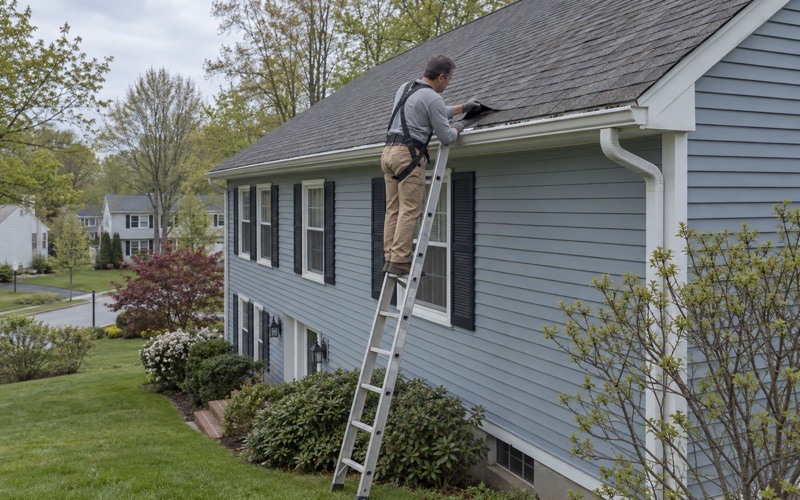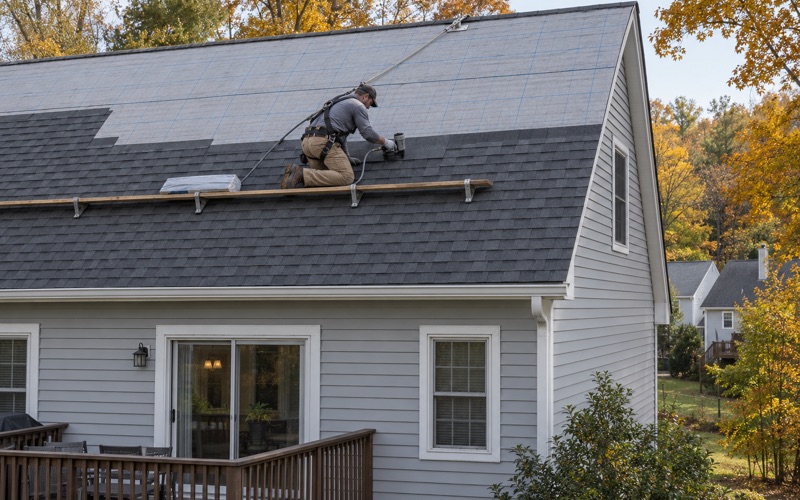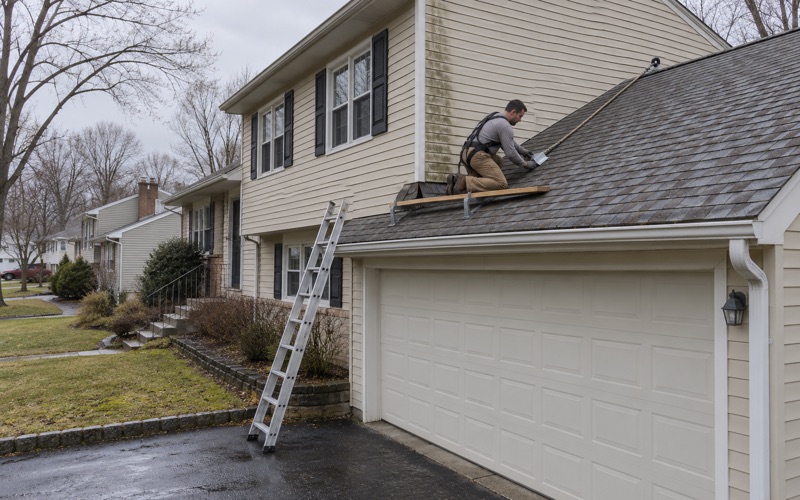
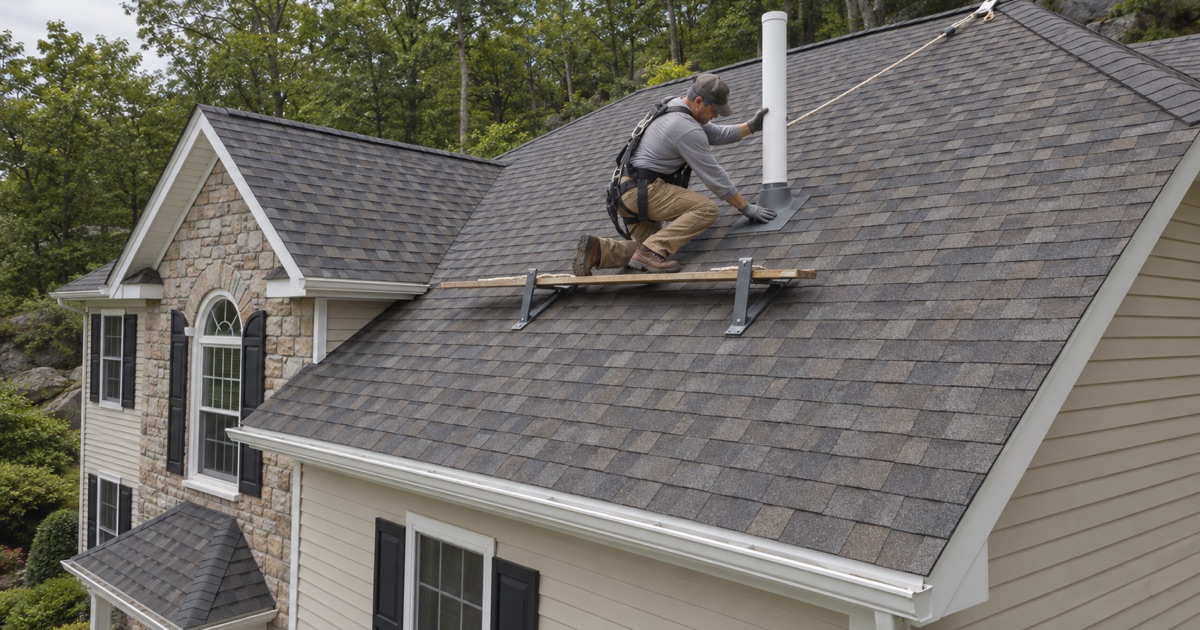
Parsippany Elite Roofing approaches roofing in Kinnelon with more than 20 years of experience behind it, and on some houses here one detail shapes the whole job. It is a plastic pipe rising through the shingles that has nothing to do with the plumbing. It may be a radon vent stack, and a re-roof has to treat it as carefully as a chimney.
Before we price anything, we tell you plainly whether the roof can be repaired, and replacement only comes up if it truly needs one. When a leak brings us out, we check the attic as well as the roof surface, so the water is traced to the place it actually enters instead of guessed at from a ceiling stain.
Our written scopes break out tear-off, decking, underlayment, flashing, ventilation and gutters as separate lines, so you can set two estimates side by side and compare them item by item. Every penetration, a radon stack included, gets its own flashing plan on paper before a single shingle comes off. Nothing about that pipe is left to a decision made on the ladder.
What Kinnelon’s Tier 1 Radon Rating Means for a Roof
What the State’s Numbers Say
New Jersey’s Department of Environmental Protection sorts municipalities by radon potential, and its 2015 Radon Tier Assignment Report places Kinnelon in Tier 1, the high-potential group. Of 2,759 Kinnelon homes tested, 751 came back at or above 4 pCi/L, the action level, which works out to 27 percent. Tier 1 requires at least 25 homes tested with 25 percent or more reaching that mark.
The report also flags towns that stay in Tier 1 after their percentage falls below 25, because the department does not lower a tier once it is assigned. Kinnelon carries no such flag. Its 27 percent stands above the threshold on its own, so the rating reflects the borough’s test results rather than a holdover.
That percentage describes the borough, not any single house. Your home could test well under the action level or above it, and only a test of that house says which. We are roofers rather than radon testers, so measurement and mitigation stay with radon professionals while we focus on what the rating means for the roof over your head.
Why a Roofer Pays Attention to Radon
The Tier 1 label matters to us because of what the state’s radon hazard subcode asks of new houses in those areas. Radon-resistant new construction under NJAC 5:23-10.4, part of the New Jersey Administrative Code, includes a vent pipe that runs from beneath the house up through the building. For one- and two-family houses, the rule sends that pipe out through the roof.
So a rating that sounds like a basement topic ends up as a roof penetration. On a house built with the stack, any roof replacement has to work around it, seal it and leave it doing its job. Treated as just another plumbing vent, the pipe can lose both its seal and its required height in a single re-roof.
Looking for roofing closer to Pequannock? See Pequannock Roofing.
The Vent Stack the Subcode Runs Through the Roof
Where the Pipe Has to End
The subcode is specific about the stack’s termination. Section 10.4(c)12 says vent pipes shall terminate at least 12 inches above the roof, measured from the highest point. No vent terminal may sit directly beneath any door, window or other ventilating opening, and none may be closer than 10 feet horizontally from any lot line.
Those limits are meant to keep the gas the pipe carries from drifting back into the house or toward a neighbor. Whoever installed the stack placed it to satisfy them, and that placement is easy to undo without noticing. Our job on a re-roof is to leave the termination where the rule wants it, at the height the original installer measured.
Room for a Future In-Line Fan
The same section requires the pipe to be routed so it stays accessible for a future in-line vent pipe fan. A stack can start out passive, relying on natural draft, with a fan added later if testing calls for one. The rule keeps that path open, and a roofing crew can close it off without meaning to.
From the roof side, that means we do not box the pipe in, crowd it with new framing or reroute it to make shingling easier. When we are in the attic checking ventilation, we keep the stack’s run clear, and anything we notice about the pipe goes into our notes for you to pass along to a radon professional.
Decks and Occupiable Roofs
One more line in the subcode covers a vent pipe extension that terminates on an occupiable roof: there the pipe must extend at least seven feet. That matters when a flat section over an addition or garage becomes a deck. A stack that met the rule at a foot above a plain roof no longer does once people can stand next to it.
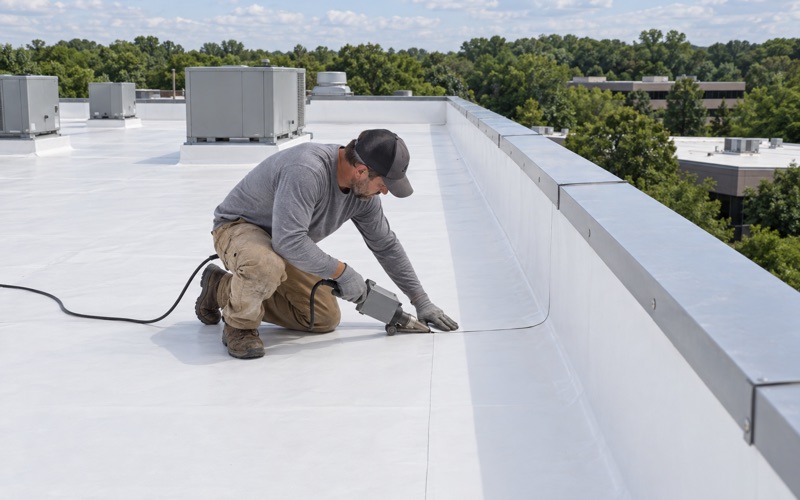
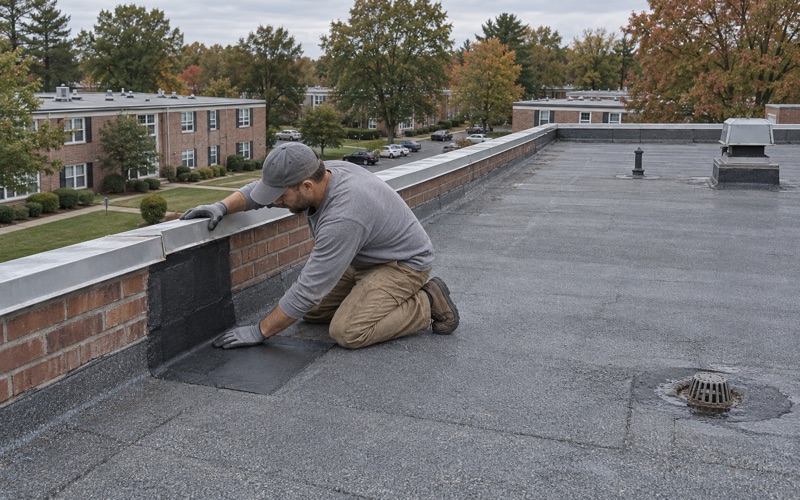
If a project turns part of a roof into usable space, we raise the stack question at the planning stage. On low-slope sections we work with EPDM rubber or TPO membranes, and a penetration through those needs its own detail. Converting a roof to a deck also moves the job beyond simple maintenance, so the borough’s building office gets involved.
Flashing the Stack and Keeping Its Height
A New Seal, Not a Reused One
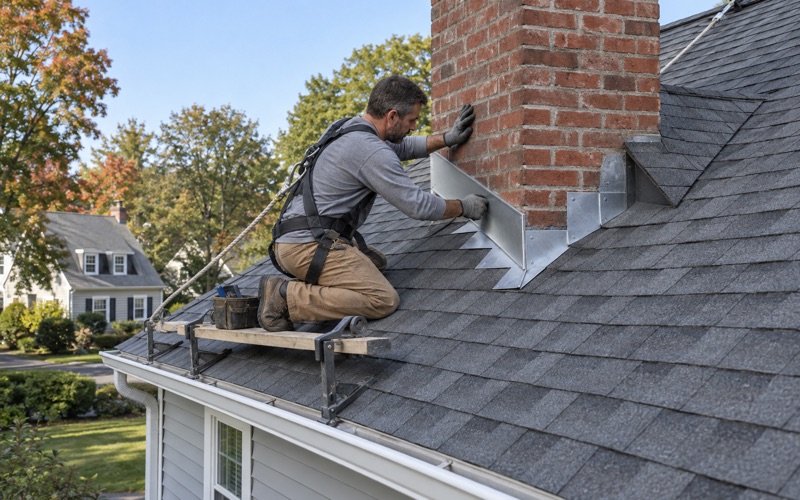
A radon stack meets the roof the way any pipe does, through a hole in the deck that has to be sealed against water. On a tear-off, the old boot around it comes off with the shingles. We do not slide that collar back under new material, for the same reason we replace step, counter and chimney flashing rather than reusing it.
Around the pipe we lay ASTM D1970 self-adhering ice and water barrier, then a new pipe boot or lead flashing boot sized to the stack. Shingles are laid around the collar so water sheds past it instead of behind it. A stack leaking at the roof line can show as a ceiling stain below, which is one reason every leak call includes the attic.
Measuring 12 Inches Above the Roof, Twice
Height is the detail that slips. New underlayment, thicker laminated shingles and a ridge vent can all change how far the pipe stands above the finished surface. If the stack exits close to the highest point of the roof, even a small change can leave it short of the 12 inches the subcode calls for.
We measure the stack before tear-off and again once the new roof is on, from the highest point as the rule describes. If the pipe ends up short, we show you before we pack up, so an extension can be arranged rather than left for a later inspection or a home sale to find. Nobody should discover a shortened stack years after the crew is gone.
Ventilation and Skylights Around the Stack
Every replacement we do includes an attic ventilation check, because a roof that cannot breathe ages from underneath. When that check leads to a new ridge vent or other exhaust, we plan it so it does not crowd the radon terminal. The stack and the attic ventilation each have a job, and neither should interfere with the other.
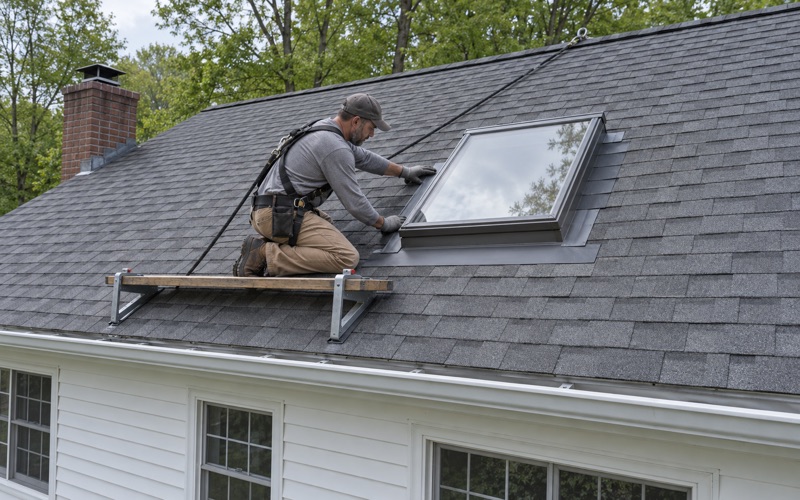
Skylights raise the same question from the other direction. The subcode bars a vent terminal directly beneath any window or other ventilating opening, so a curb-mounted or deck-mounted skylight set above an existing stack could create exactly the arrangement it forbids. We locate the stack on the roof plan before proposing any new opening in that plane.
Kinnelon Houses Built 1990 Through 2009
Two Decades of Building
The Census Bureau’s American Community Survey counts 608 Kinnelon homes built during the 1990s and 427 built during the 2000s, a combined 1,035 across those two decades. On that count the 1990s were the borough’s busiest building decade. Many of those houses are now at an age when an original asphalt roof is often near the end of its life.
We cannot tell from a construction year whether a particular house has a radon stack. We could not confirm the date the subcode’s construction rules began applying to Kinnelon, and a stack can also come from a system added after the house was built. So we read the roof itself, and if there is a stack on it, the estimate plans for it.
Detached Homes on Wooded Lots
Kinnelon’s housing is mostly detached and owner-occupied: the same survey counts 3,155 one-unit detached homes, and 3,117 of 3,348 occupied homes are lived in by their owners. Replacing the roof covering on a detached one- or two-family dwelling is ordinary maintenance under NJAC 5:23-2.7. Work on the deck or framing, solar, or an attached building is a different matter, and we confirm it with the borough first.
Many of these houses also sit among mature trees. Our estimates call out overhanging limbs, leaf-packed valleys and shaded, mossy slopes, because debris that collects around a roof penetration holds water against the flashing. A clean collar around the stack outlasts one buried under wet leaves every fall.
After a Storm
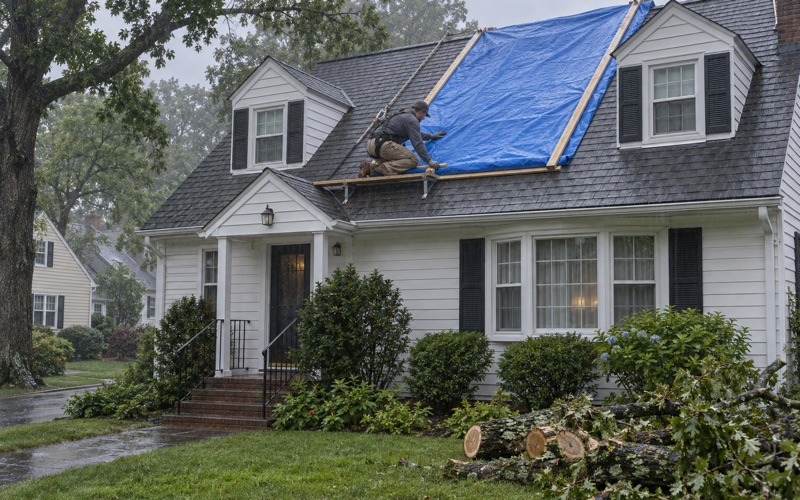
When wind lifts shingles or drops a limb, we tarp and make temporary repairs the same day, photographing the roof before anything is moved. Around a radon stack, a quick temporary seal keeps water out of the opening until the permanent flashing goes on.
We write up the damage with photos for your own claim, and the crew will meet the insurance adjuster on site if you ask. What the policy pays is between you and your insurer; our part is an accurate record of the roof, the stack and the flashing as we found them.
Contracts, Cleanup and Sale Reports
Our contracts follow New Jersey’s home improvement rules, including the three-day cancellation notice. If damaged decking turns up once the old roof is off, we photograph it and show you before replacing it, at a per-sheet price already set in the contract. At the end of every work day the driveway, yard and gutters are cleaned, with a magnet sweep for nails.
If you are selling a Kinnelon house, we can provide a written roof condition report to hand to the buyer’s inspector, and it notes any radon stack along with its flashing and measured height. A buyer who spots the pipe will ask about it, and a clear note from the roofer answers the roofing half of that question.
- 20+ Years on Local Roofs
- Itemized Written Scopes
- Same-Day Storm Tarping