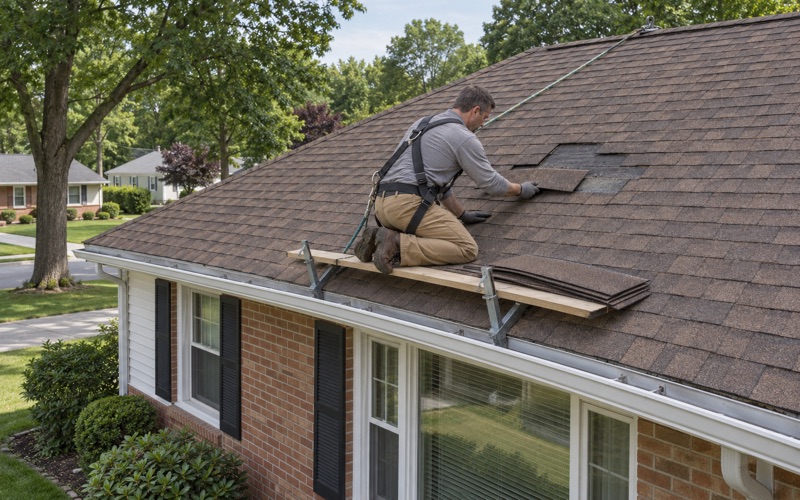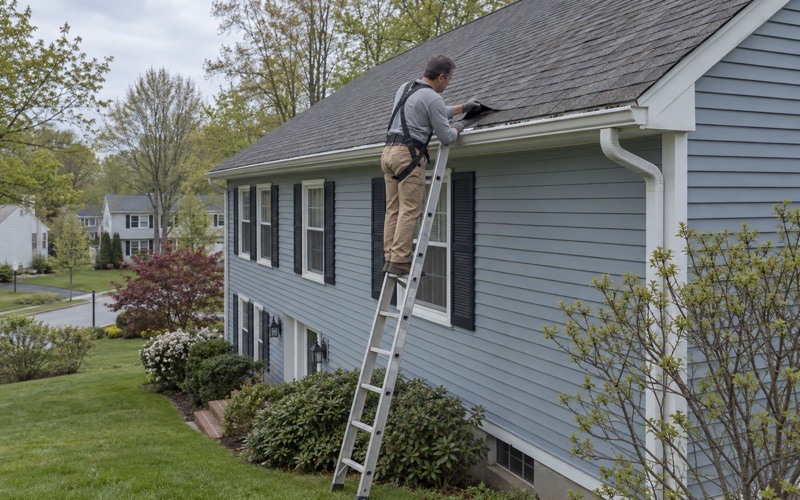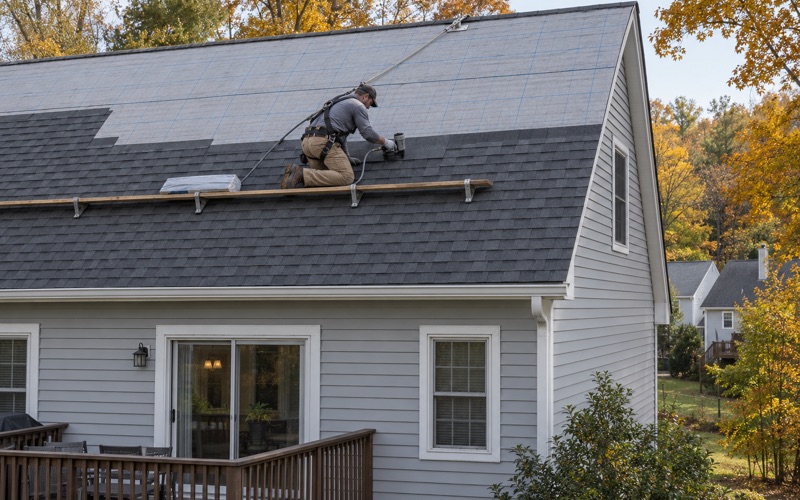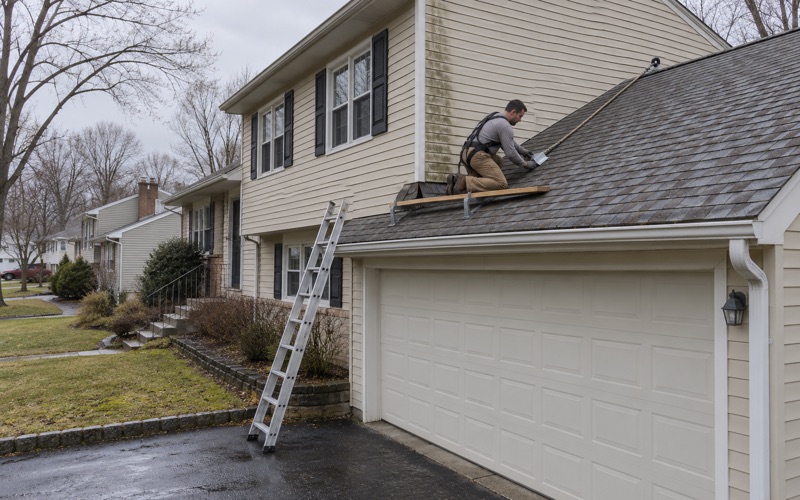
Parsippany Elite Roofing has handled roofing in Lincoln Park for more than 20 years, and the first thing we do on any call here is find out what the house actually needs. A leak gets traced from the attic as well as from the shingles, so we know where water enters before we put a price on anything. Repair comes up first, and replacement only when repair would not hold.
That order matters more in this borough than in most of Morris County. Some homeowners are weighing a county buyout or an elevation project, and a new roof on a house that may be bought and demolished, or lifted onto a new foundation, is money spent at the wrong moment. We ask about those plans before we write a full replacement scope.
Every scope we hand over breaks the job into separate lines for tear-off, decking, underlayment, flashing, ventilation and gutters, so a second estimate can be laid beside ours and compared line by line. Contracts follow New Jersey’s home improvement rules, including the three-day cancellation notice, and the crew cleans the driveway and yard at the end of each day with a magnet sweep for nails.
A Borough the County Counts by Flood Claims
290 Repetitive-Loss Properties Along the Pompton
Lincoln Park sits where the Pompton River meets the Passaic, and those two rivers form the borough’s line with Passaic and Essex counties. The Morris County Hazard Mitigation Plan 2025 counts 290 repetitive loss properties in the borough and another 133 severe repetitive loss properties, with 71 of them mitigated so far. Flood ranks High on the borough’s own hazard list.
The same annex records 3,265 flood loss claims and $62,787,068 paid on them, along with 619 flood insurance policies listed as in force. Those figures are county counts, not addresses, and nothing in them says which streets or houses are involved. What they tell a roofer is that a real share of the homes we see here have a flood history behind them.
Acquisition Comes First in the County’s Plan
The annex states that the borough will focus on acquisition as the primary mitigation action for these properties. In practice that means buying flood-prone homes from willing sellers, demolishing them and returning the land to open space. Morris County runs that work through its Flood Mitigation Program, set up after Hurricane Irene and funded by the county open space tax.
By June 2020 the county had made 26 buyout grants for Lincoln Park homes, and its release on two purchases that spring described the cause as chronic Pompton River flooding. A buyout is a river and land-use decision, not a roofing one. Our part is simply to know the program exists and to ask whether a house is in line for it.
Where the Floodplain Reaches Public Ground
The plan’s facility table puts the Lincoln Park Airport, the Two Bridges Sewerage Authority plant and the borough DPW inside the 1-percent floodplain, and its action list notes plainly that the airport lies in the 100-year floodplain. When public works and a sewer plant sit in the mapped flood area, the exposure is not limited to a handful of private lots.
None of that changes how a shingle is nailed. It changes the questions we ask at the kitchen table: whether the house has flooded before, whether an insurer or the county has been involved, and whether the owner expects the house to stay where it is. Those answers decide whether we quote a repair, a full replacement, or a holding plan.
Looking for roofing closer to Dover? See Roofing in Dover.
Ask About a Buyout or Elevation Before Replacing
Why a Full Replacement Can Wait
A complete tear-off and new roof is one of the largest checks a homeowner writes on a house. If that house is in a buyout application, it may be demolished once the sale closes, and the new roof goes with it. If it is in an elevation application, the structure will be lifted and worked on, and the timing of roof work belongs inside that project.
So we ask before we price a replacement, and we say plainly when the honest answer is to wait for the decision. That is the same repair-first habit we bring to every house, applied to the one question that weighs more heavily in Lincoln Park than in most towns we serve.
Keeping a Roof Sound While the Decision Is Pending
A pending application does not stop a roof from leaking. When an owner is waiting on the county or an elevation grant, we look at targeted repairs: replacing a cracked pipe boot, replacing a run of blown-off shingles, rebuilding a section of step flashing at a wall. The aim is a dry attic for the months ahead, not a full investment in a building with an uncertain future.
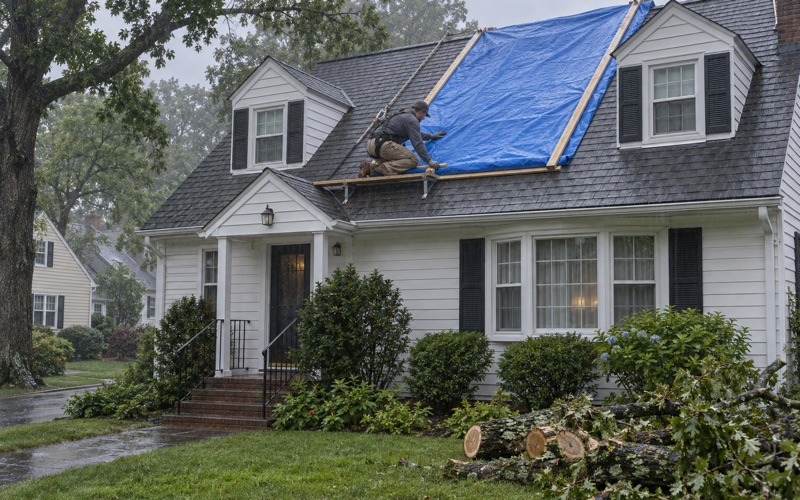
After a wind storm we tarp the same day and photograph the damage before anything is moved. Those photos and a written description go to the owner for their own claim, and if the owner asks, our crew will meet the insurance adjuster at the house. What any policy pays is between the owner and the insurer, and we make no promise about it.
Houses That Are Staying Put
For a house that is not in any application, the work is ordinary roofing. On a detached one- or two-family house, replacing the roof covering is ordinary maintenance under New Jersey Administrative Code section 5:23-2.7, which keeps the paperwork light. The Building Department on Chapel Hill Road keeps a file on every property showing the permits taken, which is worth checking before a sale.
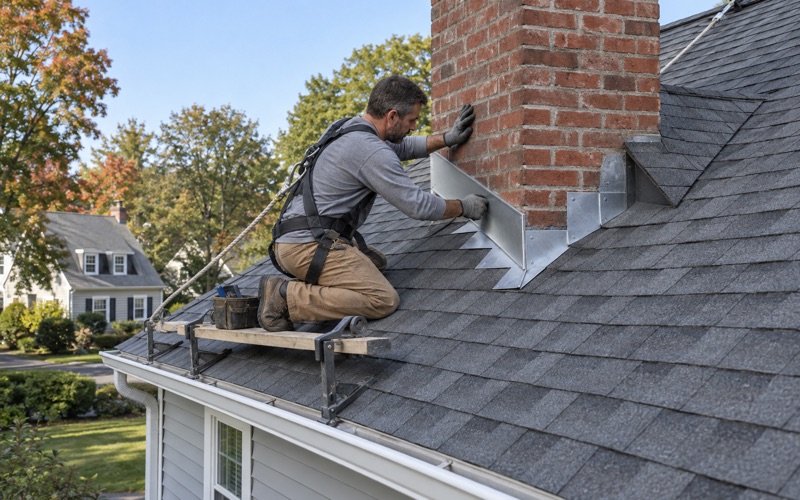
When an owner is selling, we write up a roof condition report that can be handed to the buyer’s inspector. On homes that will stay, our replacements include new step, counter and chimney flashing rather than reused metal, and an attic ventilation check, because a roof that cannot breathe wears out from below.
The August 19, 2025 Flood Map and the Class 5 Discount
A New Effective Map for the Borough
FEMA’s current effective flood map for Lincoln Park took effect on August 19, 2025, according to the agency’s Community Status Book. The borough has been in the regular National Flood Insurance Program since 1971, so this is not its first map. A new effective date is still a reason for an owner to look up where their own lot now sits.
We do not read flood maps for customers or tell anyone what zone they are in; that belongs with the borough and the insurer. What the map date does for us is explain why elevation, flood insurance and buyouts can come up in the same conversation as a roof leak.
What Class 5 Means for Owners
Lincoln Park entered FEMA’s Community Rating System on May 1, 2016, and holds Community Rating System Class 5, which carries a 25 percent discount on flood insurance premiums. The rating rewards floodplain management that goes beyond the federal minimum, and the county annex describes the borough’s program as exceeding that minimum. The annex also dates the borough’s last Community Assistance Visit to March 20, 2017.
Holding that class depends on how the borough manages its floodplain, which is one more reason we keep roof work and flood work in their own lanes. A flood policy and a homeowners policy are separate contracts, and we never tell an owner which one, if either, will respond to a roof problem.
Weather Here Comes From Mount Holly
Storm forecasts for Lincoln Park come from the National Weather Service office in Mount Holly, which places the borough in forecast zone NJZ008, Morris. The county plan rates severe weather and severe winter storms as Medium hazards here, below flood. Those are the events that actually reach a roof: wind that lifts shingle tabs and winter ice that builds at the eaves.
On older capes and split-levels with a history of ice dams, we add a self-adhering eave membrane to ASTM D1970 and check the attic ventilation rather than simply laying new shingles. For wind, we look at the shingle’s rating, such as ASTM D3161 Class F, and at how the drip edge and starter course are fastened.
What a Roof Can Do Here, and the Floodplain Office
A Roof Handles Rain, Not River Water
A roof sheds rain and snow from above. River flooding is a matter of the structure and its lower floors, and no shingle, membrane or flashing detail changes what the Pompton does when it leaves its banks. We say that plainly, because a roofing sales pitch that hints otherwise is selling the wrong thing to an owner who may have already lived through a flood.
Where a roof earns its keep is in ordinary rain. Seamless aluminum gutters and leaders that carry roof water well away from the foundation and an attic that stays dry keep the upper house in good shape. Leaf-packed valleys and overhanging limbs on wooded lots are called out in the estimate so the owner knows what to keep clear.
The Construction Department Runs Floodplain Management
The county annex names the borough’s Construction Department as the office responsible for floodplain management and lists Sal Marino as floodplain administrator. The local flood damage prevention ordinance is Chapter 17, Article 10 of the borough code, last amended in 2012. Any question about how flood rules apply to work on a specific house belongs with that office.
We do not interpret that ordinance for customers, and we do not tell an owner how roof work is treated under it. If a house has a flood history or an open mitigation application, we suggest the owner call the Construction Department before signing a replacement contract, and we will hold the schedule until they have an answer.
Registration and Decking on Older Houses
The borough’s Building Department says it requires contractors to be registered with the State of New Jersey as home improvement contractors for building work. New Jersey has no separate roofing license, so that registration is the credential an owner should ask any roofer to show. Asking for it before signing takes a minute and settles who is doing the work.
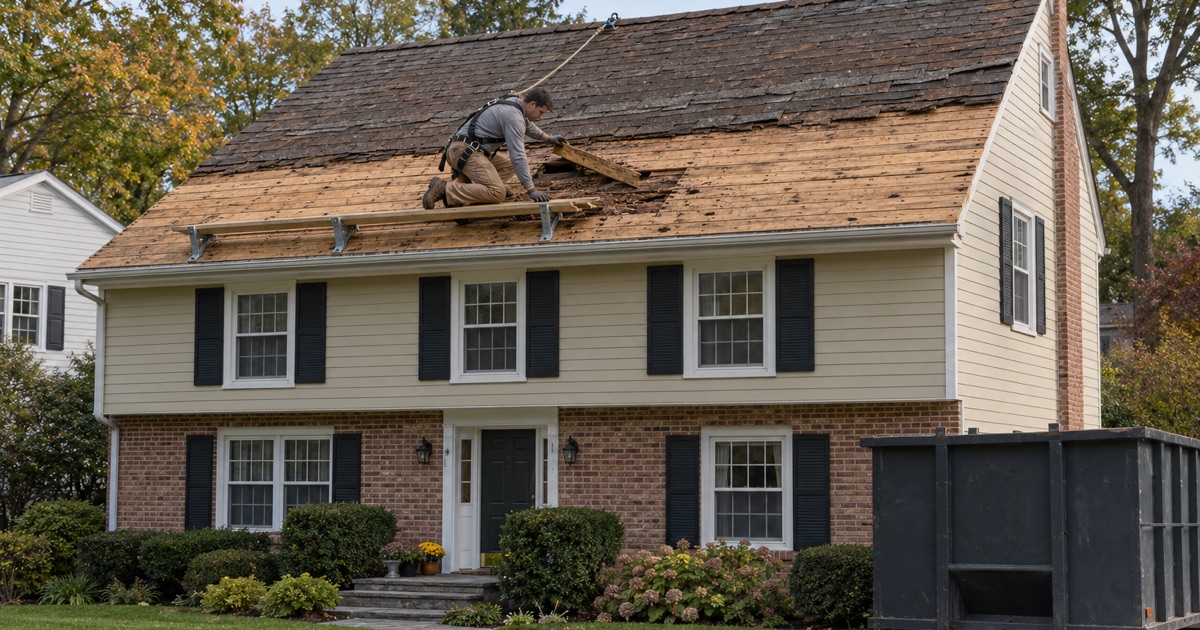
The Census counts 983 of the borough’s housing units as built during the 1950s and 1960s, and another 519 from 1939 or earlier. Older decking often shows damage only once the old roof is off, so we photograph any bad sheets, show them to the owner, and replace them at the per-sheet price already written into the contract.
- 20+ Years on Local Roofs
- Itemized Written Scopes
- Same-Day Storm Tarping