Parsippany Elite Roofing brings more than 20 years to roofing in Little Falls, and many of the calls we take here begin with a ceiling stain or a few shingles in the yard. Before anyone talks about price, we go up on the roof and into the attic, because water usually runs along a rafter or a deck seam before it shows indoors. Finding the true entry point is what keeps a repair from turning into a second visit.
Our first job on any older roof is to say plainly whether it can be repaired. A slipped tab, a cracked pipe boot or a lifted run of step flashing is a repair, and we say so before replacement comes up at all. When a roof really is finished, you get a written scope that breaks tear-off, decking, underlayment, flashing, ventilation and gutters into separate lines, so a second estimate can be laid beside ours and compared item by item.
Little Falls also offers something many towns do not: a township loan program that can pay for a roof on an income-eligible home. For owners who may be eligible, it changes the order in which things should happen, and getting that order wrong can forfeit the help. Below we cover the roofing work itself, how the program treats roofs, and the households and buildings it was designed around.
Roof Repair and Replacement in Little Falls
Leaks Traced From the Attic Side
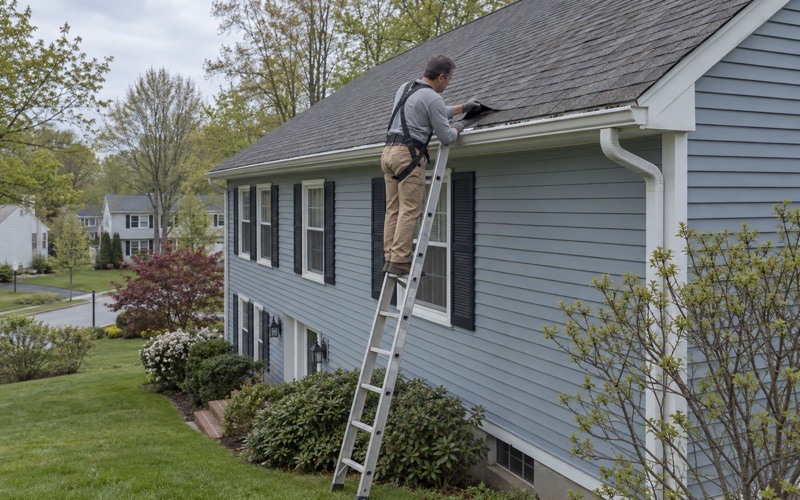
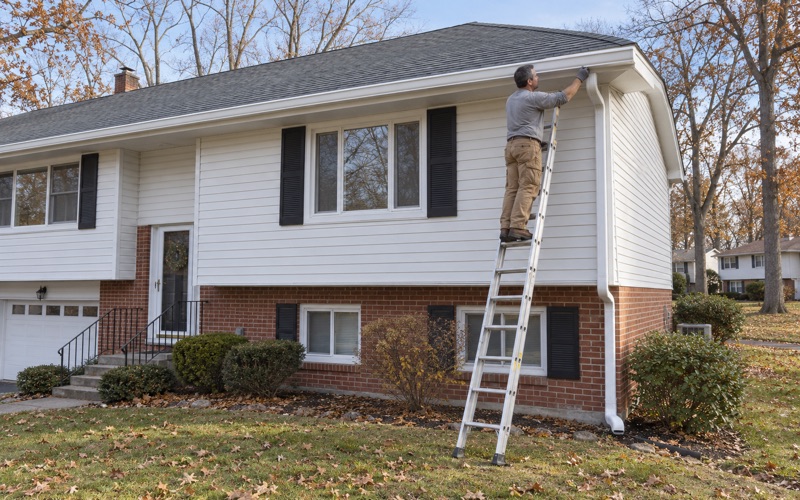
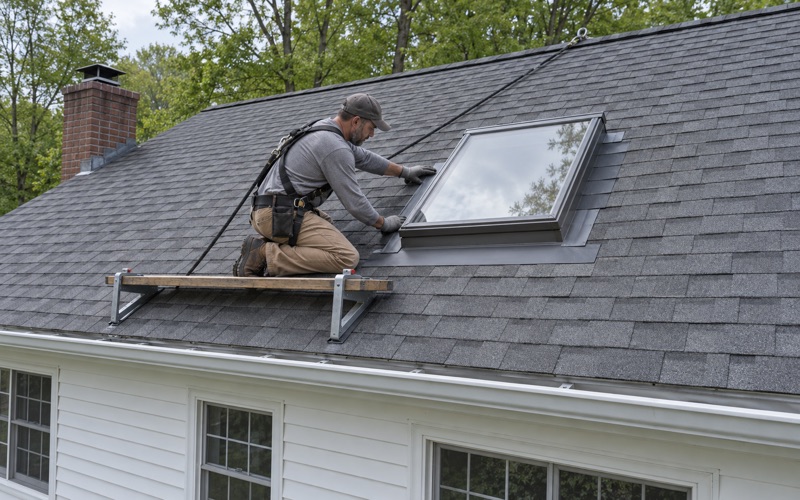
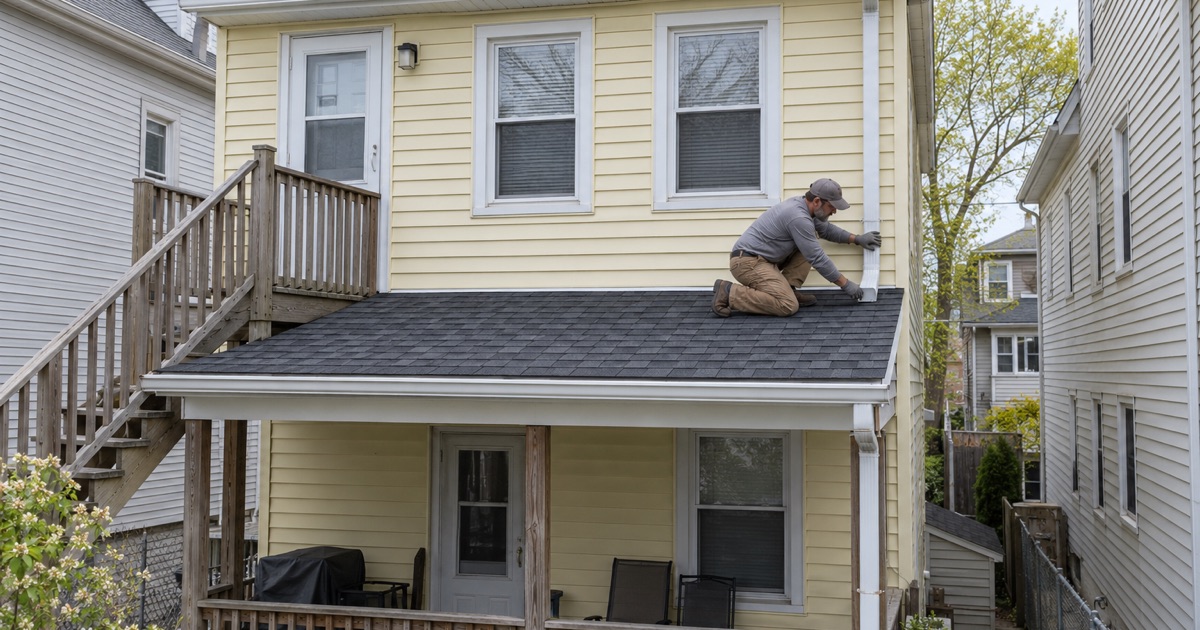
A leak call here means two inspections, not one. We check the shingles, valleys and flashing from above, then go into the attic with a light to find wet sheathing, stained rafters or rusty nail tips. Water that shows up over a bedroom closet often entered several feet uphill at a vent or a chimney, and pricing the wrong spot fixes nothing.
Once the path is clear, the estimate names the cause and the fix together. If the problem is one failed pipe boot, that is what we write up. If the attic shows wet decking across a whole slope, we explain what that means for the roof’s remaining life, and you decide the next step with the evidence in front of you.
Flashing and Ventilation on a Replacement
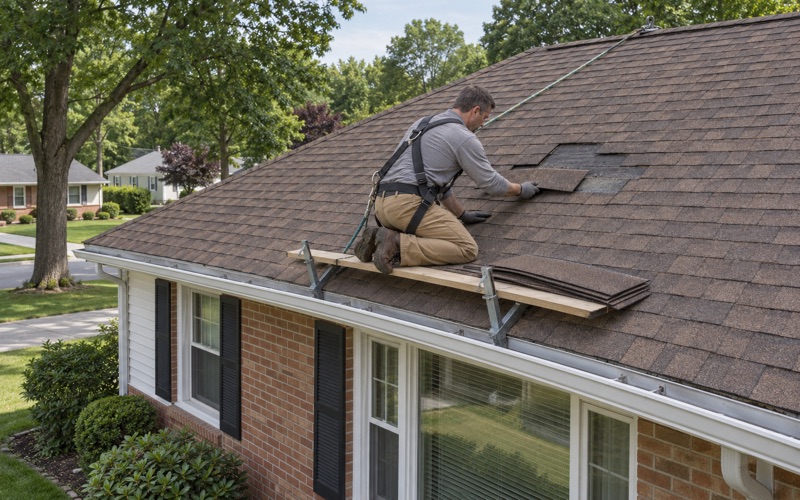
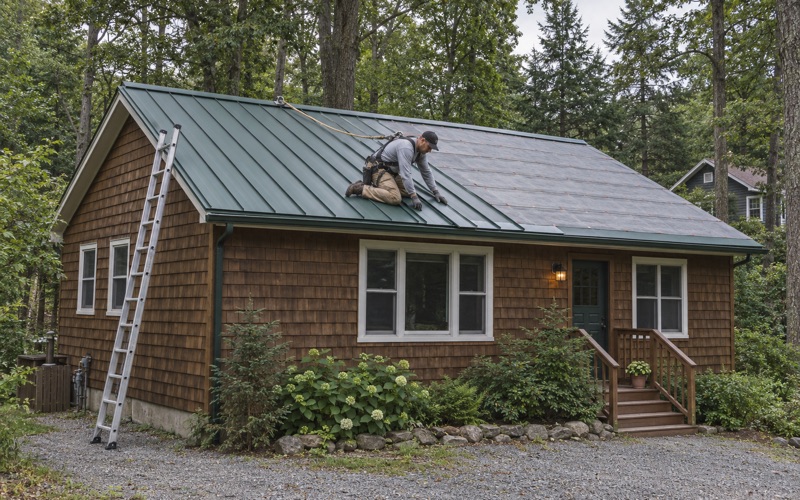
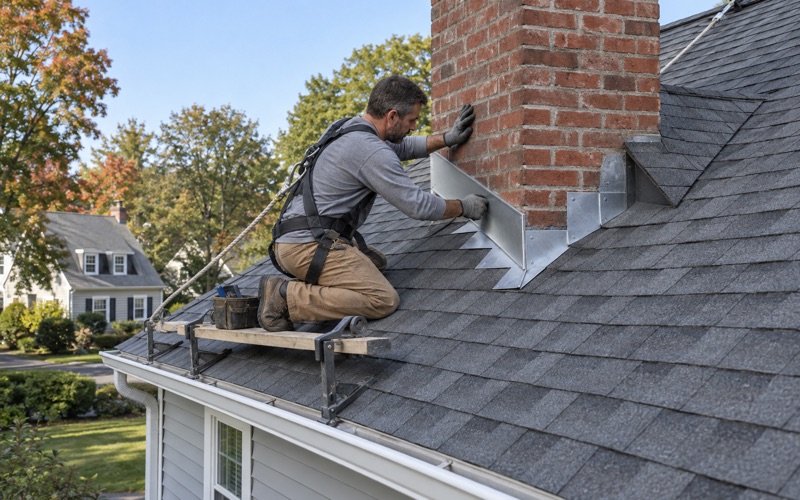
When a roof is replaced, we replace the step, counter and chimney flashing with it rather than bending old metal back under new shingles. Reused flashing is one of the most common reasons a new roof leaks at a sidewall or chimney within a few seasons. Drip edge goes on at the eaves and rakes, and every pipe boot is new as well.
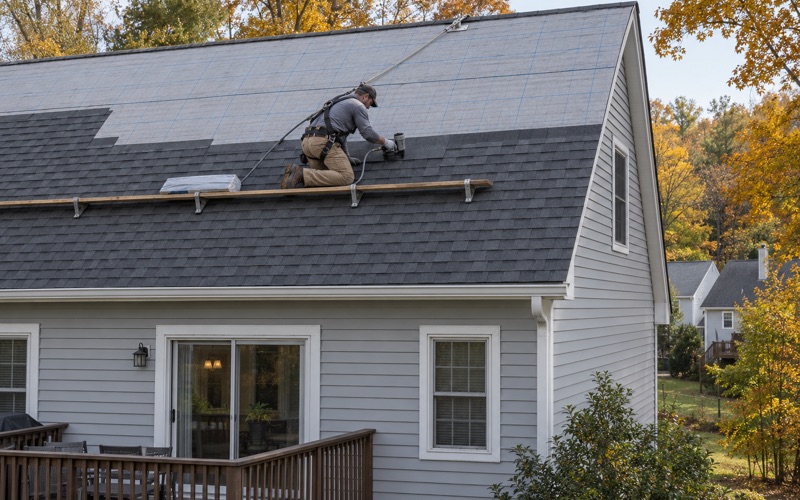
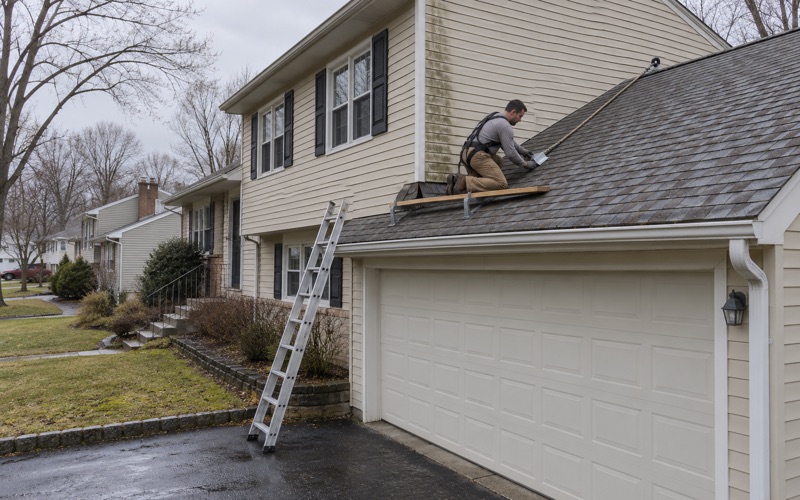
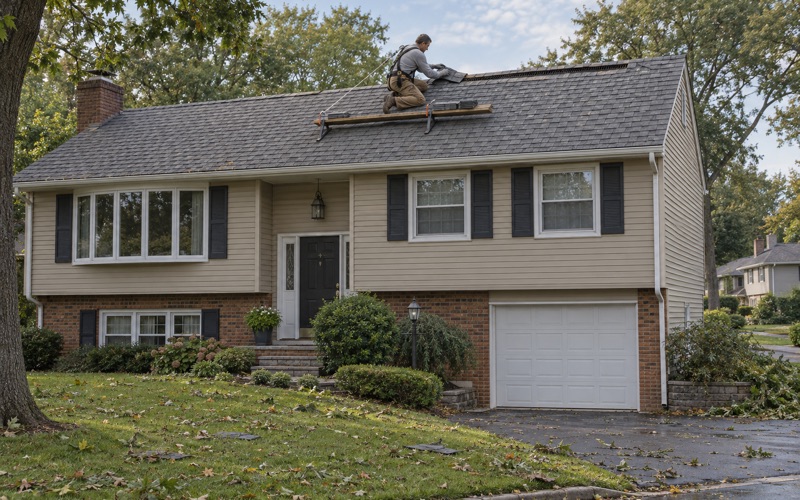
Every replacement also gets an attic ventilation check, weighing intake at the soffits against exhaust at the ridge. A roof that cannot breathe traps heat and moisture under the deck, and the shingles age from beneath long before their rated life. On older capes and split-levels where ice dams build at the eaves, we add a self-adhering eave membrane and look hard at airflow instead of simply laying new shingles.
Decking You See Before It Is Replaced
Nobody knows the condition of the plywood or boards until the old roof is off. When we find rotted or delaminated decking, we photograph it and show you before any sheet is replaced, and the per-sheet price is already set in the contract. That keeps a mid-job discovery from becoming an open-ended bill.
The same goes for anything else that changes once tear-off starts. If a chimney turns out to need a cricket behind it, or its crown has cracked through, we show you what we found and price it as its own line rather than folding it into a total you cannot check.
Looking for roofing closer to Totowa? See Roofing in Totowa.
The Township’s Home Improvement Program and Roofs
What the Program Is
The Little Falls Home Improvement Program was created by the Township to help properties occupied by low- and moderate-income households correct health, safety and code problems in their major housing systems. It is administered under contract by Community Grants, Planning & Housing, which runs it day to day. The program belongs to Little Falls Township itself, so that is where to look for it.
The program lends up to $22,000 for an eligible owner-occupied single-family home, and up to $22,000 per unit for eligible owner-occupied multi-family properties and investor rental units. Occupants must fall below the state Department of Community Affairs moderate income limits. We have not seen this year’s figures, so the current numbers should come straight from the program rather than from any contractor.
Where a Roof Fits Among the Major Systems
To qualify, a house needs at least one major system in need of replacement or substantial repair. The program handout lists the roof first, followed by electrical, heating, plumbing, load-bearing structure, and windows or lead paint remediation. A roof that leaks, curls or has outlived its shingles is the kind of condition the program was set up to correct.
Some work falls outside it entirely. Cosmetic projects, additions, conversions, detached garages and sheds, solar panels and generators are ineligible, and so is anything the owner does personally. A worn roof on a detached garage would not count, even when the roof on the house would.
Older Houses Across a Small Township
Little Falls covers 2.87 square miles and takes its name from a waterfall on the Passaic River at a dam near Beattie Mill. Within that small area sit Great Notch to the east, Singac to the west and the downtown known as the Center of Town.
Much of the housing is old enough that roof condition is a live question. Of 5,832 homes in the 2024 American Community Survey five-year estimates, 1,281 were built in 1939 or earlier and another 1,607 date from the 1950s. Houses of that age have often been through several roofs, and some still carry layers that must all come off together.
A 0% Loan, and Why You Apply Before You Sign
Repaid at Sale, Not Forgiven
Every program loan takes the form of a 0% loan with no monthly payment, deferred until sale or transfer of title. Owner-occupied single-family homes are secured by a mortgage and note, while multi-family and investor properties add a deed restriction. It is real money owed back to the program, simply not owed until the property changes hands.
Homeowner’s insurance has to cover the existing mortgage plus $22,000, which is worth confirming on your policy before you apply. Investor-only properties work differently: the owner pays 20% of construction cost at contract signing and the remainder is a forgivable loan. Anyone living in the house should plan on repaying the full amount when the home is eventually sold.
The Program Writes the Scope and Picks by Bid
The sequence runs through the program, not through a roofer. A program inspector visits, writes up the needed work with a cost estimate, and the program circulates bid packages to approved contractors. Generally the lowest responsible bid from a qualified contractor is chosen, an owner who prefers a higher bidder pays the difference, and the municipality pays the contractor directly after program inspection approval.
We have not seen the current approved list, and we cannot speed up or steer an application. What we can offer an owner is an honest read on the roof itself: whether it needs replacement or substantial repair, or whether a smaller fix will hold. That answer helps decide whether an application is worth the time.
Do Not Start the Roof First
This is the step that catches people. The program handout states plainly that it does not reimburse for previously completed work, or for work that is currently underway. An owner who signs with a roofer in a hurry, has the old shingles torn off and only then learns about the program has likely lost the chance to use it for that roof.
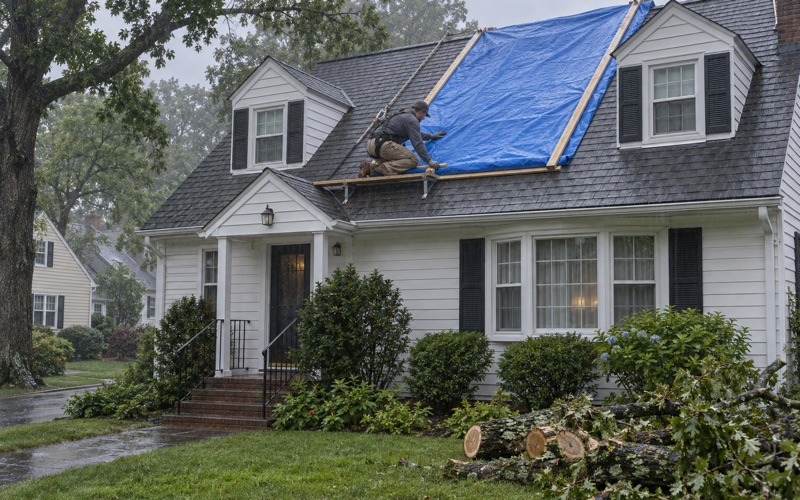
Open permits from recent work also have to be closed out before an application goes in. So if your household income may fall under the limits and the roof needs replacing, contact Community Grants, Planning & Housing before signing any roofing contract, ours included. If water is coming in now, a tarp can protect the house while you ask the program how temporary protection is treated.
Two-Family and Small Rental Buildings in Little Falls
A Real Stock of Small Multi-Family Houses
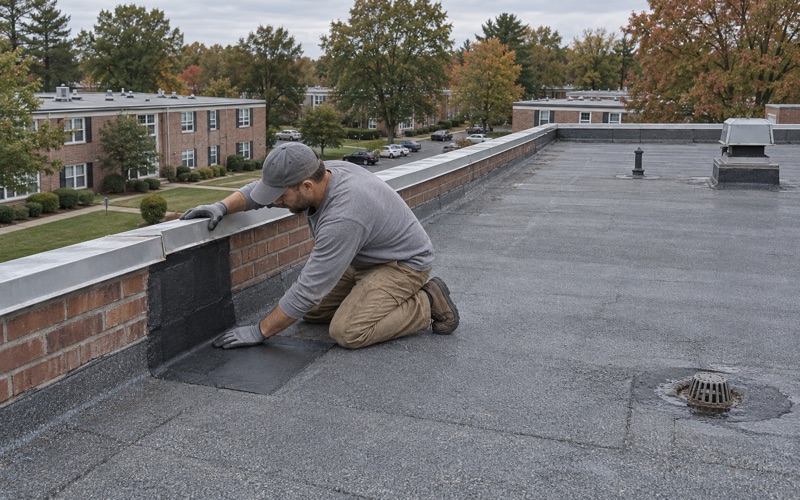
Little Falls has a sizable stock of small multi-family housing. The census estimates place 828 units, about 14.2% of the total, among buildings of two to four units, and 225 owner-occupied units sit in two-unit buildings. With 28.8% of occupied homes rented, a fair share of roofs here cover more than one household.
The program anticipates this. An owner who lives in one unit of a building with two or more units may get funding for the income-eligible units. On two-family houses with one shared roof, that per-unit structure can make a single replacement easier to finance.
Rentals Carry Conditions
Rental units come with conditions attached. Owners of rental property do not themselves need to be income-eligible, but rents must stay affordable and rentals carry a ten-year affordability period under a deed restriction. That is a business decision to make with open eyes, separate from the question of what the roof needs.
For an investor-only building, the 20% due at contract signing is cash to plan for ahead of time. Our written scope of the roof’s condition and likely work helps an owner judge whether the program’s terms suit that property before the paperwork starts, even though the program’s own inspector sets the scope it bids.
Working Around Tenants and Closings
A two-family or small rental roof has its own logistics: two households, shared gutters and leaders, more cars in the driveway. We schedule around that and clean the driveway, yard and gutters at the end of each work day, including a magnet sweep for roofing nails.
When a building is being sold, we can write a roof condition report the seller can hand to the buyer’s inspector. Since a program loan comes due at transfer of title, a clear record of the roof’s condition is useful to everyone at the closing table.
- 20+ Years on Local Roofs
- Itemized Written Scopes
- Same-Day Storm Tarping