Parsippany Elite Roofing installs metal roofing in Parsippany, NJ and has worked on roofs across the area for more than 20 years, serving surrounding cities including Hanover, East Hanover, Denville, Florham Park and West Caldwell. Metal suits owners who plan to stay in a home for the long term and want a roof that sheds snow, resists wind and holds its finish for decades. It also suits smaller areas, such as porch roofs, bay windows and dormers, where a metal accent sets off the house.
A metal roof only performs as well as the details underneath and around it. Panels expand and contract with every change in temperature, snow slides off in sheets, and every wall, chimney and vent needs flashing designed for metal rather than shingles. Getting those details right is what separates a quiet, long-lasting roof from one that leaks at the seams.
Our estimates for metal work list the tear-off, decking, underlayment, panels, flashing and trim as separate lines. You can see what is included, compare it with other quotes, and decide on the panel style and color with full information.
Types of Metal Roofing
Standing Seam Metal Roofs
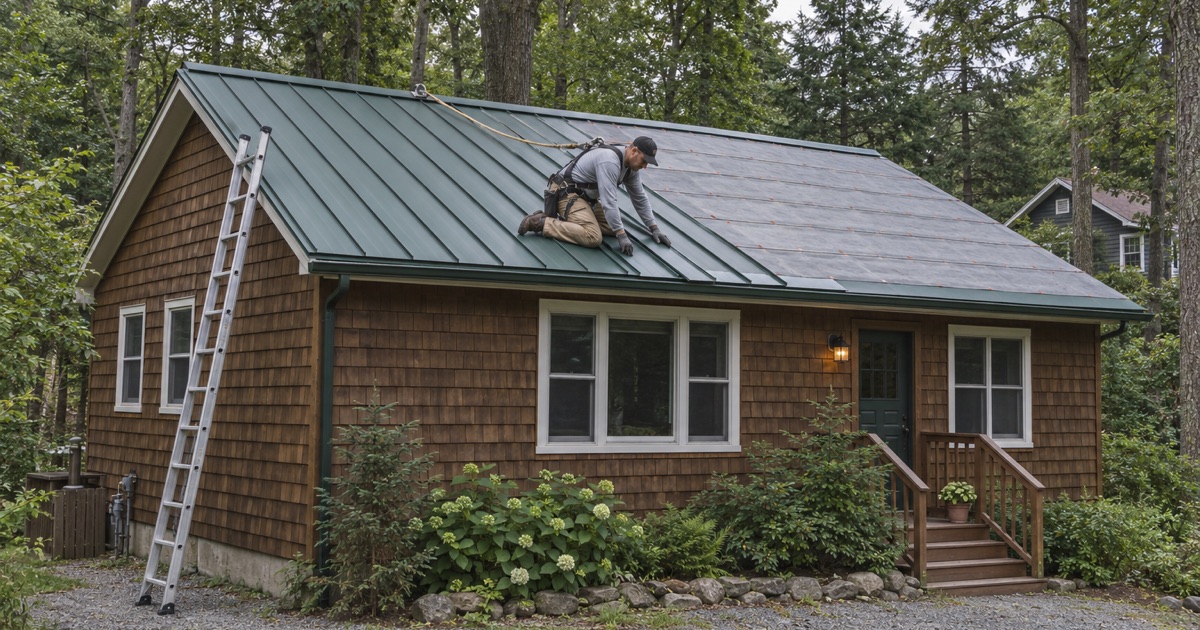
Standing seam is the most common choice for homes. Long panels run from the ridge to the eave with raised seams that lock together above the flat of the roof. The fasteners are hidden under the seams, so there are no exposed screws to loosen or leak.
Because the panels are attached with clips that allow them to slide, they can expand and contract without tearing at the fasteners. That movement is a big part of why standing seam lasts as long as it does. The clean vertical lines also suit both modern homes and traditional colonials.
Exposed-Fastener Panels
Exposed-fastener metal panels are screwed directly through the face of the panel into the decking or purlins. They cost less than standing seam and install quickly. They are a common choice for garages, sheds and outbuildings.
The trade-off is maintenance. The rubber washers under each screw age and the screws can loosen as the panels move. On a house, we usually recommend standing seam, and we explain the difference in long-term upkeep before you decide.
Metal Accent Roofs
Many homes use metal only on a porch roof, bay window, entry canopy or low dormer. These small roofs often sit below a larger shingle roof, and they take a lot of water and snow from above. Metal handles that load well and adds a distinctive look.
The key is the transition where the metal meets the wall or the shingle roof above it. We flash those joints so water from the main roof runs onto the metal and off the edge. A poorly flashed accent roof is one of the most common sources of leaks into front walls.
Details That Make a Metal Roof Last
Underlayment and Decking
Metal panels need a smooth, solid deck and a high-temperature underlayment beneath them. We tear off the old roof, replace any damaged decking and install synthetic underlayment over the entire deck. Self-adhering ice and water barrier goes along the eaves, in valleys and around penetrations.
Any decking we replace is photographed and shown to you first. Replacement sheets are billed at the per-sheet price written in the contract. That keeps the hidden part of the job transparent.
Flashing Built for Metal
Flashing on a metal roof is bent from matching metal and designed to let the panels move. Ridge caps, eave trim, rake trim, valley metal and wall flashing are all fitted to the panel profile. Around chimneys, we install a cricket where needed and counter flashing cut into the masonry.
Pipe boots and vents need flexible flashing that fits the panel shape. A rigid boot designed for shingles will split as the metal moves. We use boots made for metal panels and position them away from the seams wherever possible.
Snow Guards and Ice
Metal sheds snow quickly, and a full slope of snow can slide off the eave at once. Over doors, walkways, decks and lower roofs, that can be dangerous. Snow guards fastened to the seams hold the snow in place until it melts.
We plan the snow guard layout based on the roof pitch, the length of the panels and what sits below the eave. Ice dams are also less common on metal, but attic ventilation still matters. We check intake and exhaust on every metal installation.
Choosing Metal for Your Home
Durability and Service Life
A well-installed metal roof can last far longer than an asphalt shingle roof. The finish resists fading and chalking, and the panels do not curl, crack or lose granules. Wind resistance is strong because the panels interlock along their full length.
The upfront cost is higher than shingles. For owners planning to stay many years, the longer service life can balance that out. We give you a straight comparison so you can weigh the two.
Colors, Finishes and Appearance
Metal panels come in a wide range of colors, from dark bronze and charcoal to traditional red and green. Painted finishes are baked on at the factory and are designed to hold their color for many years. We bring samples so you can see them against your siding and trim.
In historic districts and some neighborhoods, the appearance of a new roof may be reviewed. We point that out when it applies, so you can check with your local office before choosing a color. Standing seam often fits well on older homes because its lines suggest traditional metal roofs.
Metal Roofs and Solar Panels
Standing seam is one of the best roofs for solar. Clamps grip the raised seams, so panels can be mounted without drilling through the roof. That means fewer penetrations and fewer places for leaks.
If you plan to add solar, we can plan seam spacing and panel layout with your installer. If solar panels are already on your current roof, their removal and reinstallation are built into the schedule. That avoids surprises on installation day.
- 20+ Years on Local Roofs
- Itemized Written Scopes
- Same-Day Storm Tarping