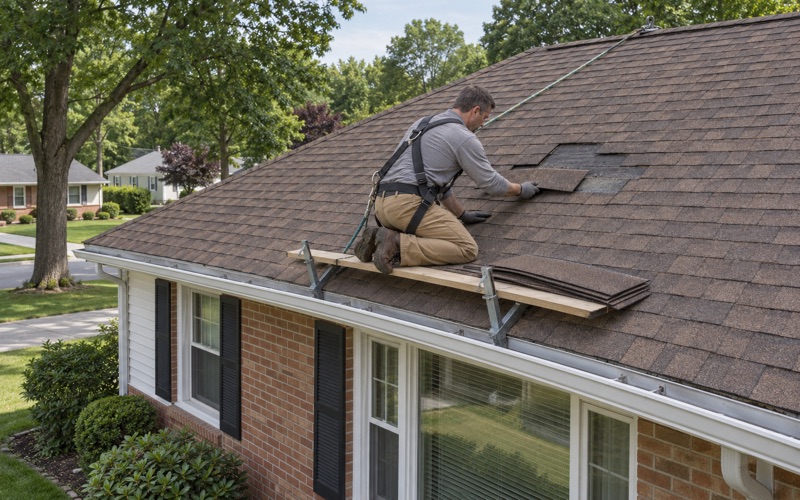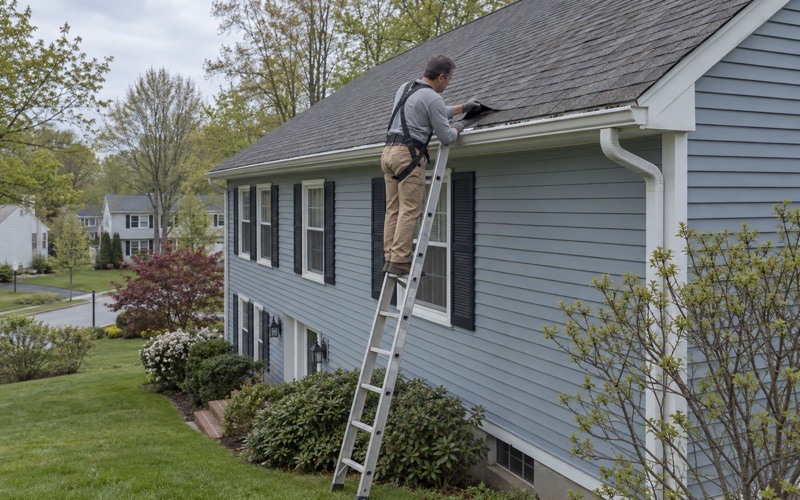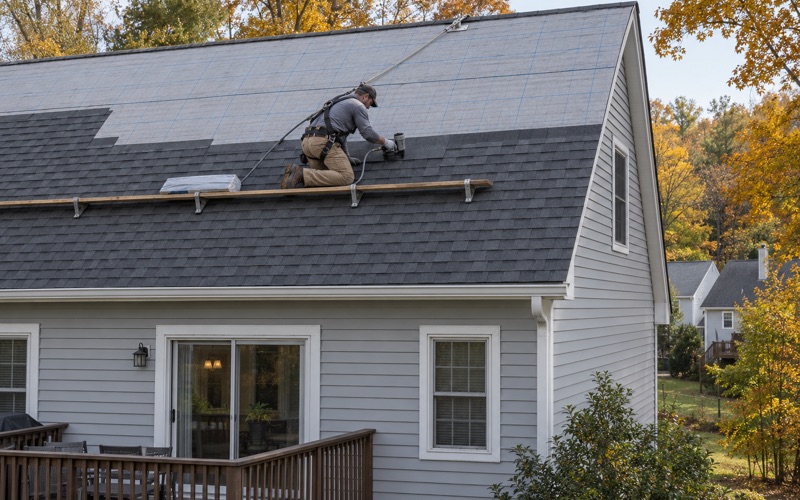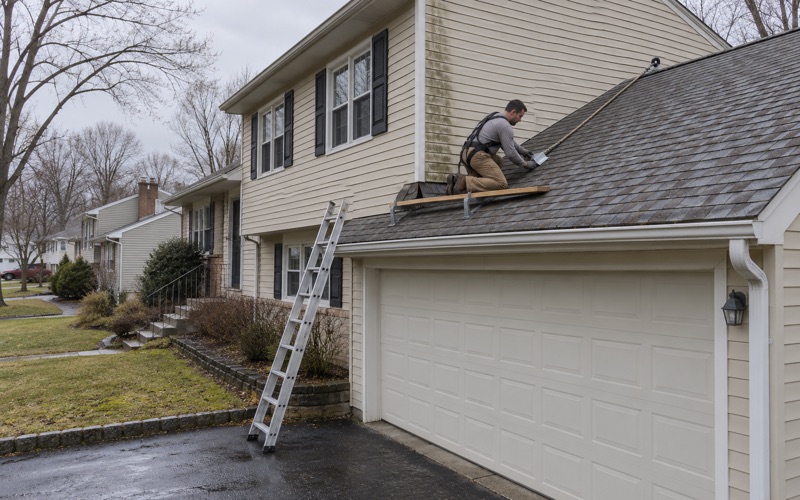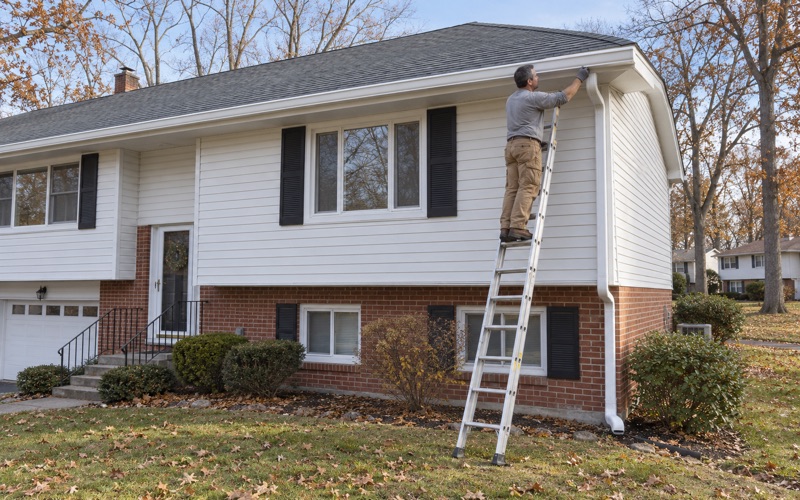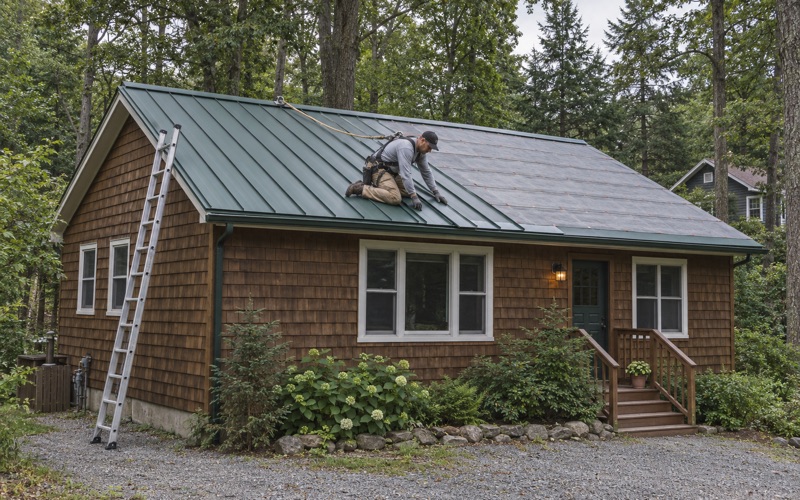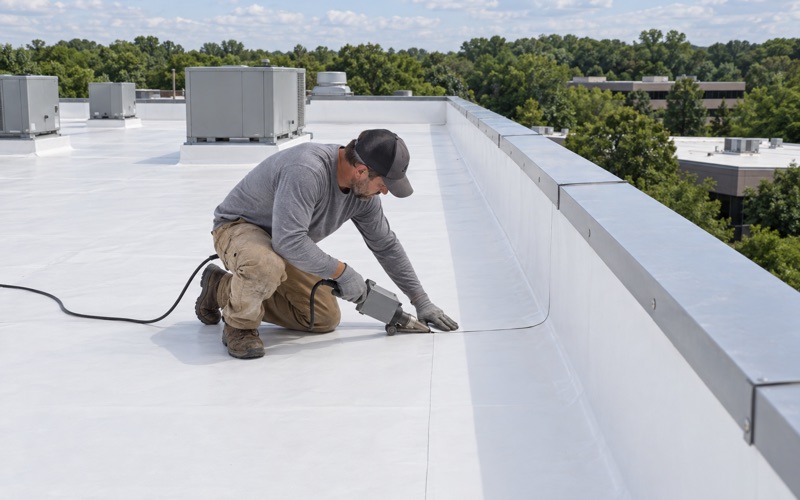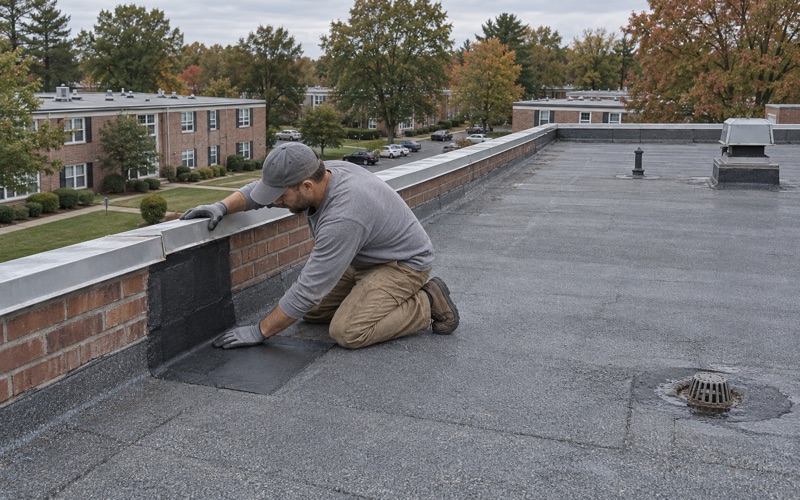
Parsippany Elite Roofing has handled roofing in New Providence for detached houses, townhouses and condominium buildings, drawing on more than 20 years of tearing off, repairing and rebuilding roofs across North Jersey. Most calls start with a stain on a ceiling or a missing shingle on the lawn. The harder question, especially in an attached home, is who has the authority to hire anyone to fix it.
That is why our first visit covers two things at once. We go into the attic as well as onto the roof, so the water is traced to the point where it actually enters before a price is attached to anything. And if the home sits inside a townhouse or condominium community, we check the association’s documents to see who holds the roof before any estimate is written.
On a detached house the owner decides, and we give a straight answer on whether the roof can be repaired before replacement comes up at all. On an attached home the answer may run through a board, a property manager and a reserve fund. This page walks through that second path, because it is the one that changes how a leak gets fixed.
Whose Roof Is It in a New Providence Townhouse or Condominium?
New Providence is mostly a borough of detached houses, but it holds a meaningful number of owned attached homes. The Census Bureau’s 2024 American Community Survey five-year estimates count 415 owner-occupied units outside detached and two-unit houses: 165 single-family attached homes and 168 units in buildings of 50 or more, with the rest in smaller multi-unit buildings. Those figures are estimates with margins of error, but they describe a real share of the borough’s owners.
Named Communities and What Their Listings Say
Several owner communities show up on public listings. Murray Hill Square dates from 1983, and one listing gives an association fee of about $786 a month with exterior maintenance, common-area maintenance and snow removal among its inclusions. Foley Square at Murray Hill brought 22 townhomes on South Street to market starting in 2013, and Central Villas is a set of townhomes built this year by Summit General Construction, listed with an HOA fee of $785 a month.
None of those listings says who maintains or replaces the roof, and we have not read any of these communities’ governing documents. A fee that lists exterior maintenance tells you the association does some outside work, but it does not say whether that work reaches the shingles, the decking or a full replacement. The listing is a starting point, never the answer.
The Master Deed Decides
In a condominium the master deed defines which parts of the building are common elements and which belong to each unit. In a townhouse community the declaration does the same job, and the split varies widely. One community may treat every roof as a common element, while another leaves the covering over each unit to that unit’s owner.
Where the roof is a common element, New Jersey’s Condominium Act, at New Jersey Statutes Annotated 46:8B-18, bars a unit owner from contracting for common-element repair except through the association. So when a New Providence condo owner calls us about a leak, the first thing we ask for is the master deed or the management company’s contact, and we put that answer in writing before we price anything.
Looking for roofing closer to Woodland Park? See Roofing in Woodland Park.
What the 2024 Reserve-Study Law Asks of Associations
Senate Bill 2760, signed in January 2024, amended the Planned Real Estate Development Full Disclosure Act. Under New Jersey Statutes Annotated 45:22A-44.2, every planned-development association must undertake and fund a capital reserve study covering the common-area components it is obligated to maintain. The state Department of Community Affairs says the rule applies to all such associations, not only those with buildings covered by the structural-inspection parts of the same law.
Who Prepares the Study
The study must be performed or overseen by a reserve specialist credentialed through the Community Associations Institute, or by an engineer or architect licensed by the state. Associations whose common-area capital assets total less than $25,000 are exempt. An association that had no reserve study in the five years before January 8, 2024 had one year to get one, and one formed after that date must get its study within two years after owners elect a majority of the board.
Roofs are named explicitly. In its published questions and answers on the law, the Department of Community Affairs lists roofs among its examples of common-area assets. For a community whose documents make the roof a common element, that puts the roof squarely inside the study, where its physical condition has to be assessed.
The 30-Year Funding Plan
The study must include a proposed 30-year funding plan, and under 45:22A-44.3 the association is expected to fund it. A roof is usually among the larger lines in such a plan, because it wears out on a rough schedule and is costly to replace all at once. The plan is where a board decides, years ahead, roughly when the roof comes off and how the money will be there.
When a board is commissioning or refreshing its study, we can walk the roofs and give the reserve specialist or engineer a plain account of what we find: shingle wear, flashing condition, ventilation, and signs of decking trouble seen from the attic side. We do not write the study and we do not set its numbers. That work belongs to the professional the law names.
The 85 Percent Notice, Special Assessments and Buyers
The funding section gives older associations a transition. An association that existed on January 8, 2024 may fund 85 percent of its study’s plan, for no more than five fiscal years, but only after issuing a notice printed in 20-point bold type that states the year and amount of any special assessment or loan it anticipates. An association created after that date has no such option and must fund to its study.
What a Buyer Receives
That notice travels with a sale. A seller in an association funding at the reduced level must give the buyer a copy before the contract is signed, so anyone shopping for a New Providence townhouse or condo can see the year and amount of any assessment the board expects. It is worth asking for it, along with the current reserve study, before committing.
Sellers can help that conversation along. For a home going on the market we write a roof condition report the seller can pass to the buyer’s inspector. On an attached unit that report can describe what is visible, but whether the roof is the buyer’s problem or the association’s still comes down to the master deed.
How a Special Assessment Reaches the Roof
When reserves fall short of what a roof replacement costs, a board typically covers the gap with a special assessment on owners or a loan, which is what the 20-point notice is meant to disclose. A plan funded to its study is the board’s way of avoiding that letter. Either way, the decision belongs to the board, and an owner’s part is to read the notices and ask questions at meetings.
One more point is easy to miss. The Department of Community Affairs states that it does not oversee owner-controlled associations on whether a board complies with the reserve-study sections. If you think your board’s roof planning is off track, the route runs through the association’s own governance, not a state inspector.
Reporting a Leak When the Association Holds the Roof
Water does not wait for a board meeting, so a leak in an attached home needs two tracks running at once: protecting the unit and getting the report to whoever controls the roof. The owner who sees the stain is often not the person who can hire the repair, and the order of calls matters.
Call the Board or Manager First
Report the leak in writing to the property manager or board, with the date, the room and photos of the ceiling. If the master deed makes the roof a common element, the association arranges the repair, and we can be the contractor it calls. In that case our estimate goes to the board, and with its agreement we keep the unit owner informed of what we find.
Ask, too, what your HO-6 policy covers inside the unit. Damage to ceilings, drywall and finishes may fall under your own policy, the association’s master policy or neither, depending on how each is written. We photograph and write up what we see so you have a record for your own claim, and we will meet an adjuster on site when asked, but coverage is decided by the policies, not by us.
Same-Day Protection Without Overstepping
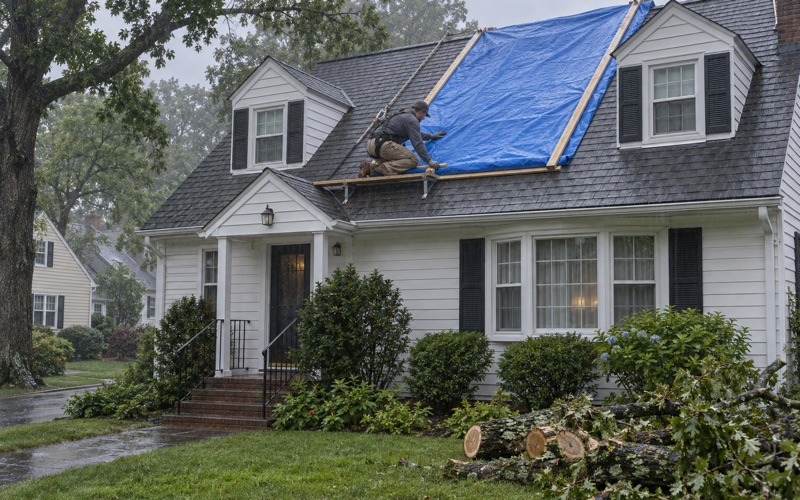
After a wind storm, we put tarps and temporary repairs on the same day and take photos before anything is moved. On a roof the association holds, we do that work with the board’s or manager’s go-ahead, because a temporary fix is still work on a common element. Where the roof belongs to the unit owner, the owner can authorize it directly.
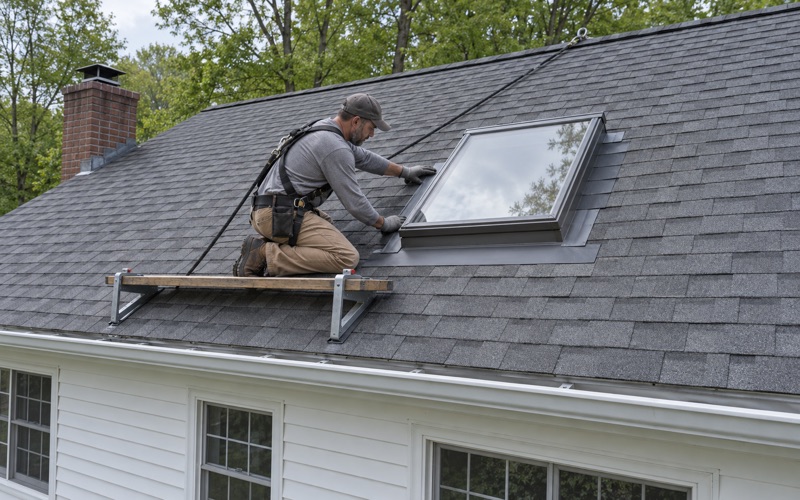
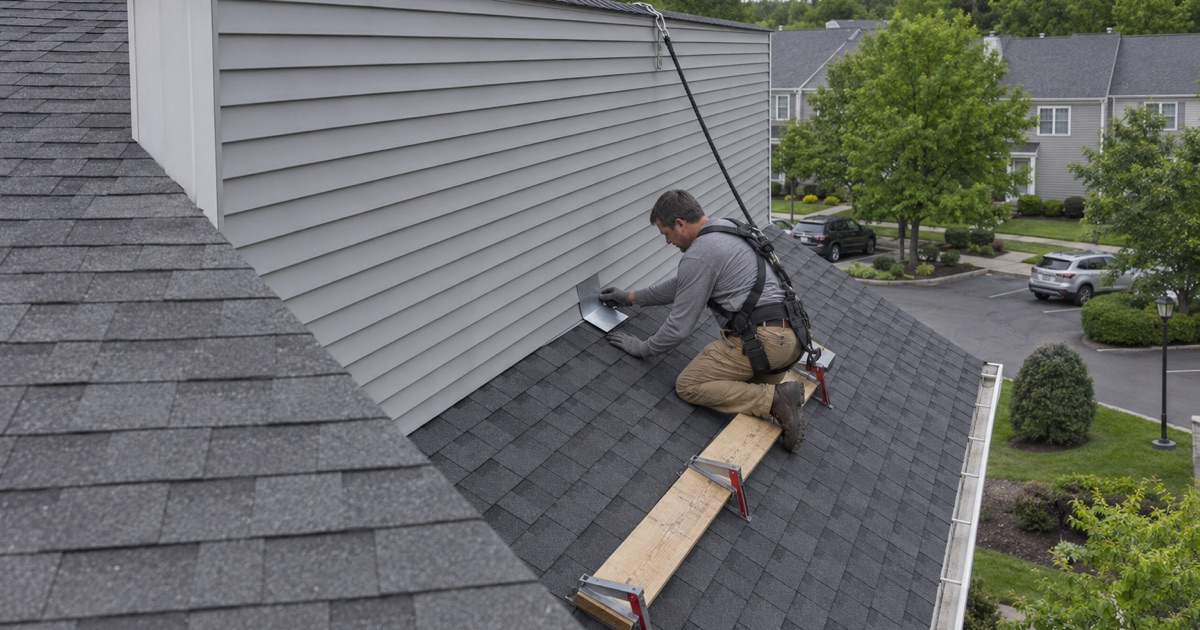
Inside the unit we still look into the attic or ceiling space where it can be reached. A stain under a roof can come from a failed pipe boot, flashing at a wall, or condensation from a bathroom fan venting into the attic, and the board needs to know which before it spends reserve money on shingles.
When the Roof Is Replaced
Re-roofing an attached townhouse or condominium building is not on the state’s ordinary-maintenance list, which covers roof covering on detached one- and two-family dwellings only, so the work goes through the New Providence Building Department for a permit. Our written scopes break out tear-off, decking, underlayment, flashing, ventilation and gutters as separate lines, which lets a board compare bids item by item against its reserve figures.
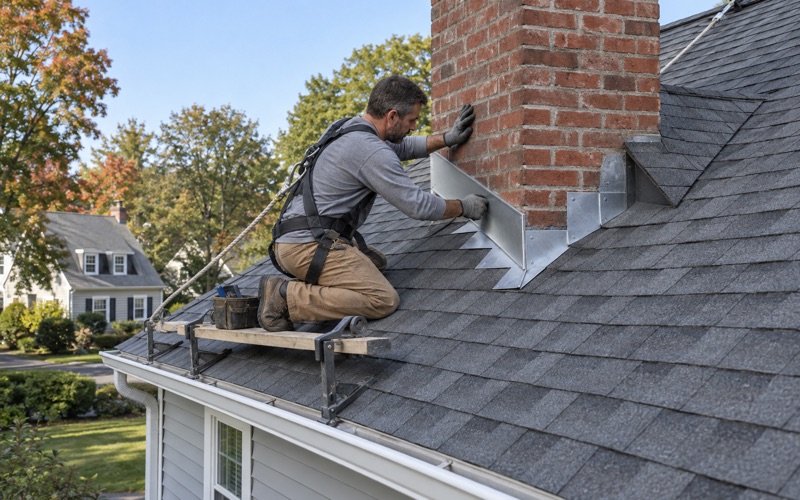
Damaged decking found after tear-off is photographed and shown to the signer before it is replaced, at a per-sheet price set in the contract. Step, counter and chimney flashing is replaced with the roof rather than reused, and attic ventilation is checked on every replacement. Each contract follows New Jersey’s home improvement rules, including the three-day cancellation notice, whether it is signed by a board or a single owner.
- 20+ Years on Local Roofs
- Itemized Written Scopes
- Same-Day Storm Tarping