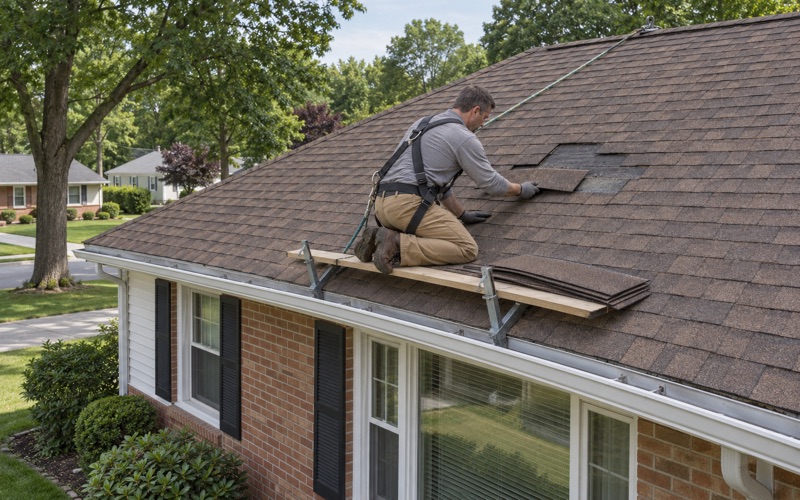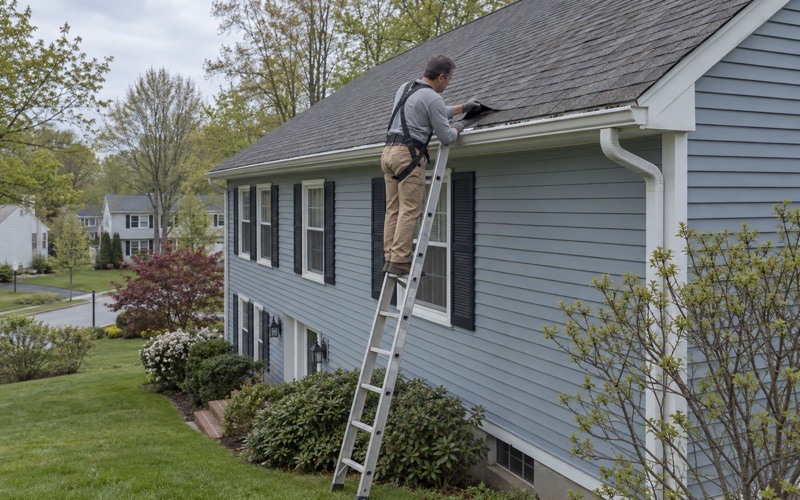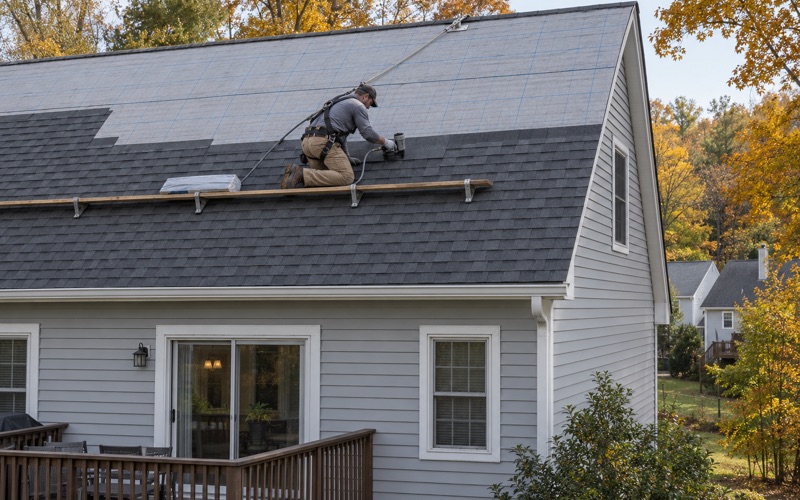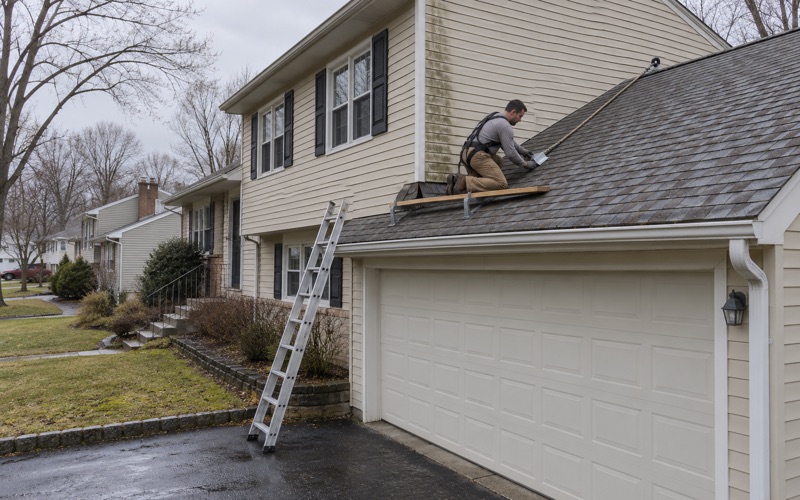
Parsippany Elite Roofing handles roofing in Pequannock with more than 20 years of experience behind every inspection, repair and replacement we take on. Many of our calls here start after a storm rather than before one: a gutter hanging off the fascia, a limb resting on the shingles, or a ceiling stain that showed up a week after the snow melted.
When we get one of those calls, we look in the attic as well as on the roof, so the water is traced to the spot where it really gets in before anything is priced. You also get a plain answer on whether the roof can be repaired, and that answer comes before anyone mentions a replacement.
If the work does turn into a new roof, the written scope breaks out tear-off, decking, underlayment, flashing, ventilation and gutters as separate lines. That lets you set our estimate beside anyone else’s and compare it item by item. The rest of this page covers the kind of storm that tends to start these calls, and what we check once it has passed.
The March 6-7, 2018 Nor’easter in Pequannock’s Own Record
Heavy, Wet Snow and a Federal Declaration
Pequannock’s section of the 2020 Morris County hazard mitigation plan lists the March 6-7, 2018 nor’easter, which FEMA declared a severe winter storm and snowstorm disaster, DR-4368, on June 8, 2018. The annex says 12 to 24 inches fell across large parts of Morris County and that the snow held large amounts of liquid, making it heavy and wet.
That weight is the part that matters for a roof. Dry powder blows off a slope, but wet snow sits on it, packs into valleys and behind chimneys, and freezes into the gutters overnight. The township’s only recorded local cost was snow removal, reimbursed at $48,372.28, and the annex records no roof damage, so the lesson is about load and debris rather than wreckage.
What the Nearby Snowfall Reports Show
The National Weather Service office at Mount Holly issued a storm-total statement on March 8, 2018 that gives 25.0 inches at Kinnelon and 25.5 at Butler, both from social media, and 26.8 inches at Montville from a trained spotter. That statement carries no Pequannock or Pompton Plains entry at all, so we do not put a local total on the storm.
What those reports do tell a homeowner is that totals above two feet were reported in towns close to the township during that storm. Forecasts for Pompton Plains and the rest of Pequannock come from the same Mount Holly office under the Morris forecast zone, NJZ008, which is worth knowing when the next big March system shows up in a forecast.
Pequannock’s Two Declared Winter Storms
The same annex also lists the January 22-24, 2016 blizzard, declared as DR-4264, and states that the township did not report damages from it. Two declared winter storms two years apart, one with no damages reported and one with heavy, wet snow and downed trees, show why we ask what kind of snow fell, not just how much.
For a roof, that means a big snowfall alone is not a reason to panic, and a moderate one is not a reason to skip a look. When the snow is dense enough to bring down limbs and wires, as the 2018 storm was, it is dense enough to strain gutters and push meltwater under worn shingles at the eaves.
Looking for roofing closer to Verona? See Roofing in Verona.
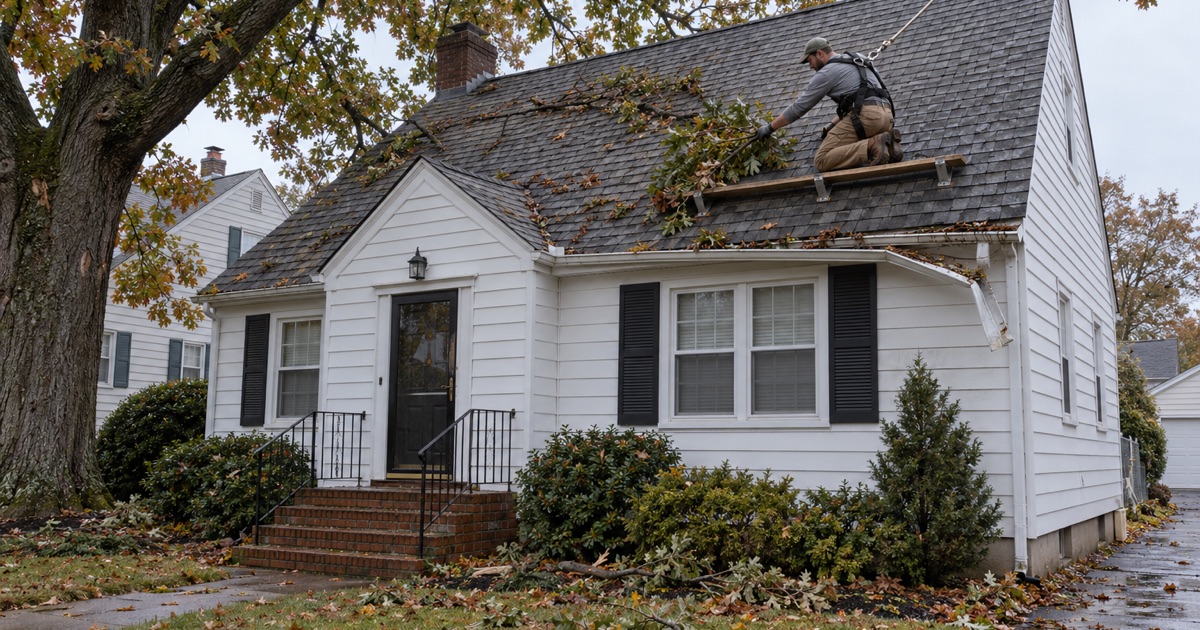
Downed Limbs Over Pompton Plains Houses
Trees, Limbs and Wires
The annex is specific about what the 2018 snow did: it resulted in downed trees, limbs, and wires. Pompton Plains, the census-designated place in the north, and Pequannock in the south each have their own post office, and across both, two-thirds of housing units are one-unit detached houses, 4,228 of 6,554. Where one of those lots has trees close to the roofline, wet snow clinging to every branch adds weight the limbs were never built to carry.
A limb that lands on a roof does not always leave an obvious hole. More often it cracks or creases shingles, knocks granules loose, bends drip edge at the eaves, or tears a pipe boot, and the leak shows up weeks later during a spring rain. That delay is why we inspect after a limb strike even when the roof looks fine from the driveway.
Same-Day Tarps and Photos
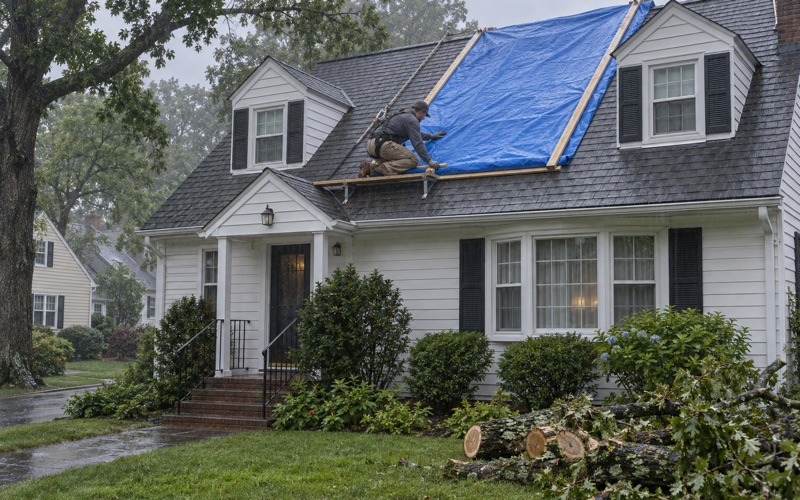
When a wind storm leaves a limb on the roof or opens a section of shingles, we put tarps and temporary repairs on the same day. Before anything is moved, we photograph the damage as we found it, because once a branch is cut away the evidence of where it hit is much harder to show.
Those photos go into a written damage report you can use for your own claim, and if you ask, our crew will meet the insurance adjuster on site. What we do not do is promise what a policy will pay, since coverage depends on your insurer and your policy, not on us. The claim itself stays between you and your insurance company.
Planning Around Overhanging Trees
On a wooded lot, we call out overhanging limbs, leaf-packed valleys and shaded, mossy slopes right in the estimate, so they are part of the plan rather than a surprise. A limb that already brushes the shingles is the kind most worth watching before the next load of wet snow, and naming it early gives you time to have it trimmed.
Wet Snow, Sliding Loads and Gutters
How Heavy Snow Pulls Gutters
Wet snow does not stay put once the sun hits a roof. It slides as a slab toward the eaves, and when it reaches a gutter already packed with ice, it can bend the hangers, pull the gutter away from the fascia, or rip a leader loose at the corner. A wet March storm is especially hard on gutters because thaw and refreeze follow so quickly.
When gutters need replacing after that kind of damage, we install seamless aluminum gutters and leaders, and the gutter line sits on its own row of the written scope. We also check the drip edge at the eaves and rakes, since a bent or missing drip edge lets meltwater curl back behind the gutter and into the fascia board.
Valleys and Chimneys Under Wet Snow
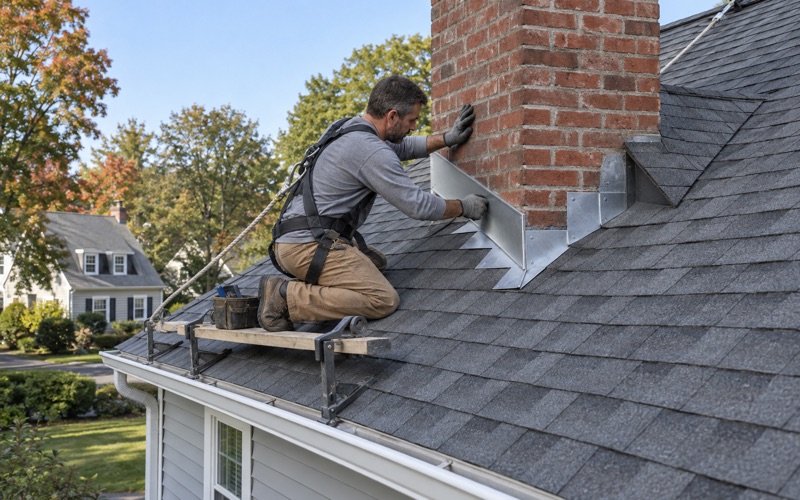
Valleys collect the deepest snow on most roofs, and wet snow packed into a valley melts slowly and feeds water into any weak spot in the underlayment. The same thing happens on the uphill side of a chimney, where drifted snow sits against the flashing. A chimney wider than 30 inches needs a cricket, or saddle, behind it under IRC R1003.20 to split that water around the stack.
When we replace a roof, step, counter and chimney flashing are replaced along with it rather than reused under the new material. Old flashing bent back into place is a frequent source of chimney leaks on a roof that is otherwise new, and wet snow sitting against it is exactly the test that finds the gap.
Ice Dams on 1950s Houses
Pequannock’s largest building decade is the 1950s, with 1,711 housing units, so a good share of the township’s roofs sit on houses roughly 70 years old. On older capes and split-levels with ice-dam-prone eaves, we add an ASTM D1970 self-adhering ice and water barrier and check the ventilation, rather than just laying new shingles over the same problem.
Ventilation gets checked on every replacement we do, because a roof that cannot breathe ages from underneath. A ridge vent paired with soffit intake keeps the attic closer to outdoor temperature, which slows the melt-and-refreeze cycle that builds ice at the eaves after a heavy snow. Houses of that age also often have painted trim, so fascia work follows the EPA lead-safe rule for pre-1978 homes.
What We Check on a Roof After a Heavy March Storm
From the Ground and the Attic First
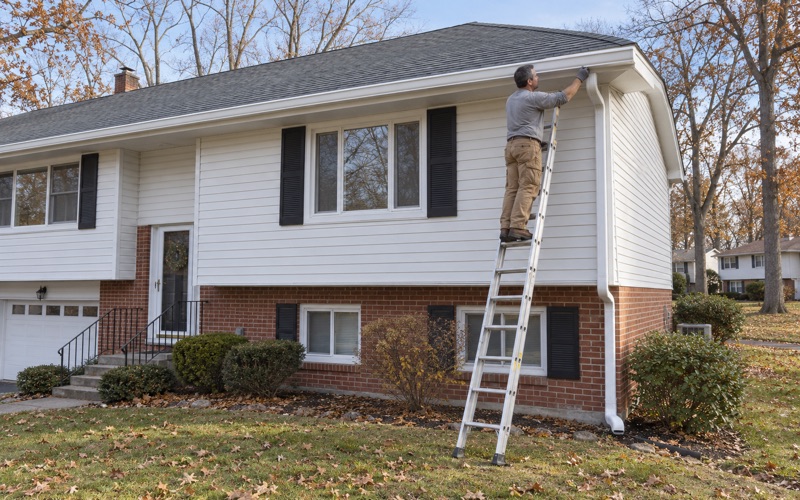
We start where the damage shows first. From the ground we look for sagging or detached gutters, bent drip edge, missing shingles and limbs still resting on the slope, and then we go into the attic. Damp sheathing, stained rafters or frost on the underside of the deck after a wet storm tell us where water or warm air is moving before we ever set a ladder.
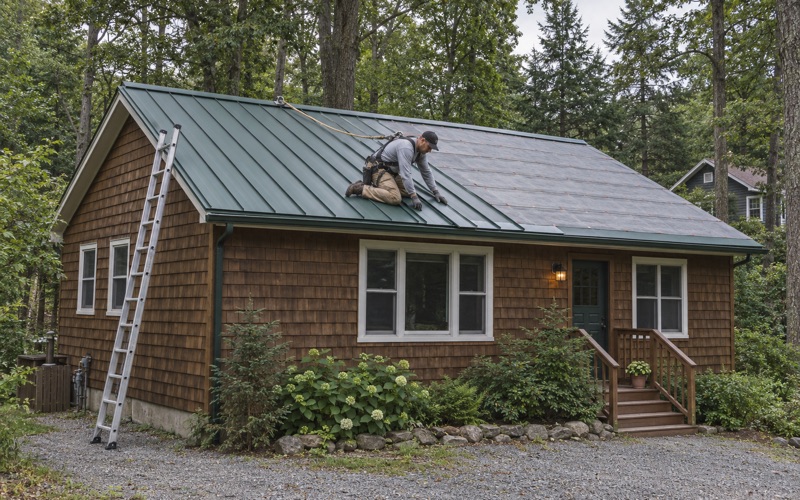
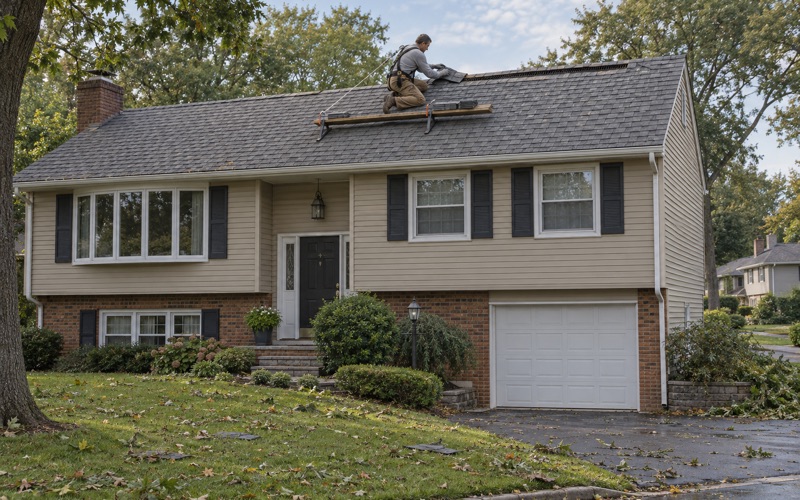
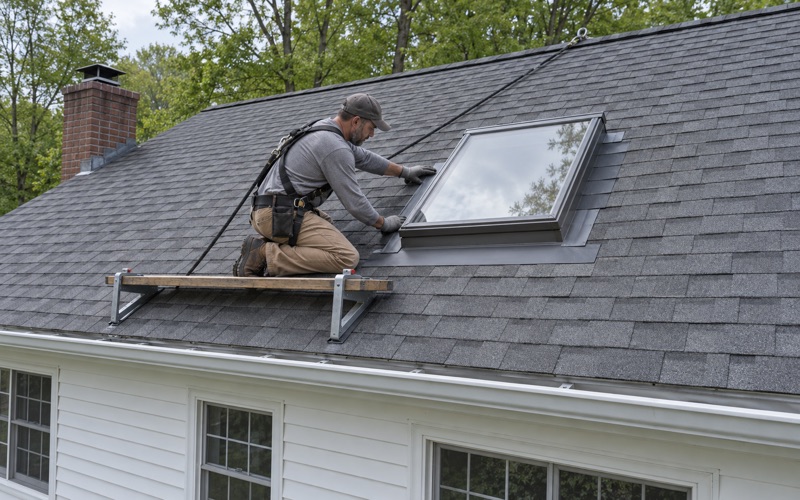
Once on the roof, the crew works under OSHA fall protection rules, which apply at 6 feet for residential roofing. We check valleys, the flashing around the chimney and any skylights, pipe boots, and the shingles directly under the trees that dropped limbs, and every finding is photographed so you see what we saw.
Repair or Replace
Plenty of storm calls end in a repair: a few shingles, a reset gutter, a new pipe boot or a patched section of flashing. If the roof is near the end of its life or the damage runs across several slopes, we say so plainly, and only then do we talk about replacement. Either way, you get the reasoning in writing so you can weigh it on your own time.
Re-roofing a detached one- or two-family house is treated as ordinary maintenance under New Jersey Administrative Code 5:23-2.7, though a roof that already carries two or more layers, or one covered in slate, wood shake or tile, falls under the rehabilitation subcode’s tear-off rule. When the old roof comes off and damaged decking turns up, we photograph it and show you before replacing it, at the per-sheet price written into the contract.
Contracts and Cleanup
Our contracts follow New Jersey’s home improvement rules, including the notice of your three-business-day right to cancel. At the end of each work day, the crew cleans the driveway, yard and gutters and runs a magnet sweep for roofing nails, which matters on a lot where children or pets are back outside as soon as the snow is gone.
If you are getting ready to sell, a storm check can become a written roof condition report that you hand to the buyer’s inspector. And for a condominium or townhouse owner, we check the association’s documents to confirm who holds the roof before any estimate is written. Roofs under solar panels are scheduled with the panel removal and reinstall built in, not discovered on the day.
- 20+ Years on Local Roofs
- Itemized Written Scopes
- Same-Day Storm Tarping