Parsippany Elite Roofing brings more than 20 years of residential work to roofing in Rutherford, and the calls we take after a hard wind are the ones this page is about. They tend to start the same way: a strip of shingle on the lawn, a gutter hanging off its brackets, or a limb resting on the eave, and a homeowner who wants to know whether the roof underneath is still sound.
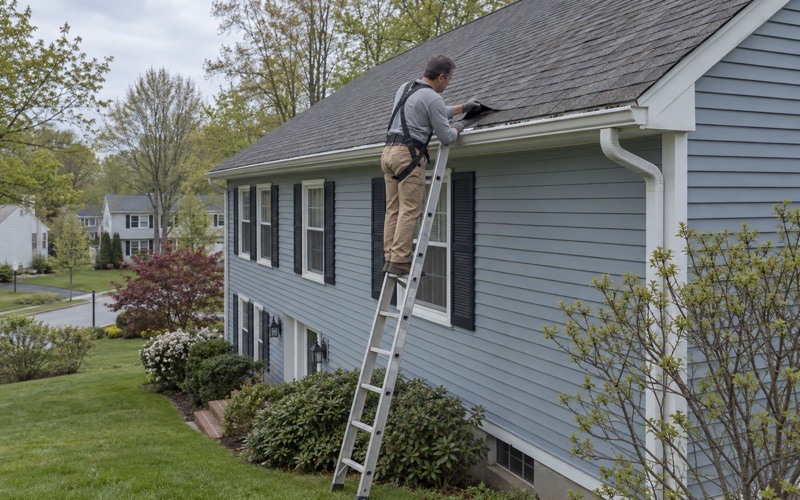
Our answer begins with a look, not a sales pitch. We walk the roof where it is safe to do so, go into the attic to see whether any water has reached the sheathing, and tell you plainly whether a repair will hold before replacement comes up at all. Plenty of wind damage is a few lifted tabs and a loose run of gutter, and we say so when it is.
The sections below follow one dated event through to the practical step it suggests. They cover what the weather stations near the borough recorded, which streets the borough itself named the next morning, what a gust of that size can do to an older roof, and how we check a house once the branches have been hauled away.
The June 6, 2026 Storm and What the Stations Recorded
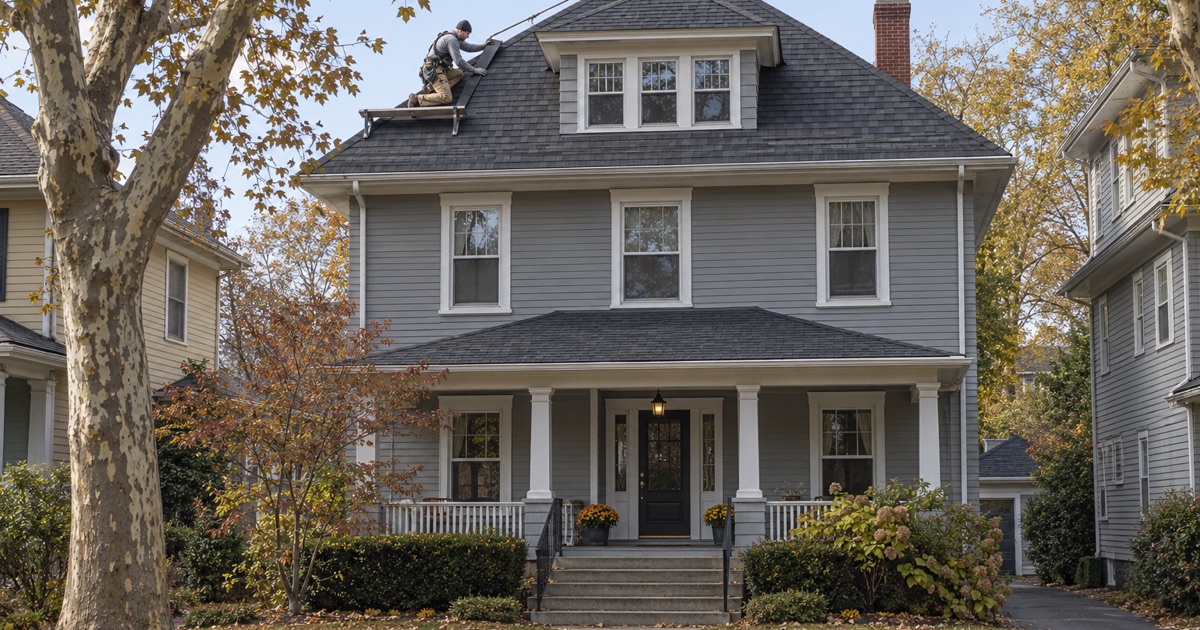
On the evening of June 6, 2026, a line of thunderstorms crossed north Jersey, and Rutherford sat in its path along with the towns around it. Nobody had to look up a weather report the next morning to know something had come through: the line carried wind strong enough to bring down branches across the borough and keep public works crews busy well into the night.
None of the records we read include a wind reading taken inside the borough. What they do include is a set of measurements from airport weather stations nearby and a notice the borough posted the following day, and together those give a fair picture of the evening without anyone needing to guess.
60 mph at Teterboro, 58 mph at Newark Airport
The Teterboro Airport weather station, which sits under four miles northeast of Rutherford, recorded a 60 mph gust at 7:34 p.m. A minute later the Newark Airport station logged 58 mph, and a Jersey City mesonet station recorded 66 mph about ten minutes after that. These figures come from the preliminary storm reports the NOAA Storm Prediction Center publishes for each day.
Those same reports list trees and wires down near Little Falls, a large tree snapped near Wayne and a tree on a house near Demarest that evening. They contain no row that names Rutherford, which is worth keeping in mind before reading too much into any single number. The data is also marked preliminary, so the exact figures could still be revised.
Why a Nearby Station Is Not a Borough Reading
A gust measured at Teterboro is not the same thing as a gust measured on your street. Wind near the ground changes with trees, buildings and open lots, so one house can take a sharper blow than the one beside it while a third barely notices. The station tells us what the storm was capable of nearby, not what reached any particular roof.
That is why we treat the reading as a reason to look rather than as proof of damage. A 60 mph figure four miles away says a roof check is sensible; only the roof itself can say whether anything moved. That distinction matters later too, when the photos and notes from a roof check are all that describe your own house.
Looking for roofing closer to Glen Rock? See Roofing in Glen Rock.
Insley Avenue, Edgewood Place and Hackett Place
What the Borough’s Clean-Up Notice Said
On June 7, the Borough of Rutherford posted a notice titled Clean-up from the June 6 Storm. It said Insley Avenue, Edgewood Place and Hackett Place experienced the most damage, that downed branches remained throughout the borough, and that Department of Public Works crews had worked overnight with clean-up resuming that morning.
Residents were asked to be mindful and patient during school drop-off while crews worked, and Mayor Frank Nunziato thanked the police, building department, public works staff and volunteer firefighters for their response. It reads like what it is: a practical update from a town clearing its streets after a rough evening.
What the Notice Does Not Say
The notice does not mention roofs. It says nothing about trees on houses, wires on homes or how many properties took damage, and no other record we read fills that gap. We will not put a number on it either, and we would be wary of anyone who does without having stood on the roofs in question.
What the street names do tell an owner is where the borough saw the worst of the evening, in a notice that was mostly about branches. A limb that comes down near a house can brush an eave or pull at a gutter on the way, so if you live on one of those streets, or under a big tree anywhere else in town, that is a reasonable prompt to take a closer look.
Why We Wait for the Streets to Clear
Right after a storm, the priority belongs to crews clearing roads and sidewalks, and a roofing truck parked in the middle of that work helps no one. Unless water is actively coming in, we usually schedule a full look once the street is open and the branches are off the property, which also makes it possible to see the whole roof.
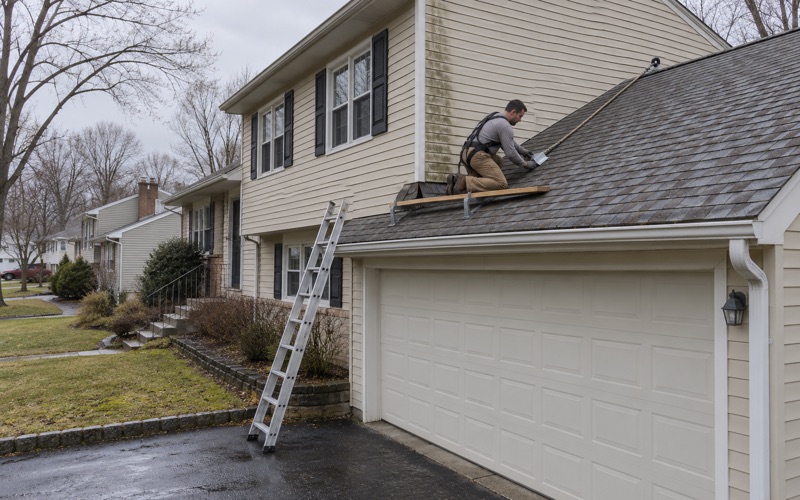
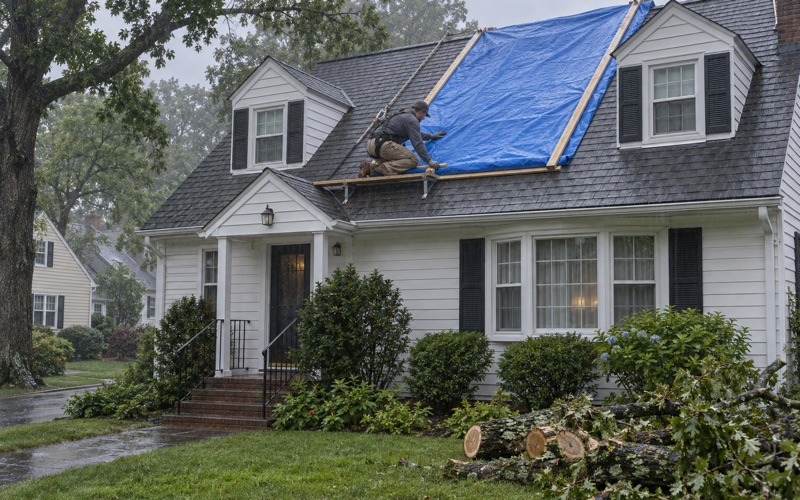
When water is coming in, the order changes. A tarp or temporary patch goes on the same day after a wind storm, and we photograph the damage before anything is moved so the record shows the roof as the storm left it. Proper repairs follow once the roof is dry and safe to work on.
What a 60 mph Gust Does to a Prewar Roof
Rutherford’s housing leans old. Census figures from the 2024 five-year American Community Survey put 42.8 percent of the borough’s homes as built before 1940 and another 34.4 percent between 1940 and 1959, and 57.0 percent are one-unit detached houses. That age is not a defect in itself, but it shapes what a strong gust can find to work on.
On houses of that era, a roof has often been reworked more than once, and the parts that age fastest are rarely the parts you can see from the sidewalk. Seal strips, nail lines, flashing joints and the fascia behind the gutter all carry their years quietly until wind tests them.
Shingles That Have Lost Their Seal
Asphalt shingles hold down in wind mainly through a strip of sealant that bonds each course to the one below. As a roof ages, that bond can weaken or fail, and a tab that is no longer sealed behaves like a flap. A gust gets under it, lifts it, and either creases it or pulls the nails partway through the mat.
A creased tab may lie flat again after the storm and look fine from the street, which is why lifted shingles are easy to miss. Up close they show as a faint horizontal line across the tab or a course that no longer sits tight, and on an older roof we often find a run of them along the windward side.
Limbs, Eaves and Gutters
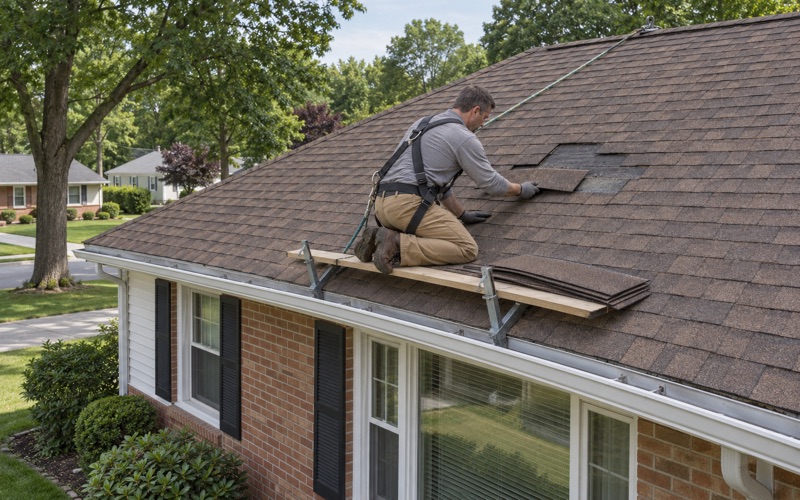
Branches do their own kind of damage. A limb that drops onto an eave can crack the edge of the roof deck, tear the drip edge or punch through shingles, and one that scrapes across the slope can strip granules and break tabs. Gutters take the rest: a heavy branch landing in a run can bend it, pull the hangers or tear the fascia behind it.
On wooded lots we also note the limbs still hanging over the roof, and the leaves and twigs packed into valleys and gutters after a storm like this one. Those go into the estimate as their own items, because a clogged valley holds water against the shingles long after the wind has passed.
Flashing and Chimneys
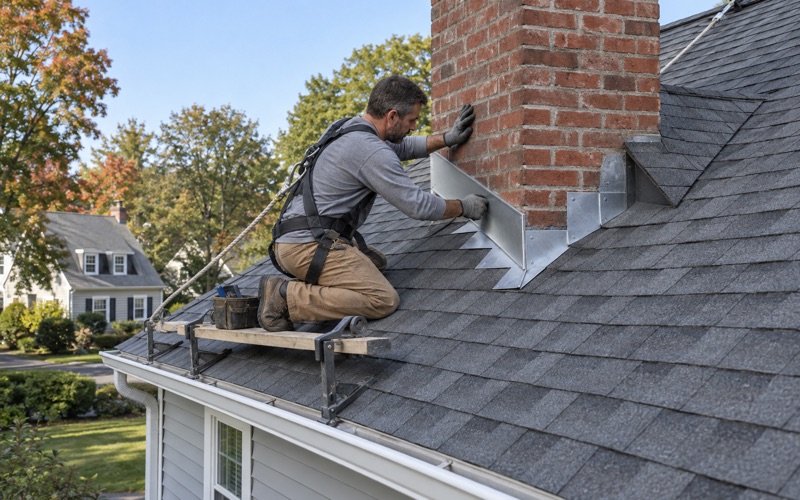
Older chimneys and the flashing around them are another weak point. Wind-driven rain finds any gap where step or counter flashing has pulled away from the brick, and a strong gust can loosen flashing that was already relying on old sealant to stay put. Water that gets in there may show up as a stain on a ceiling days later rather than on the night of the storm.
When a chimney does need work as part of a replacement, we replace the step, counter and chimney flashing rather than reusing the old metal under new shingles. On a repair, we tell you honestly whether the existing flashing can be resealed or has reached the end of its life.
Checking the Roof After the Branches Are Cleared
Start From the Ground and the Attic
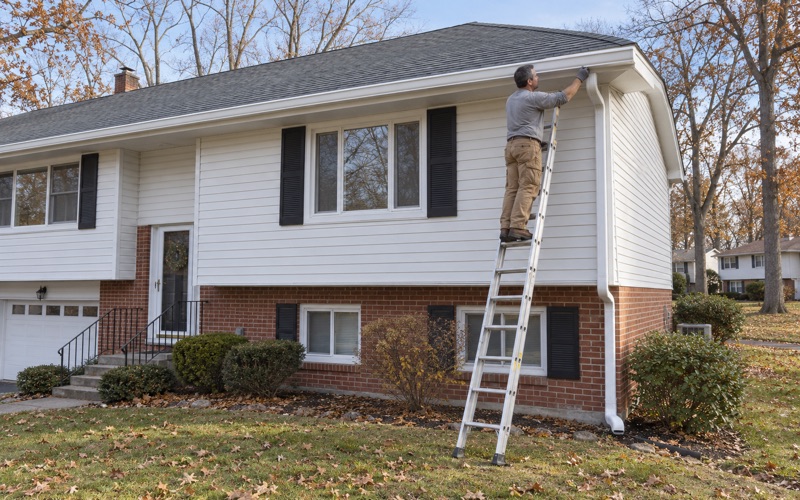
A useful first look needs no ladder. From the yard, check for shingle pieces on the grass, gutters sagging or pulled from the fascia, and dark patches on the slope where granules or whole tabs are gone. Inside, look at top-floor ceilings and around the chimney for new stains, and note anything that changed since the storm.
When we come out, the attic is part of the visit. Water travels along rafters and sheathing before it drips, so the stain on a bedroom ceiling is often a few feet from where the roof actually lets it through. Tracing it from inside first means the repair goes where the leak starts, and the price reflects the real problem.
Repair or Replace
Many storm calls end in a repair: resealing or replacing lifted tabs, refastening a gutter, rebuilding a section of drip edge. We tell you that before any talk of a new roof. Replacement comes up only when the roof was already near the end of its life or the damage is spread too widely for patching to make sense.
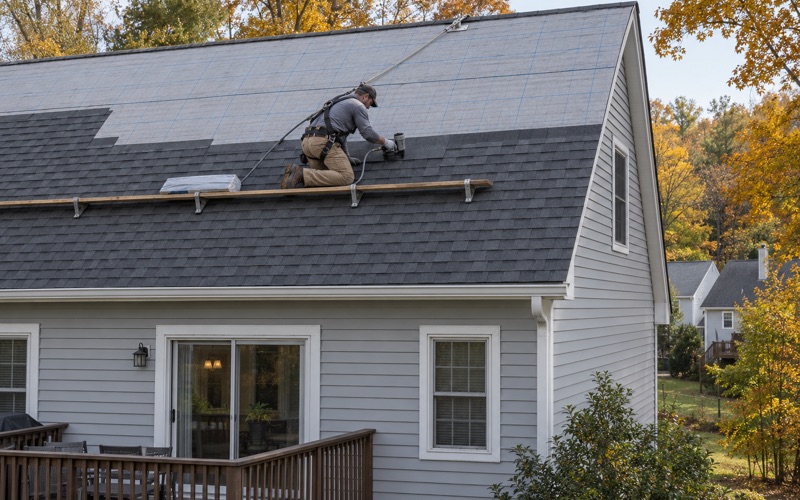
When replacement is the right call, the written scope lists tear-off, decking, underlayment, flashing, ventilation and gutters on separate lines so you can compare our estimate with anyone else’s item by item. Any rotten decking we find once the old roof is off is photographed and shown to you before it is replaced, at a per-sheet price already set in the contract.
Photos for Your Own Claim
Whether to file an insurance claim is your decision, and a storm on the calendar does not by itself mean a policy will respond. What we can do is photograph the damage and write it up clearly for your own claim, so you have a dated record of what was found and where.
If you ask, someone from our crew will meet the adjuster on site to walk the roof and point out what we documented. The claim itself stays between you and your insurer, and questions about coverage or deductibles belong with your agent or the insurer, who can read your policy in a way we cannot.
Contracts and the End of the Day
Any work we do is written to New Jersey’s home improvement rules, and the contract carries the three-day cancellation notice those rules require. That gives you room to read it at the kitchen table, compare it with another bid, and change your mind without pressure.
After a storm, a yard already full of debris does not need more. At the end of every work day we clean the driveway, lawn and gutters, and run a magnet sweep for roofing nails, so the only sign we were there is a roof that is ready for the next storm line to come through.
- 20+ Years on Local Roofs
- Itemized Written Scopes
- Same-Day Storm Tarping