
Parsippany Elite Roofing handles skylight installation in Parsippany, NJ and has worked on roofs across the area for more than 20 years, serving surrounding cities including Hanover, East Hanover, Denville, Florham Park and West Caldwell. A skylight can transform a dark hallway, bathroom or upstairs room. It also adds an opening to the roof, and how that opening is framed and flashed decides whether the skylight brings in only light or water as well.
We install new skylights in new openings and replace aging units in existing ones. Every installation uses the manufacturer’s flashing kit, self-adhering ice and water barrier around the frame, and shingles woven back into the flashing. Caulk is never the main line of defense.
Our estimates list the skylight unit, the flashing, any framing work, the interior light shaft and the roofing repairs as separate items. That way you can compare quotes and see exactly what each part of the project costs.
Types of Skylights
Deck-Mounted Skylights
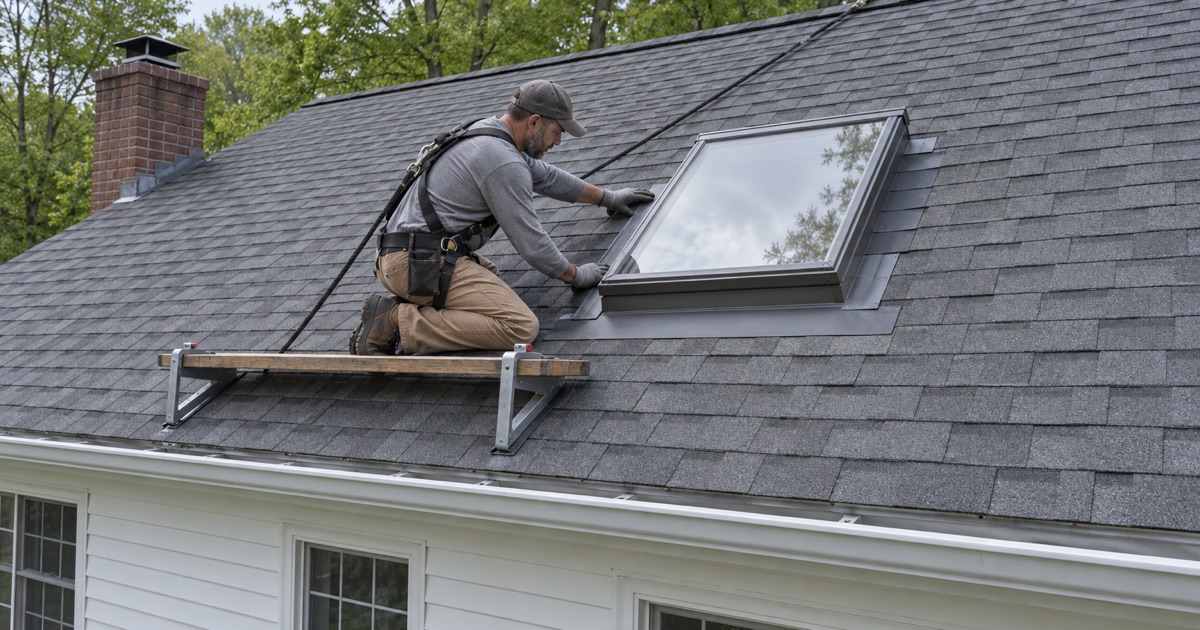
Deck-mounted skylights attach directly to the roof deck and come with their own integrated flashing system. They sit low on the roof, giving a clean, modern profile. They are the usual choice for new openings on pitched shingle roofs.
Because the flashing is designed for the specific unit, installation follows the manufacturer’s sequence closely. Ice and water barrier wraps the frame before the flashing goes on. The shingles are then woven around it so water runs over the joints, not into them.
Curb-Mounted Skylights
Curb-mounted skylights sit on a raised wooden frame built on the roof deck. The unit fits over the curb, and step flashing seals the curb to the roof. They are common on low-slope roofs and as replacements for older units that already sit on a curb.
Curbs make replacement easier, because a new unit can often fit the existing curb. We check the curb for rot before reusing it. Where it is soft or too short for the snow that collects around it, we rebuild it.
Fixed and Venting Skylights
Fixed skylights do not open and simply bring in light. Venting skylights open manually or with a motor, letting hot air and moisture escape from bathrooms, kitchens and upper floors. Many venting units include rain sensors that close them automatically.
Venting skylights can also help reduce condensation by releasing humid air. We discuss which type suits each room. Shades and blinds are available for both.
New Skylight Openings
Framing the Opening
Adding a skylight where there was none means cutting the roof deck and often a rafter. The opening must be framed with headers and doubled rafters so the roof stays structurally sound. Because this changes the framing, it goes beyond ordinary roof maintenance.
We confirm permit requirements with the local construction office before cutting. The size and location of the skylight are chosen to work with the rafters wherever possible. That keeps framing changes as simple as they can be.
The Light Shaft
Between the roof and the ceiling, a light shaft carries light from the skylight to the room. In homes with an attic, the shaft passes through the attic space and must be insulated and air-sealed. A poorly insulated shaft causes condensation and heat loss.
Shafts can be straight, angled or flared to spread more light into the room. We frame and insulate the shaft, and drywall and finish work can be coordinated with your painter or contractor. The roof side is always fully sealed before interior work begins.
Skylight Replacement and Reflashing
When to Replace a Skylight
Skylights age just like roofs. Fogged glass between panes, cracked or yellowed domes, failed seals and frames that leak at the corners are all signs a unit is near the end of its life. Older domed acrylic skylights are common on homes in the area and are often due for replacement.
Replacing the unit is often the better value when it is leaking and old. A new unit comes with new flashing and current glazing. We explain the difference between repair and replacement before you decide.
Skylights and Roof Replacement
When a roof is replaced, every skylight needs new flashing. That makes roof replacement a natural time to replace older skylights as well. Leaving an old unit in a new roof risks reopening the roof to replace it a few years later.
If the skylight is relatively new and in good shape, we reflash it with a new kit rather than reusing old flashing. Either way, the skylight and the roof are sealed together. That keeps the warranty on both the roof and the unit intact.
Removing an Unwanted Skylight
Sometimes a skylight is no longer wanted, whether because of repeated leaks, heat gain or a remodel. Removing it involves taking out the unit, framing in the opening, installing decking and roofing over it. The interior ceiling is then closed in and finished.
We photograph the framing before it is covered and confirm the structure is sound. The new roofing is woven into the surrounding shingles. Once finished, the old opening is not visible from outside.
Skylights Under Trees and Snow
On wooded lots, leaves and needles collect on the uphill side of a skylight and hold moisture against the flashing. Shaded slopes also grow moss, and a skylight there can stay damp for days after rain. We point out these conditions in the estimate and recommend placement or curb height that helps debris wash past.
In winter, snow banks up against the upper edge of the frame and can feed small ice dams around it. Extra ice and water barrier above the unit and a well-insulated light shaft reduce that risk. Checking the area around the skylight each fall, when leaves are cleared from the gutters, keeps small problems from growing.
- 20+ Years on Local Roofs
- Itemized Written Scopes
- Same-Day Storm Tarping