Parsippany Elite Roofing has spent more than 20 years on roofing in South Orange Village and across northern New Jersey, and the first question we ask about a South Orange roof is not about shingles. It is whether the house sits on the village’s list of designated historic properties, because that answer decides whether a replacement passes through a local review before a crew sets a ladder.
For most owners the answer is no, and the job runs like any other: we look in the attic as well as on the roof, tell you plainly whether a repair will do, and write a scope that breaks out tear-off, decking, underlayment, flashing, ventilation and gutters line by line. For the smaller group whose answer is yes, there is one extra step, and it is shorter than many people expect.
This page walks through that step as the ordinance itself describes it: what counts as Minor Work, how quickly a decision has to come back, which repairs need no certificate at all, and how to find out where your house stands. The application and the decision belong to the owner and the Commission, and we never promise an outcome. What we can do is write an estimate that gives the reviewers what they need to read.
Roof Replacement on South Orange’s Designated Historic Houses
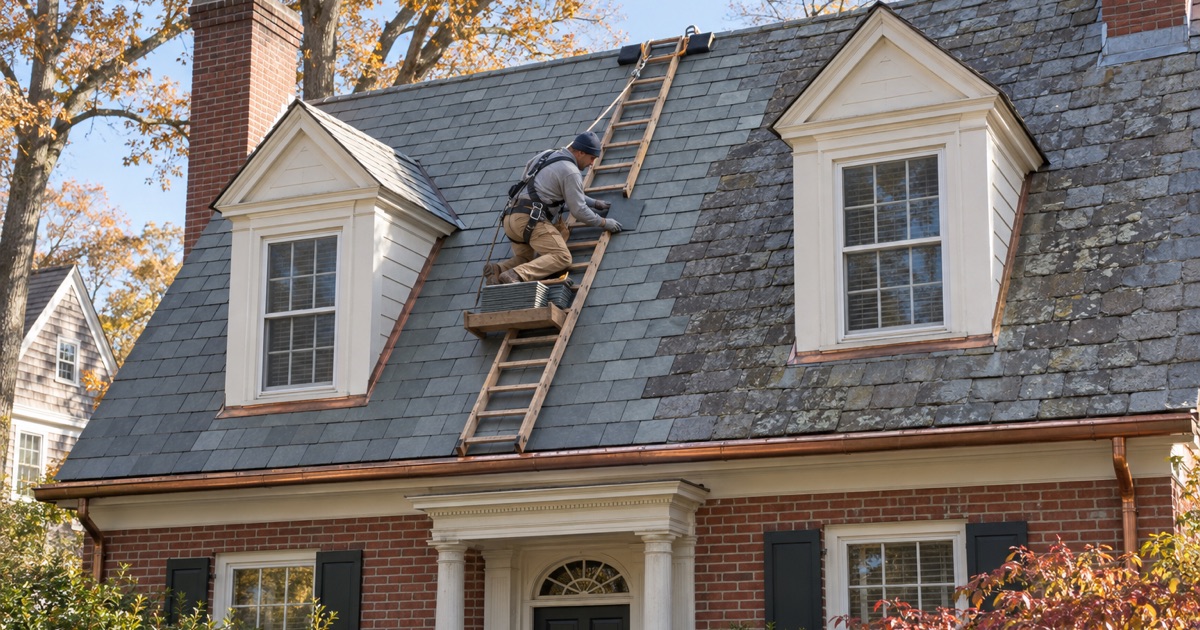
The Montrose Park Historic District was placed on the National Register of Historic Places on August 29, 1997, and it covers about 406 acres of the village’s northeast corner. National Register listing recognizes a district, but it does not by itself send a homeowner’s roof to a local board. That job belongs to South Orange’s own Historic Preservation Commission, which the village established by Ordinance 2012-09.
Only the 40 Key Contributing Properties, as of October 2024
The Commission’s 2024 FAQ is direct about who it covers: as of October 2024, the only residential properties designated historic were the 40 key contributing properties in the Montrose Park district. The 1997 nomination counted 708 primary buildings in that district, so those 40 are a small share of the houses inside its lines. A house can stand on a handsome Montrose street and still fall outside local review.
The FAQ also makes clear that designation is not casual. It takes certified-mail notice to the owner, a Commission hearing, a consistency referral to the Planning Board and an ordinance adopted by the Village Council. Owners of other contributing Montrose Park houses can apply to be recognized as key contributing, so the list can grow, but it grows one deliberate step at a time.
Checking the List Before We Price the Job
The Commission posts the list of designated properties on its website, and that list, not the district map, is the thing to check. We ask owners in Montrose Park to look their address up, or to call the village, before we settle a scope. If the house is on it, the estimate is written with the review in mind; if it is not, the job goes ahead like any other roof we do.
Owners who are unsure can also ask before committing to anything. The Commission’s posted 2026 forms include a Non-Binding Advice application alongside the Certificate of Appropriateness, and an early question settles where a house stands before a material is chosen or a deposit changes hands. It is a small step that can save a redesigned estimate later.
Looking for roofing closer to New Providence? See New Providence Roofing.
What Ordinance 2024-16 Calls Minor Work
The village restated its preservation rules in Ordinance 2024-16, introduced July 22, 2024 and adopted September 9, 2024. It sorts work on a designated property into categories, and roof replacement lands in the lighter one. The definition of Minor Work names the roof before it mentions siding, windows or paint, which says a good deal about how the village expected roof work to be handled.
Compatible With the Architectural Period or Design
The first item in the Minor Work definition is replacement of the existing roof using an appropriate material compatible with the architectural period or design of the structure. That wording sets a standard of fit, not a single required product. The ordinance does not name slate and does not forbid asphalt; it asks whether the new covering suits the house it goes on.
The ordinance adds that the Secretary of the Interior’s Standards guide how its criteria are read, and that Minor Work is judged with the minor nature of the work and the expedited review in mind. In practice, an estimate should state the proposed material, its color and profile, and the flashing and trim details plainly, so the reviewers are not left guessing about what will go on the roof.
Siding, Trim and the Rest of the Definition
Minor Work also covers in-kind replacement of more than 25 percent of existing shingles, clapboards or other siding, decorative elements, columns or porch posts, along with window and door replacement and painting of surfaces that were never painted. Roof jobs often reach those edges. A rotted fascia board, a cornice return or a dormer’s side wall can become siding or trim work once the old roof is off.
Our written scope lists those items separately for that reason. When decking, flashing, trim and gutters each carry their own line, an owner can see which parts of the job sit under the roof item and which may need to be described on their own in an application. It also makes two contractors’ estimates comparable item by item.
Where Major Work Begins
Major Work covers additions, alterations, replacements or any change to a publicly visible facade of a designated landmark or contributing property, except what the Minor Work list already names. A straight re-roof in a compatible material is not in that group. A project that adds a dormer, raises a roof line or changes the roof’s shape is a different conversation, and it falls outside the expedited Minor Work path.
The 15-Day Subcommittee Review and Deemed Approval
Section 9-26 of the ordinance sets the pace. A Minor Work application does not wait for a monthly meeting of the whole Commission; it goes to a subcommittee made up of the Chair and one other member. That subcommittee must decide and report to the village’s Administrative Officer within 15 days of receiving a completed application.
Why a Complete Application Matters
The 15 days run from a completed application, not from a first email or a rough sketch. That is one reason we put the proposed shingle, its color, the flashing metal and the ventilation plan in writing early, so an owner assembling the file has the roofing details on one page. A thin application only delays the point at which the clock starts.
Scheduling follows from it. We hold a start date for a designated house loosely until the subcommittee has answered, and we tell owners so when the contract is signed rather than booking a crew against a decision that has not come back. Our contracts follow New Jersey’s home improvement rules, three-day cancellation notice included, so an owner still has room to reconsider after signing.
When the Subcommittee Does Not Act
The ordinance answers the question of delay in plain terms. If the subcommittee fails to act within the 15-day period, that failure is deemed to constitute approval of the permit. An owner with a complete Minor Work application is not left waiting indefinitely while a worn roof keeps leaking.
That rule is a backstop, not a plan. We would rather see a written decision on file before tear-off, because a clear approval is easier to show a future buyer’s inspector than a date on a calendar. For owners selling a designated house, we can add that record to a written roof condition report the seller hands to the buyer’s side.
If the Answer Is No
A subcommittee denial is not the last word. Under section 9-26 a denied applicant may take the matter to the full Commission, which hears it de novo, meaning fresh rather than as a review of the subcommittee’s reasoning. Beyond that, the ordinance allows 45 days to appeal a disapproved certificate to the Zoning Board of Adjustment.
The full Commission meets on the third Thursday of each month at the Baird Community Center on Mead Street, and also by Zoom. An owner bringing a roof application there is better served by a scope that already names the material and explains why it suits the house than by a general promise to match the old roof.
Repairs Under 25 Percent, Emergencies and Neglect
Not every roof visit on a designated house means an application. The same ordinance lists work that needs no Certificate of Appropriateness at all, and two of those exclusions matter to roofing more than the rest. A third section reminds owners that leaving a failing roof alone carries its own risk under the preservation rules.
Repairs Below the 25 Percent Line
Section 9-24F excludes repairs and maintenance of less than 25 percent of existing roofing materials, along with siding, trim and other components, when the work uses the same style, materials and quality workmanship. Replacing a run of broken shingles, resetting a ridge or renewing a failed valley in matching material will often fit there. The threshold is the Commission’s own and applies only to designated properties.
Our inspection is what makes that call honest. We trace a leak from the attic side before pricing it, then tell the owner whether a matching repair will hold or whether the roof is past patching. On a designated house, that same answer shows which side of the Commission’s line the work falls on.
Temporary Emergency Repairs After a Storm
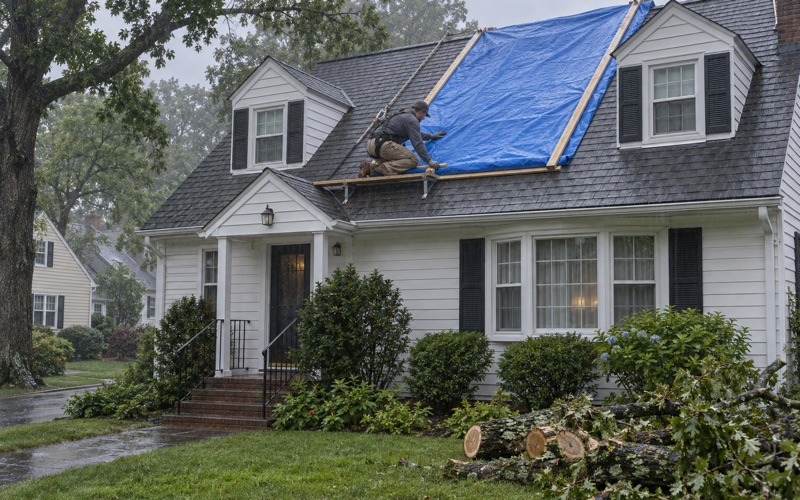
Section 9-24A exempts temporary emergency repairs needed to keep a structure habitable, so a tarp after a wind storm does not wait for a subcommittee. The condition is that nothing beyond the emergency work goes ahead until the Commission’s approvals are in place. We put tarps and temporary fixes on the same day after a storm and photograph the damage before anything is moved.
Those photos do two jobs. They document the damage for the owner’s own insurance claim, and they show the Commission what the roof looked like before the temporary work, which helps when the permanent repair comes up for review. If an owner asks, our crew will meet the adjuster on site.
When a Neglected Roof Becomes the Commission’s Concern
Section 9-29 treats deterioration of roofs and chimneys on a designated landmark or contributing structure as demolition by neglect when it harms the character of the district or could reasonably lead to irreversible damage. The Commission may refer a suspected case for follow-up. Putting off a failing roof on a listed house is not a neutral choice, even when the review path for fixing it is short.
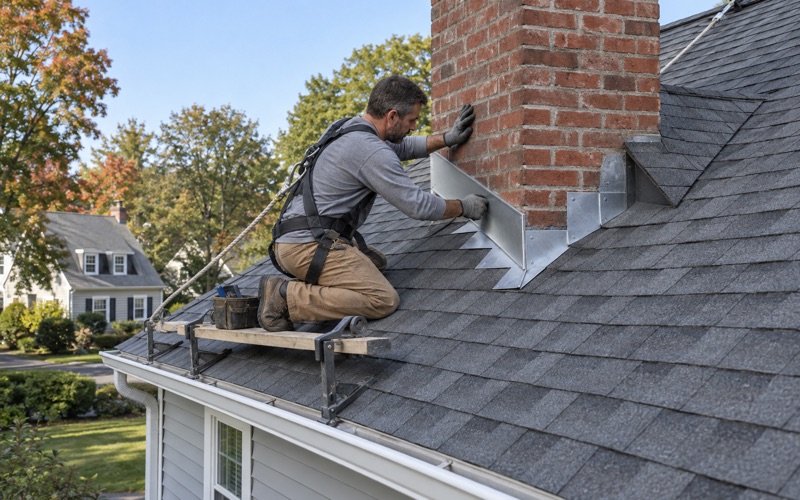
Chimneys deserve particular care on these houses. When we replace a roof, we replace step, counter and chimney flashing rather than reusing it, and we check attic ventilation, because a roof that cannot breathe ages from underneath. Those details are what keep a compatible new roof sound for decades rather than a few seasons.
- 20+ Years on Local Roofs
- Itemized Written Scopes
- Same-Day Storm Tarping