Parsippany Elite Roofing brings more than 20 years of work to roofing in Totowa, and the first thing we do on any leak call is climb into the attic as well as onto the roof. Water rarely enters where the stain shows, so we trace it to the real entry point before we price anything. That single habit saves owners from paying to fix the wrong spot.
We also tell you plainly whether a roof can be repaired before a replacement conversation ever starts. When replacement is the honest answer, our written scope breaks tear-off, decking, underlayment, flashing, ventilation and gutters into separate lines. You can lay our estimate beside anyone else’s and compare the two item by item instead of guessing what a single lump sum hides.
This page is about something particular to the borough: its own written standard for the outside of a house. Totowa’s Property Maintenance chapter treats a roof and its drainage as part of keeping a property sound, and since 2018 that expectation reaches empty houses too. Below we explain what the rule says, who enforces it, and how we help owners keep up.
Totowa’s Exterior Standard for Roofs, Gutters and Leaders
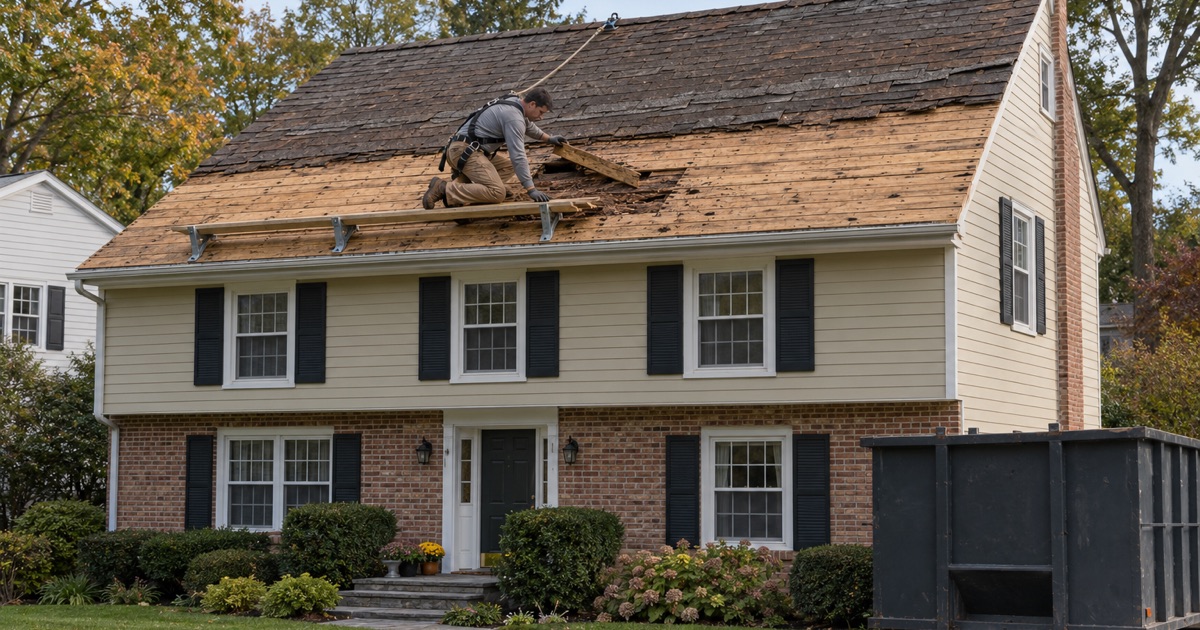
Totowa writes its expectations for a house’s exterior into Chapter 295 of the borough code, titled Property Maintenance. The sentence that matters to us reads that exterior walls, sidings, gutters and leaders and roofs shall be kept structurally sound, in good repair and free from defects. It puts the roof and the drainage that carries water off it on the same footing as the walls.
What Free From Defects Means on a Roof
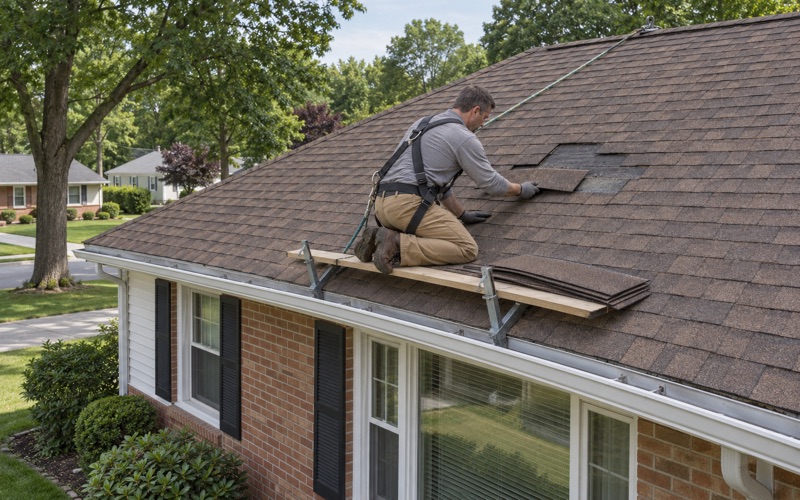
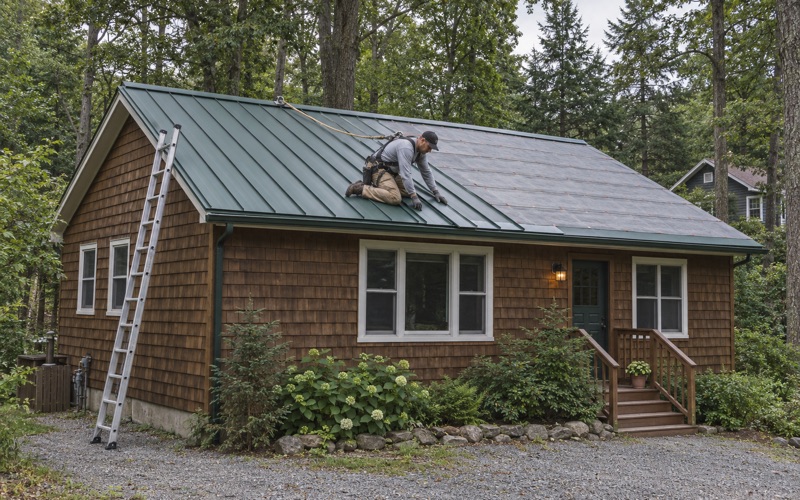
On a shingle roof, a defect is usually something a passerby can see: missing or lifted tabs, a sagging ridge, exposed nail heads, or flashing pulled away from a chimney. We look for those from the ground and the roof, then confirm from the attic whether any of them is letting water through. Daylight at the deck boards or a dark ring on the sheathing settles the question.
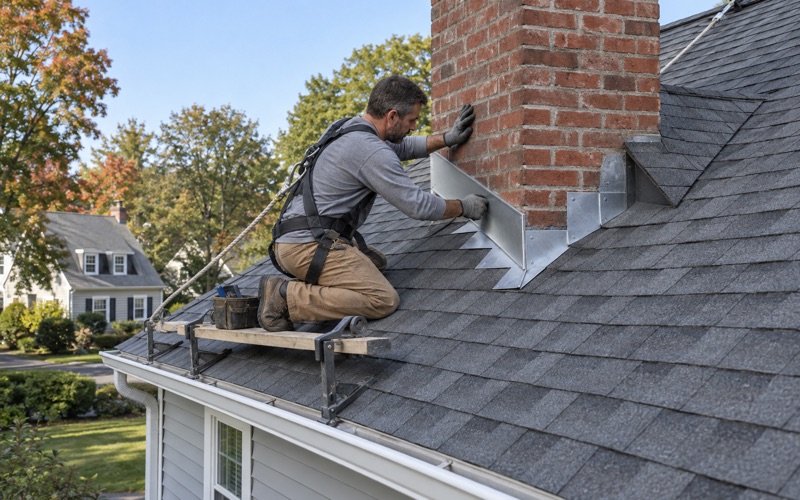
Where flashing is the problem, we replace step, counter and chimney flashing as part of the job rather than bending old metal back into place. Reused flashing under a new covering is one of the most common reasons a fresh roof leaks at the same chimney a few seasons later, and it is cheap to avoid while the roof is open.
Gutters and Leaders Are Named Too
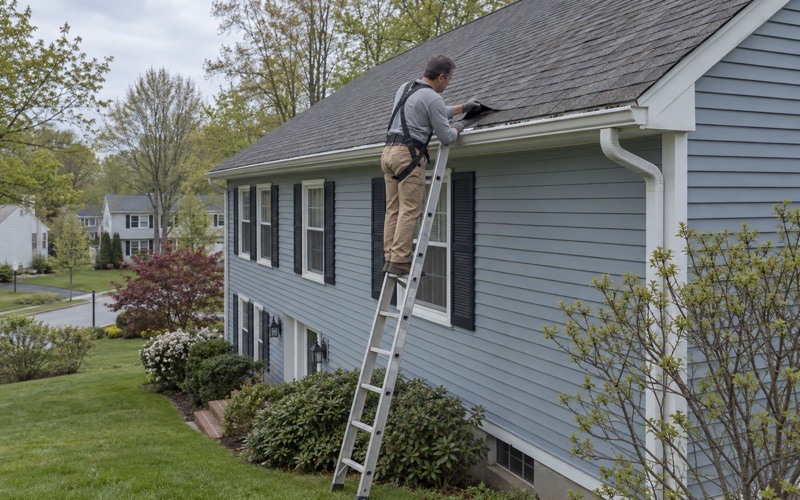
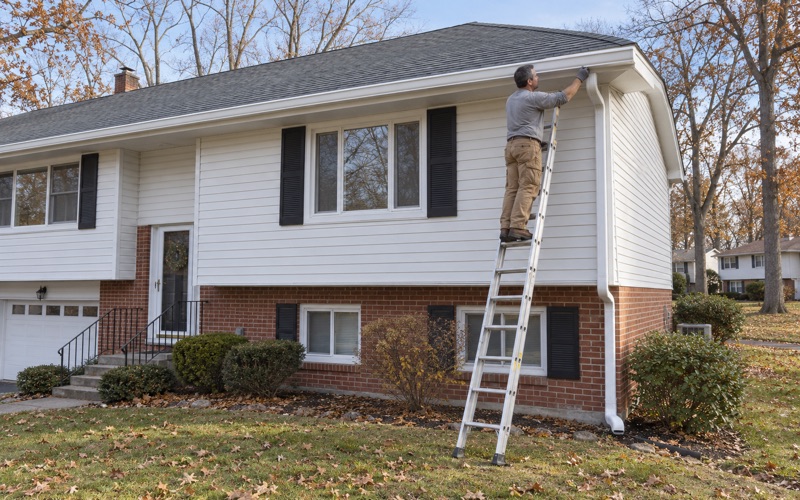
The chapter names gutters and leaders alongside roofs, which matches how damage actually happens. A gutter pulling off the fascia, a leader that dumps water against the foundation, or a run clogged so badly it overflows onto the siding is the kind of condition the standard describes. We repair or replace sections, and on a full replacement we can quote seamless aluminum gutters and leaders as their own line.
Fascia boards behind a failing gutter are often soft by the time anyone notices. We check for rot at the same visit, because a new gutter hung on a soft board will pull loose again. On houses built before 1978, painted trim falls under the EPA lead-safe rule, so we plan that work with lead-safe practices rather than dry-scraping old paint into the yard.
Who Enforces It at 537 Totowa Road
The borough Building Department, on the second floor at 537 Totowa Road, lists James Booth as Zoning Inspector, Housing Officer and Property Maintenance Inspector. That is the office an owner would likely hear from about an exterior condition under Chapter 295. We do not speak for the borough, and we cannot say how often roofs are cited, but we can put a defect right.
Replacing the covering on a detached one- or two-family house is ordinary maintenance under New Jersey Administrative Code 5:23-2.7, so a standard re-roof there needs no permit. Structural repairs such as rafter or sheathing work, and re-roofs on attached or multifamily buildings, are different, and we sort out which applies before work starts.
Looking for roofing closer to South Orange Village? See Roofing Services in South Orange Village.
Empty Houses and the 2018 Vacant-Property Rule
In February 2018 the borough adopted Ordinance 04-2018, which added a registration requirement for vacant properties to the Property Maintenance chapter. A residence counts as vacant when no one has legally lived there, or work and occupancy have stopped, for at least three months and the house shows signs of being empty. A home with working systems, regular upkeep, no citations and an active sale or rental listing is not treated as vacant.
Why Three Months Passes Quickly
Three months is not long when an estate is being settled or a sale drags on. A roof that was sound in spring can lose shingles in a single summer thunderstorm, and gutters packed with fall leaves overflow at the first heavy rain. We suggest an owner have the roof and gutters looked at when a house first goes empty, not after the registration deadline arrives.
Registered Within 30 Days
The owner must register a vacant property within 30 days of the vacancy or of taking ownership, and renew every year. The ordinance sets the fees at $500 for the first registration, $1,500 at the first renewal and $5,000 at any renewal after that. Those numbers belong to registration itself, not to any roof repair, but they make an empty house an ongoing obligation.
Registration is the owner’s job. We do not register properties or act as anyone’s agent; our part starts when the roof or gutters on that house need attention. Owners managing a house from out of town can tell us what the visit is for, and we write up findings so they can be passed to whoever is handling the property.
The Exterior Maintenance Duty
Section 5 of the ordinance requires the owner to post a sign, secure the building and make provision for the regular maintenance of the exterior of the property. A roof is part of that exterior, and it is the part nobody sees from the driveway. A house can look tidy from the street while a lifted shingle has been feeding water into the attic for weeks.
Section 6 sets a fine of $500 to $1,000 per offense under the ordinance, with each day counted separately and the total recoverable as a lien. Those penalties attach to the vacant-property rules, and the ordinance does not single out roofs, but a neglected exterior is exactly what the maintenance duty is written to prevent.
Estates, Foreclosures and Houses Between Owners
The houses most likely to fall under the vacant-property rule are also the ones most likely to have a roof problem go unnoticed. An estate house waiting on probate, a home whose owners have already moved, and a property in foreclosure share one trait: no one is upstairs when the ceiling stains. A slow leak can run for a season before anyone opens the door.
Foreclosing Creditors Carry the Exterior Duty
Section 8 of the ordinance puts responsibility for exterior care, maintenance, security and upkeep on a foreclosing creditor. When the borough sends such a creditor a notice, the creditor has 30 days to correct the violation, or 10 days if the condition is an imminent threat. Daily fines follow if it does not, and they run higher for an out-of-state creditor.
We do not hold maintenance contracts with banks. When a lender’s representative or a buyer of a foreclosed house calls us about the roof, we treat it like any other job: attic first, a plain answer on repair, and a written scope with every item on its own line.
Selling an Estate or Between-Owner House
Executors and sellers often need to know what the roof will mean to a buyer. We provide a written roof condition report the seller can hand to the buyer’s inspector, describing the covering, flashing, gutters and what we saw in the attic. It gives both sides the same starting point instead of a surprise line in an inspection report.
Contracts we write follow New Jersey’s home improvement rules, including the three-business-day cancellation notice, which gives an heir or attorney signing for an estate time to check with the family. If a buyer or estate later files an insurance claim for storm damage, we photograph and document it for them, and we will meet the adjuster at the house when asked.
Keeping an Empty House’s Roof and Gutters Watched
Totowa’s housing stock makes this more than a theoretical concern. Census figures count 1,114 homes built during the 1950s, about 28 percent of the borough’s units, plus 747 built before 1940. A house from those decades has usually been through more than one roof, and on a re-roof the open questions are how many layers come off and what shape the original board sheathing is in.
Tear-Off and Decking on an Older House
When an older roof has two or more layers, New Jersey’s rehabilitation subcode calls for tearing off to the deck rather than adding another layer. Once the old roofing is off, any damaged decking we find is photographed and shown to the owner before it is replaced, at the per-sheet price already set in the contract. An absent owner sees the same photos we do.
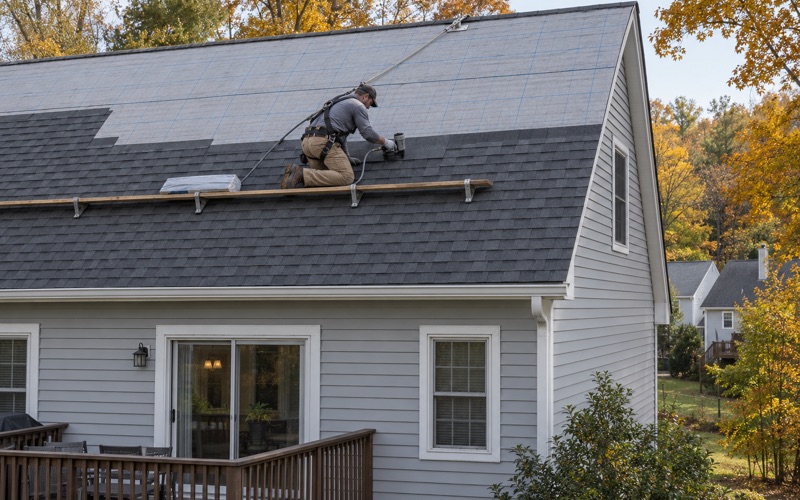
We also check attic ventilation on every replacement, since a closed-up house with no one running the heat or opening windows can trap moisture under the deck. A ridge vent paired with soffit intake keeps air moving whether or not anyone lives there. Capes and split-levels with ice-prone eaves get an eave membrane along with that ventilation check.
Storm Visits and Seasonal Checks
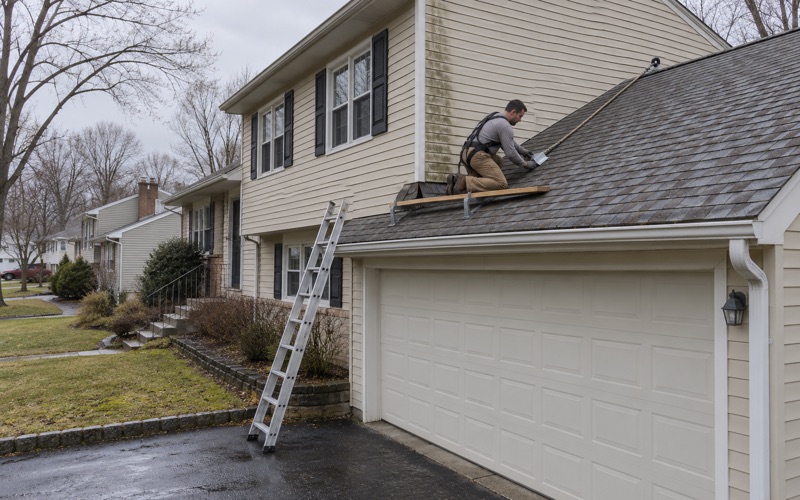
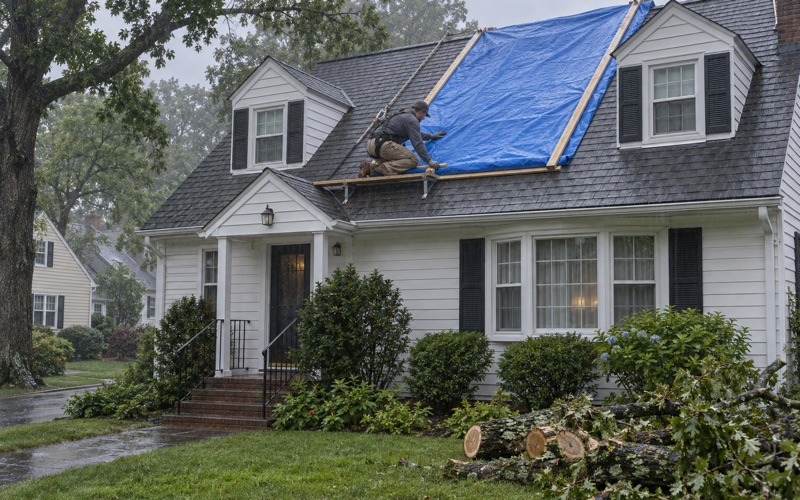
After a wind storm, we put tarps and temporary repairs on the same day and take photos before anything is moved. For an empty house that same-day visit is often the only thing standing between a torn section and a wet attic. Owners who live elsewhere get the photos so they can see the damage without making the trip.
Between storms, a fall gutter cleaning and a look at the flashing and shingles is a simple way for an owner to keep up with exterior maintenance on a house nobody lives in. Mature trees overhanging a lot fill valleys and gutters with leaves, and we call those out in the estimate. At the end of every work day we clean the driveway, yard and gutters and run a magnet for nails, so an empty property is not left littered.
Whether you are an heir, an executor, a seller or a new owner, we can look at a Totowa roof from the attic up and tell you what it actually needs. Call us before a small defect becomes a bigger repair, and we will give you a written answer you can act on.
- 20+ Years on Local Roofs
- Itemized Written Scopes
- Same-Day Storm Tarping