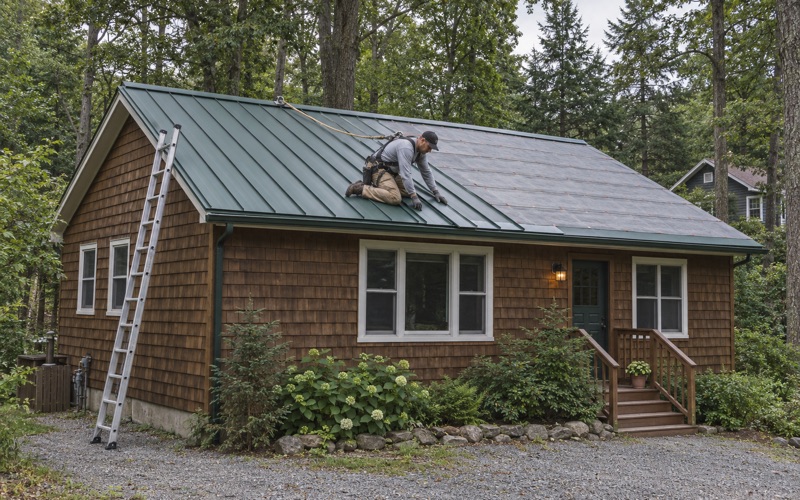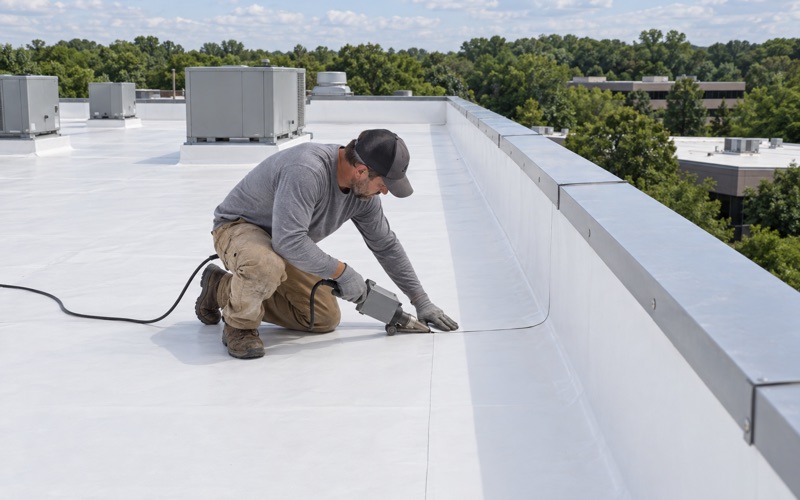
Parsippany Elite Roofing has handled roofing in Verona and across this part of New Jersey for more than 20 years, and on the older houses here the job is rarely just shingles. Removing a worn roof often means touching the painted wood at its edges: fascia boards, rake trim and soffits that have been repainted for decades. That edge work carries federal rules a plain shingle tear-off does not.
Before we price anything, we tell you plainly whether the roof can be repaired, and a leak call always includes a trip into the attic so we find where the water actually enters. When replacement is the honest answer, our written scope breaks tear-off, decking, underlayment, flashing, ventilation and gutters into separate lines. That lets you lay two estimates side by side and compare them item by item.
This page walks through what changes on a re-roof of a pre-1978 house, where the painted trim threshold sits, what a bare roof deck does not trigger, and how the township’s own rental lead inspection fits in. Owners of rented older houses have one more thing to think about, and we cover that near the end.
Re-Roofing Verona’s Pre-1978 Houses
How Old the Housing Stock Runs
Verona is a township in Essex County with 14,572 residents at the 2020 census, and its housing is older than most buyers expect. Census survey estimates count 6,012 homes, and 2,014 of them were built in 1939 or earlier. Another large share went up through the 1950s and 1960s, and the population had passed 10,000 by 1950.
Federal lead rules use 1978 as the dividing line for target housing, and the estimates put between 4,466 and 5,292 Verona homes before that year. The exact figure falls inside a census age bracket, so we give it as a range rather than round it up. Either way, most houses in the township sit on the older side of that line.
Why the Roof Edge Matters
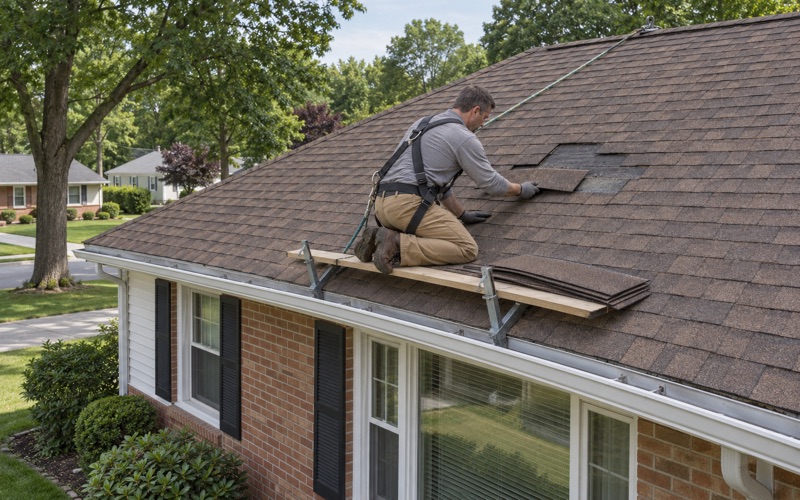
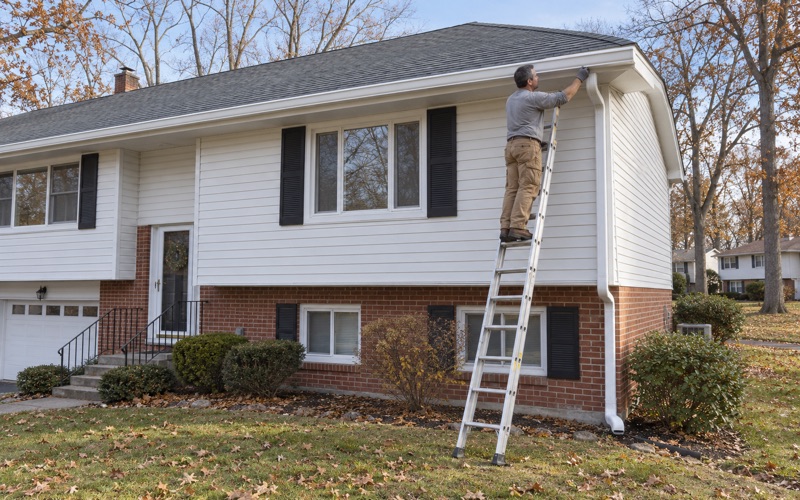
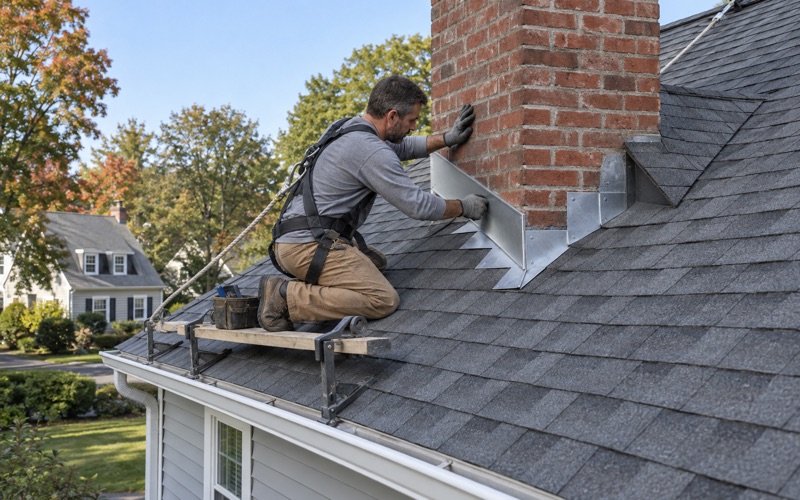
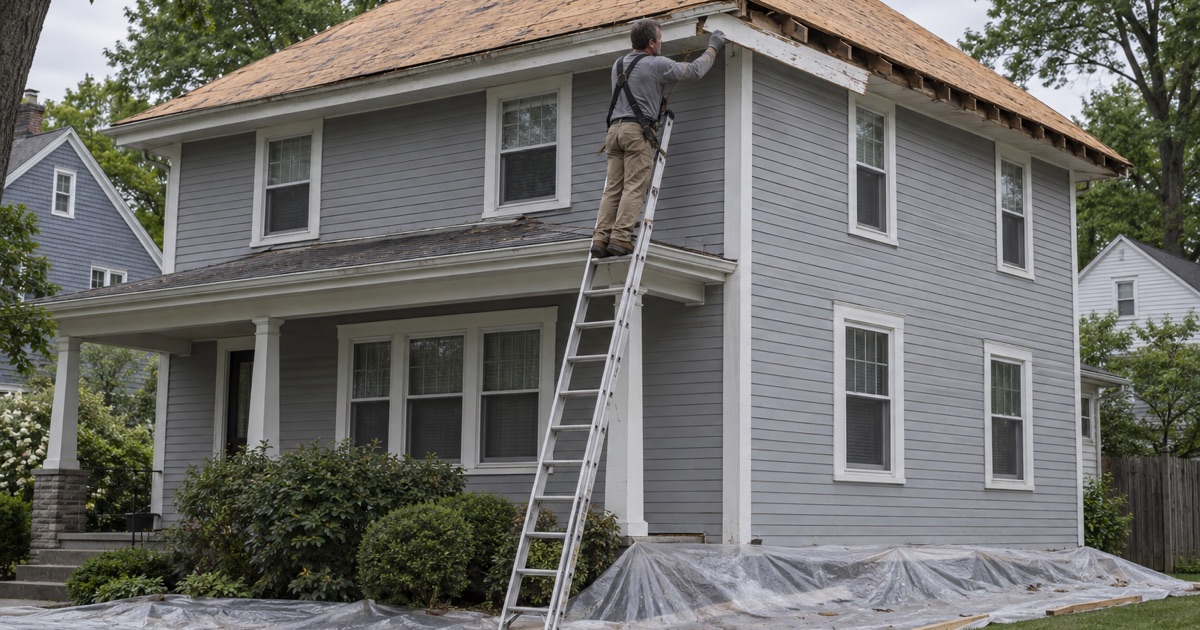
On a house built before 1978, the shingles and felt usually carry no paint at all. The trouble starts at the perimeter, where painted fascia boards hold the gutters, rake boards finish the gable ends and soffits close in the overhang. Replacing rotted fascia or swapping trim for new drip edge disturbs painted wood, and that is the part of a re-roof the federal rule cares about.
We do not assume any particular Verona house has lead in its paint, and no record we hold says which ones do. What we can see is the age of the house and whether the trim is painted. Those two facts decide which work practices the edge of the job needs, so we look at both before the estimate is written.
What We Check Before Pricing
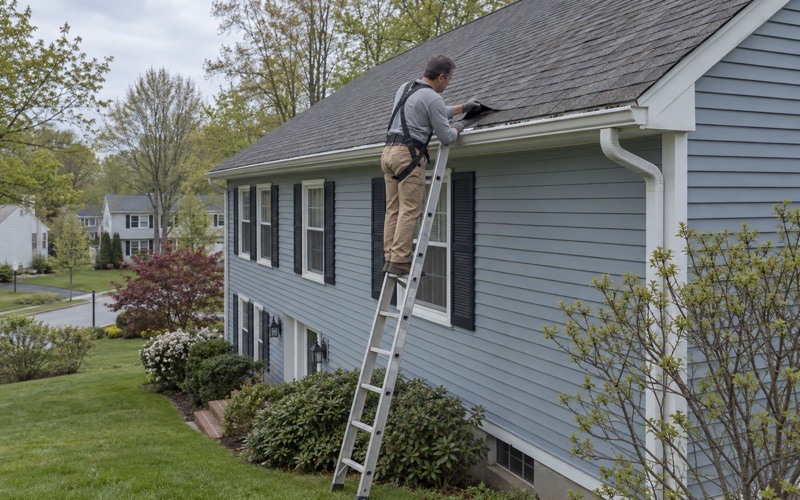
Our walk-around on an older home covers the fascia behind the gutters, the rake boards, the soffit panels and any painted crown trim at the eaves. We note which pieces are sound, which are soft and which would come off for new drip edge or gutters. That list goes into the written scope, so you see the painted-surface work as its own item.
We also check attic ventilation on every replacement, because soffit intake ties straight into how the roof breathes. Changing solid soffit panels for vented ones can disturb painted surface too, so the ventilation plan and the trim plan are drawn up together. A roof that cannot breathe ages from underneath, and on an older house the two problems are often linked.
Looking for roofing closer to Cedar Grove? See Roofing Services in Cedar Grove.
Painted Fascia, Soffits and the 20-Square-Foot Line
How the Federal Rule Counts Paint
The EPA Renovation, Repair and Painting Rule, written at 40 CFR 745.83, defines renovation as modifying a structure in a way that disturbs painted surfaces, including the removal of building components. Exterior work counts as minor repair and maintenance only when it disturbs 20 square feet or less of painted surface, uses none of the restricted work practices and involves no window replacement or demolition of painted areas.
Above that line, the job is a renovation under the rule, and containment, cleanup and record-keeping requirements follow. On housing built before 1978, owners are also handed the EPA’s Renovate Right pamphlet before the work starts. New Jersey has not taken this rule over from the federal government, so EPA Region 2 administers it here.
Removed Components Count in Full
The detail that catches people is how removal is measured. Under the rule, when a painted component or part of one is removed, the entire surface area that comes off counts as painted surface disturbed. A long run of fascia pulled to replace rot can pass 20 square feet quickly, even if only a small patch of it looked bad.
Picture a rake board and a section of fascia replaced on the same gable. Each piece is measured by its whole painted face rather than by the damaged spot. We list those pieces in the estimate so you can see whether the trim work stays under the minor-repair line or crosses into renovation.
Planning Trim Work Around the Line
Sometimes the honest choice is to leave sound painted trim in place and fit new drip edge and gutters to it, which keeps the disturbed area small. Other times the fascia is rotted through and has to come out regardless. We explain which applies on your house and why, rather than quietly widening or shrinking the scope.
Where painted trim will come off past the line, the rule’s lead-safe work practices apply to that part of the job, and we raise it in writing before anything is scheduled. Owners can fairly ask every contractor bidding the job how they plan to meet the rule on the trim, and expect a specific answer.
What an Unpainted Roof Tear-Off Does Not Trigger
The EPA Answer on Bare Roofing
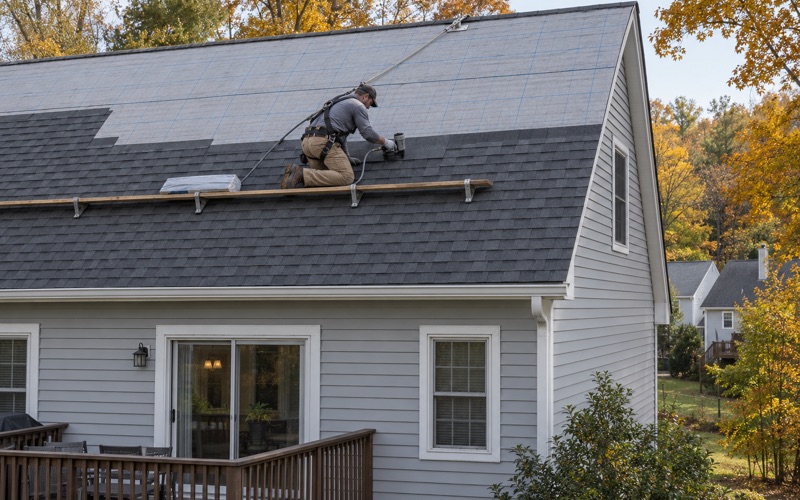
The EPA has answered this question directly in its published guidance on the rule. It says the rule applies to work that disturbs painted surfaces, and where there is no paint to disturb, it does not apply. Stripping asphalt shingles, felt and unpainted sheathing from a roof deck is ordinary roofing as far as the lead rule is concerned.
That matters because owners of older homes sometimes assume a full replacement automatically brings lead-safe requirements with it. It does not when the work stays on unpainted material. The rule turns on the paint as well as the age of the house, so a 1930s roof with bare wood trim and a 1960s roof with painted fascia can be very different jobs.
Where the Line Gets Crossed by Accident
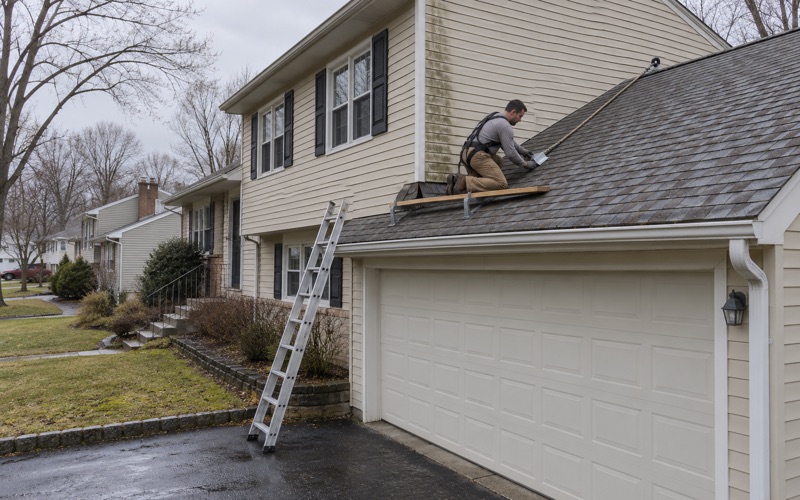
A separate EPA answer warns that hammering painted components from the unpainted side can still bring the work under the rule if it creates paint dust or chips. Prying a gutter or drip edge off a painted fascia board is an easy way to do exactly that. We plan the edge removal so painted wood is not broken up as a side effect of the tear-off.
The same thinking applies to flashing. We replace step, counter and chimney flashing with every roof instead of reusing it, and on older houses that metal sometimes meets painted siding or trim. Those meeting points are noted in the scope so the trim beside them is handled deliberately rather than pried loose in a hurry.
Decking and the Township’s Permit Answer
Once the old roof is off, any damaged decking is photographed and shown to you before it is replaced, at a per-sheet price already set in the contract. The Verona Building Department, based at the Verona Community Center on Bloomfield Avenue, says on its own FAQ that shingle replacement alone on one- and two-family homes needs no permit, but sheathing repair or replacement does.
That is the township’s published answer, and we treat it as the starting point on any job where decking comes out. Our contracts follow New Jersey’s home improvement rules, including the three-day cancellation notice, so the scope and the paperwork line up before anything is torn off.
Verona’s Own Lead Inspection of Rental Houses
What Ordinance 2024-03 Requires
Separate from anything a roofer does, Verona runs its own lead-paint program for rentals. Ordinance 2024-03 created Article II of Chapter 390 of the township code, effective February 29, 2024. It directs a township lead inspector to inspect every single-family, two-family and multiple rental dwelling for lead-based paint hazards through visual assessment and dust wipe sampling.
Dust wipe sampling means wiping a representative surface and testing what it picks up, while a visual assessment looks for deteriorated paint or visible dust, debris or residue. Rentals built during or after 1978 are exempt. An owner may hire a private lead inspector certified by the state Department of Community Affairs instead of using the township’s own.
Fees, Certification and Deadlines
A clean result earns a lead-safe certification valid for two years, which the owner gives each new tenant and attaches to the lease. The ordinance sets a $250 visual assessment per unit, a $25 filing fee and $20 per unit for the state’s Lead Hazard Control Assistance Fund, with $295 charged for a re-inspection. An owner who fails to act gets 30 days to cure, then faces a penalty of up to $1,000 per week.
Census estimates count 1,208 renter-occupied homes in Verona, including 103 rented detached houses and 218 rented units in two-unit buildings. Those landlords are the owners most likely to be juggling a roof replacement and a lead inspection on the same property, sometimes in the same year.
How a Re-Roof Fits Around the Inspection
A roof replacement does not set off the township inspection, and a roofing crew does not issue the lead-safe certification; the ordinance ties both to rental dwellings and the township’s program. What the roof and the inspection share is the painted trim. On a rented older house, the fascia and soffits under the gutters are the first place we look, because deteriorated paint there is exactly what a visual assessment notices.
If a landlord is preparing for an inspection, timing the trim repair with the roof can keep peeling paint at the eaves from sitting through a visual assessment. We will tell you what condition the edge is in, while the inspection itself stays between you and the township or your private inspector.
Questions to Ask Before the Tear-Off
Ask any contractor which painted pieces of trim they expect to remove, how they measure that surface against the 20-square-foot line, and what happens if rotted fascia turns up once the gutters are off. Ask how decking is priced and shown to you, and whether flashing is new or reused. Clear answers to those questions separate a careful bid from a cheap one.
If the house is being sold, we can write a roof condition report the seller hands to the buyer’s inspector. If it is rented, check the date on the lead-safe certification before scheduling the work. Either way, knowing the age and condition of the trim is worth more than a guess made from the ladder.
- 20+ Years on Local Roofs
- Itemized Written Scopes
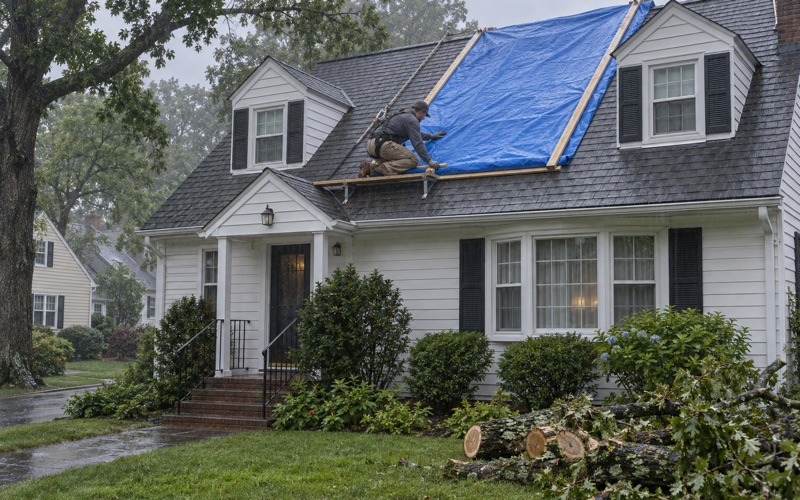
- Same-Day Storm Tarping