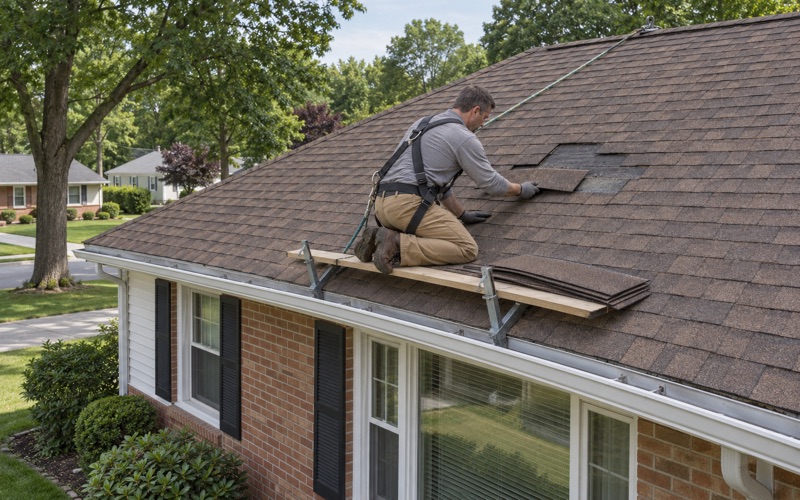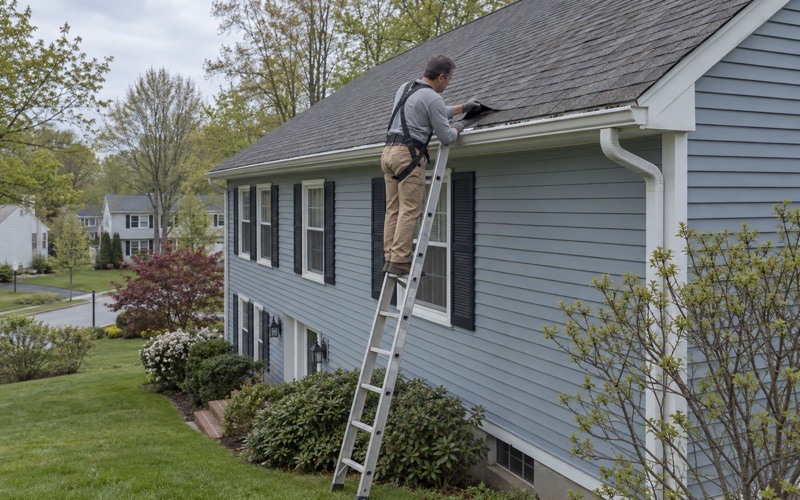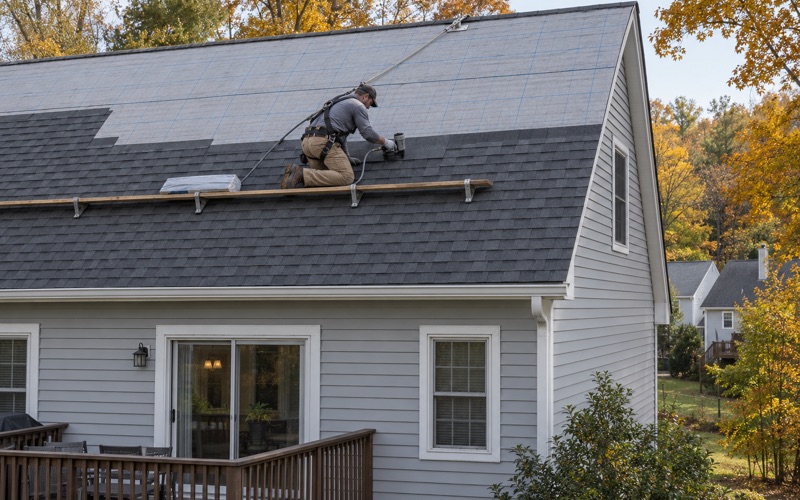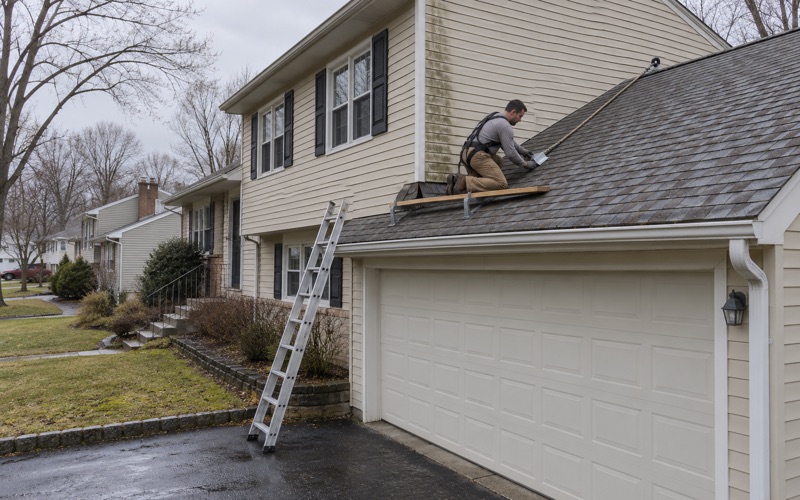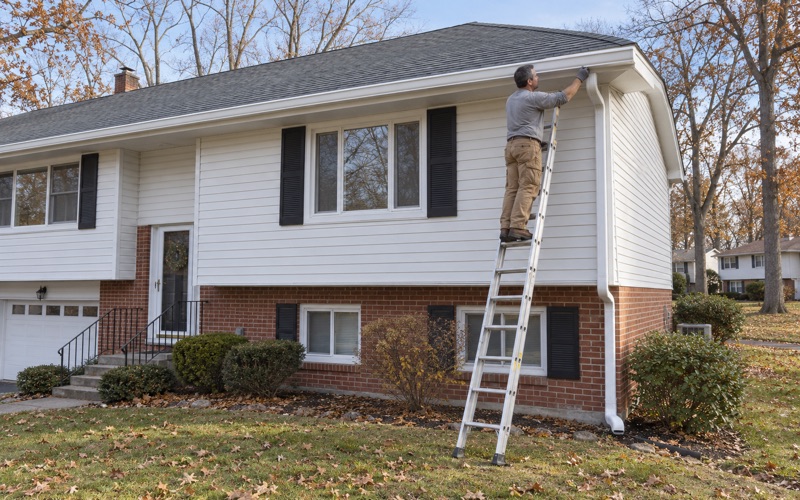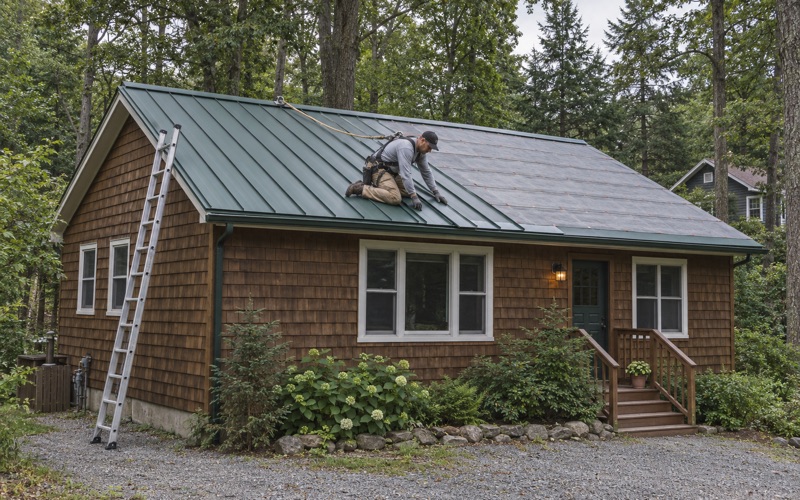
Parsippany Elite Roofing approaches roofing in Wallington with more than 20 years in the trade and one habit that does not change: we find the water before we price the fix. Every leak call includes a trip into the attic as well as onto the roof, so the entry point is traced rather than guessed. Owners then get a plain answer on whether a repair will hold before anyone mentions replacement.
Many roofs here belong to landlords, and that changes what a roof estimate has to do. A replacement on an apartment building is a large capital cost, and in this borough it can also become a question for a municipal board that reviews rents. We write scopes with that reader in mind, listing tear-off, decking, underlayment, flashing, ventilation and gutters as separate lines.
Two estimates written that way can be compared item by item, and the same document gives an owner a clear record of what the work cost. Damaged decking found after the old roof comes off is photographed and shown to the owner before it is replaced, at a per-sheet price fixed in the contract. Contracts follow New Jersey’s home improvement rules, including the three-day cancellation notice.
Rent Control in Wallington and the Buildings It Covers
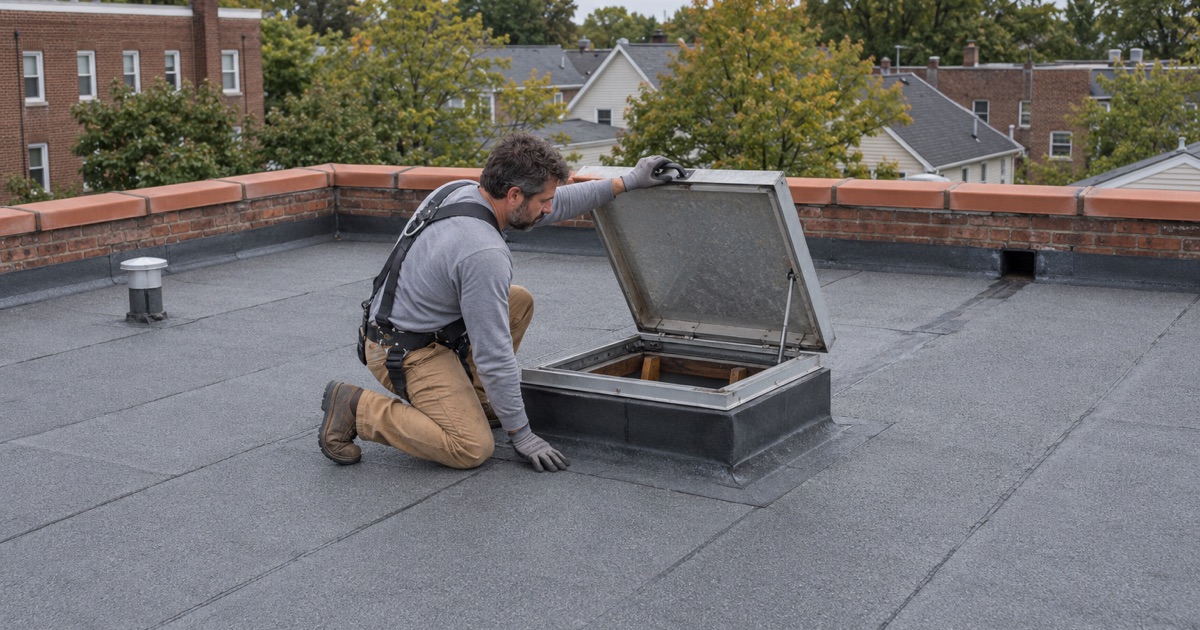
Wallington still runs rent control. The ordinance sits at Chapter 283 of the borough code, and for an owner planning a roof it matters in two ways: it decides which buildings answer to the Rent Leveling Board, and it carries a clause on capital improvements that a new roof may fall under.
What Chapter 283 Calls a Dwelling
The chapter’s definition reaches ‘any building or structure rented or offered for rent to four or more tenants or family units.’ That language is the threshold, and the code goes on to exempt certain premises from the chapter. We have not seen the full exemption list, so we never tell an owner that a particular building is covered or exempt.
That answer belongs to the Rent Leveling Board and to the owner’s own attorney. What we can do is record on the estimate how many units sit under the roof being replaced, since the unit count is the line the chapter turns on. A four-family house and a forty-unit walk-up both reach that line, and both get the same itemized scope.
How Many Wallington Units Sit Above That Line
The borough covers just under one square mile, and much of it is rental. Renters occupy 62.5 percent of occupied homes, and the 2024 American Community Survey counts 1,435 units, or 28.8 percent of the housing, in buildings of five or more units. Another 530 units sit within three- and four-unit buildings, the range where a building can cross the four-tenant threshold.
Those larger buildings hold 1,393 renter households on their own. For their owners, a roof replacement is rarely a simple household purchase; it is a building expense that may be weighed by the Board, financed over years and explained to tenants. We plan the job and the paperwork around that reality from the first visit.
Looking for roofing closer to Rutherford? See Rutherford Roofing.
A New Roof as a Capital Improvement
The capital-improvement clause is the reason a Wallington roof estimate can end up as an exhibit at a public hearing. We know what the clause’s text says, and we are equally clear with owners about the parts of it we have not read.
Spreading Cost Over the Depreciation Period
The clause divides the cost of an improvement over the ‘depreciation period allowed by the Internal Revenue Service.’ The annual amount that produces is then ‘prorated among all tenants’ under a method the code spells out further. In plain terms, a capital improvement is not treated as one lump; any recovery the Board allows is spread across years and across units.
That is why the total on a roofing contract matters so much in this borough. A figure padded with vague allowances is hard to defend, while a scope with each component priced on its own line shows exactly what was bought. Our estimates are written that way for every client, and here the habit does extra work.
Whether a Roof Qualifies Is the Board’s Call
The code defines what counts as a qualifying capital improvement, and that definition, along with any cap, schedule or application step, is in sections we have not read. We will not tell an owner how the Board will rule on a roof, and we do not prepare applications, calculate surcharges or appear at hearings on anyone’s behalf.
The sensible order is for the owner to confirm with the Rent Leveling Board whether a replacement can be treated as a capital improvement, and on what terms, before the job is priced around that assumption. Once the owner knows, we can schedule the work and supply the documents the owner chooses to present.
Repair or Replace, Answered First
A capital-improvement question only arises if the roof actually needs replacing. On a multi-unit building we inspect the field, the flashing and the attic or roof cavity first, and if a repair will carry the roof for years, we say so. An owner should not start a Board process for a roof that a targeted repair could have saved.
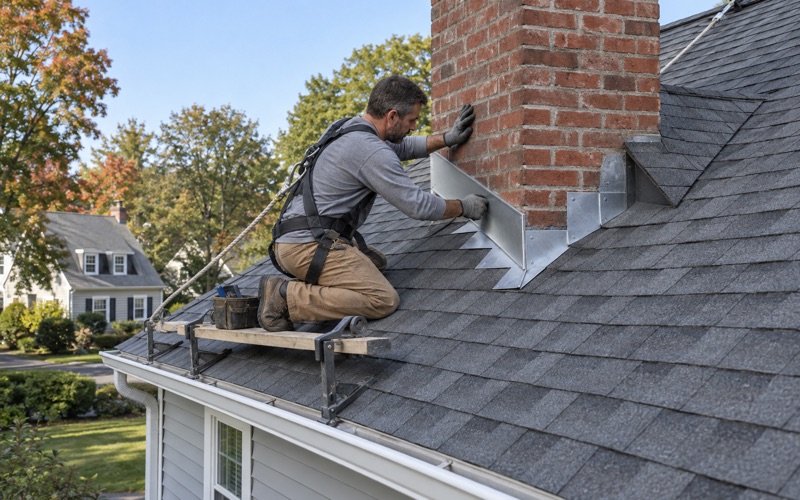
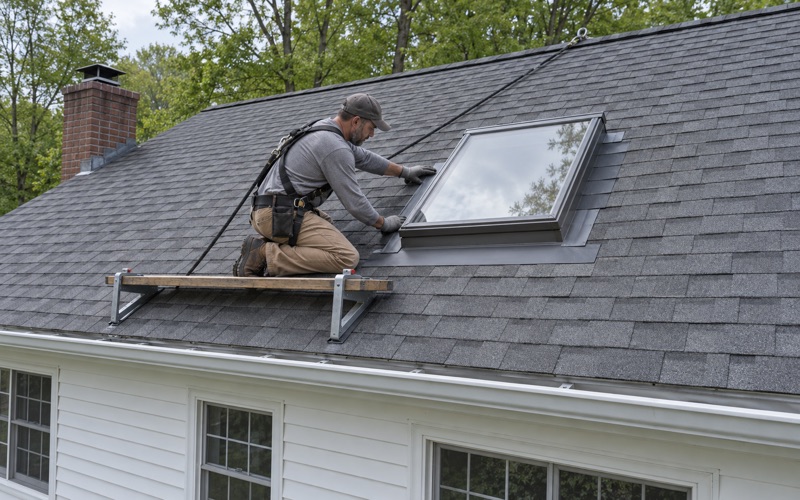
When replacement is the honest answer, the scope says why. Step, counter and chimney flashing is replaced with the roof rather than reused, and ventilation is checked on every replacement, because a roof that cannot breathe ages from underneath. Those choices cost money up front, and the written scope shows where that money goes.
Permit Work on Apartment-Building Roofs
Rent control and the building code meet on the same roof. The Board may weigh what a replacement cost, but the construction office decides whether it was built and inspected correctly, and an owner needs both answers on paper.
Outside the Ordinary-Maintenance Rule
New Jersey treats re-covering the roof of a detached one- or two-family house as ordinary maintenance under New Jersey Administrative Code 5:23-2.7. A building of three or more units is outside that rule, so a roof replacement on any building Chapter 283 reaches is permit work. The application goes to the Borough of Wallington Building Department, where Nick Melfi serves as Construction Official.
The department’s page publishes no online portal and no fee schedule, so filing is planned well ahead of a start date rather than squeezed into the week before. We build that lead time into the schedule, and the permit and its final inspection become part of the record an owner keeps for the building.
Low-Slope Roofs on Walk-Ups
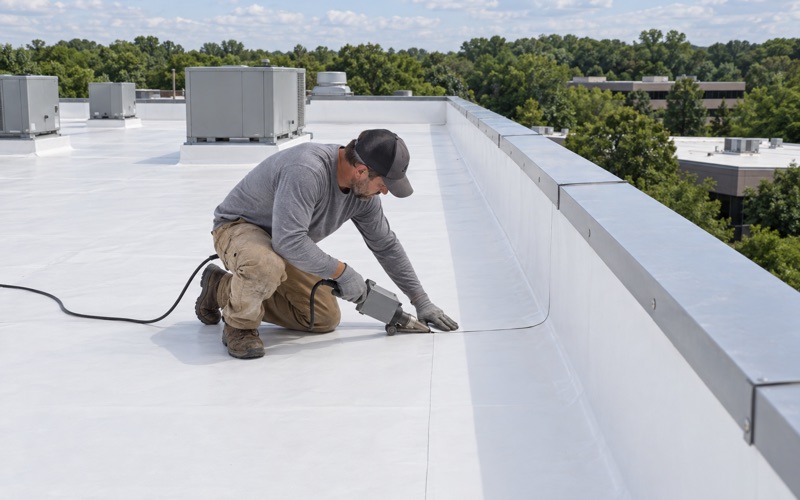
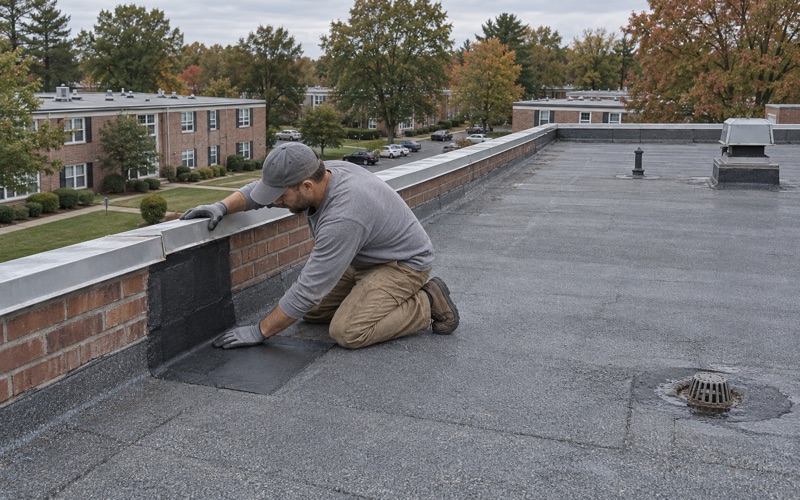
Many apartment buildings carry flat or low-slope roofs where shingles do not belong. Those roofs take torch-down SBS or APP modified bitumen, EPDM rubber, or TPO and PVC single-ply membranes, each with its own seams, edge details and drainage needs. The scope names the system, the insulation if any, and how parapets, scuppers and drains are flashed.
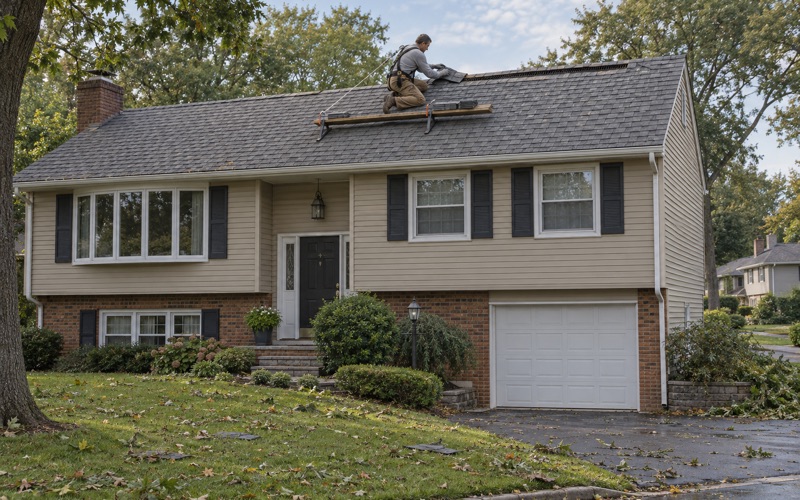
A pitched roof on a four-family house gets architectural shingles over ASTM D1970 ice and water barrier at the eaves and synthetic underlayment elsewhere, with new drip edge at eaves and rakes. Either way, the line items stay separate, so an owner can show what a membrane cost apart from the decking or gutters beneath and beside it.
Working Over Occupied Apartments
A roof replacement on a rental building happens over people’s homes. We plan tear-off by section so no unit sits open to the weather overnight, and we protect top-floor ceilings where old decking is coming out. Fall protection follows the OSHA standard at 6 feet for residential roofing, which matters on taller walk-ups with entries below the eaves.
At the end of each work day the sidewalk, yard and gutters are cleaned, including a magnet sweep for roofing nails where tenants walk in and out. On a dense block that cleanup is a courtesy to neighbors as much as to the building, and it keeps a long job from turning into a tenant grievance.
Paperwork an Owner Keeps for the Rent Leveling Board
Board paperwork is never ours to file, but much of it starts with the roofing job. These are the documents a Wallington owner of a rent-controlled building is most likely to need, and where each one comes from.
The Complaint Form’s Capital Improvements Line
The Board’s own Tenant Complaint Form shows what it looks at. Alongside current rent, new rent and the amount of the last increase, the form carries lines for ‘ADDITIONAL SURCHARGE $’ and ‘CAPITAL IMPROVEMENTS $’, and it asks whether the landlord lives in one of the units. Any roof cost an owner has sought to recover can surface on that line.
That makes the roofing paperwork worth keeping in one folder: the signed contract, the itemized scope, decking photos with the per-sheet count, the permit and the final inspection. If a tenant questions the figure, the owner can show what the roof cost and why, without reconstructing it from memory.
Hearings at the Civic Center
Complaints are heard at 7:00 p.m. at the Civic Center, in the Wallington Municipal Meeting Room at 24 Union Boulevard. The tenant must serve the landlord a copy no later than 10 days before the hearing, personally or by regular and certified mail. The form also warns that the Board may decide a complaint in the absence of a party who fails to appear.
Ten days is not much time to assemble a roof file from scratch. Owners who keep the documents together from the day the job closes are ready to answer on the evening of the hearing, and we hand over everything in that folder at completion rather than waiting to be asked.
Registration and the Emergency Contact
Rental buildings of three or more units register with the state Department of Community Affairs Bureau of Housing Inspection, while one- and two-unit rentals that are not owner-occupied file the landlord identity form with the borough clerk. Item seven of the clerk’s form names a representative who can be reached at any time in an emergency and who has authority to make repairs and expenditures.
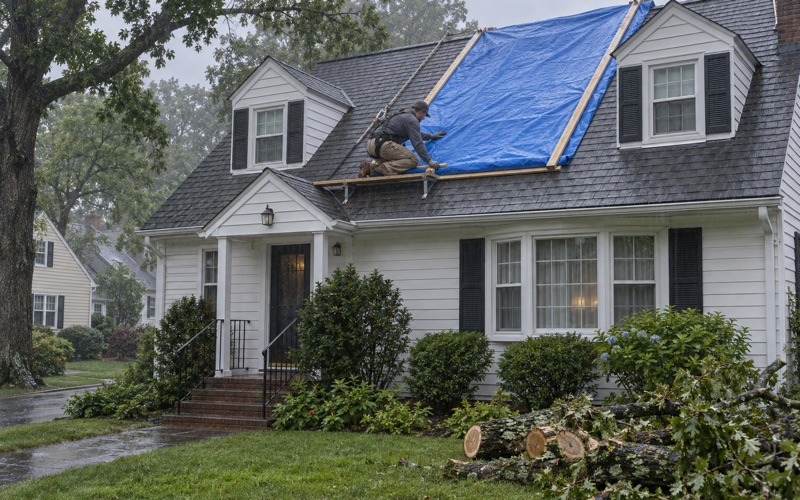
When a roof starts leaking into an apartment at night, that person is the one who authorizes a tarp. We take that call, go up the same day after a wind storm, and photograph the damage before anything is moved. A Wallington landlord who keeps our number beside the emergency contact shortens the time between a drip and a covered roof.
- 20+ Years on Local Roofs
- Itemized Written Scopes
- Same-Day Storm Tarping