Parsippany Elite Roofing has spent more than 20 years on roofing in Wood-Ridge and across northern New Jersey, and the calls we take here after a hard wind usually start with a tree. A limb on a roof is rarely just a shingle problem. It can crack the decking, split a rafter and let water into the attic before anyone has climbed a ladder.
Our first job on any damaged or leaking roof is to find out where the water actually gets in, which means we look in the attic as well as on the shingles. You then get a straight answer on whether the roof can be repaired before anyone talks about replacing it. Plenty of storm-struck roofs need a section of new deck and fresh shingles, not a full tear-off.
When replacement is the right call, the written scope breaks out tear-off, decking, underlayment, flashing, ventilation and gutters as separate lines. That lets you hold our number against another contractor’s line by line. This page walks through what the borough learned from one storm, what a falling limb does to an older house, and how to get ahead of the next one.
What Superstorm Sandy Did to Wood-Ridge
The Columbia Boulevard House
Superstorm Sandy came ashore on October 29, 2012, and Wood-Ridge’s own account of it is mostly about trees. The borough’s 2012 newsletter led with a photo of a house on Columbia Boulevard that took heavy damage from an ancient tree, with a second shot of the tree’s base ripped up by the wind. That picture is the roofing story of the storm for this borough.
We had no part in that repair and know only what the newsletter shows. What it shows is familiar to anyone who has stood in an attic after a strike: a heavy trunk does not just tear shingles, it loads the framing underneath. The house in the photo is a reminder that the roof question after Sandy was structural first and cosmetic second.
Trees Removed, Trees Still Down
Nearly a week before the storm, the borough went after dead and dangerous trees, the ones losing bark or branches with roots cresting the surface. Once those were cut, arborists found the centers of many were completely rotted out. Crews still worked 12-hour shifts for six days afterward to clear the 20 to 30 additional trees that Sandy brought down.
The newsletter also notes flooding on the eastern side of the borough and at the public works yard, whose buildings took in four feet of water, and power was restored to all homes within the week. For homeowners, the point is that the planned removals helped but did not end the risk. A rotted tree can look sound from the street until the day it fails.
A Tree Pattern, Not a Wind Figure
The newsletter describes Sandy’s winds in general terms, not as a reading taken here, and we have no measured gust for the borough to quote. What the record does support is a pattern: old, decayed trees standing over houses, and roofs that failed where those trees came down. That pattern is what we plan around on Wood-Ridge jobs.
Sandy also carried a technical label that mattered once the claims started. The National Hurricane Center reported that it came ashore near Brigantine as a post-tropical cyclone on the evening of October 29, not as a hurricane. That one classification decided which deductible New Jersey owners faced, and we come back to it below.
Looking for roofing closer to East Rutherford? See Roofing in East Rutherford.
Decayed Trees and Limb Strikes on Older Wood-Ridge Roofs
Prewar and Postwar Houses Under Mature Trees
A large share of the borough’s housing is old. Census figures put 20.2 percent of units at 1939 or earlier and another 28.4 percent between 1940 and 1959, and one-unit detached houses make up about half the stock. Many of those houses sit under street and yard trees that have been growing for as long as the houses have stood.
Older framing was often built with board sheathing or early plywood, and decades of small leaks can soften it before anyone notices. When a limb lands on that kind of deck, it tends to punch through rather than bounce. That is why our estimates on wooded lots call out overhanging limbs, leaf-packed valleys and shaded, mossy slopes as their own items.
Reading the Signs of Decay
The borough’s own checklist from 2012 is a good one to borrow. Trees that keep dropping bark or branches, or whose roots crest the surface, were the ones it chose to remove first. If a tree like that leans over your roof, the roof and the tree are one problem, even if they need two different contractors.
We are roofers, not arborists, and we will not tell you a tree is safe. What we can do is note on the estimate which limbs hang over which slopes and where debris is already packing the valleys and gutters. A tree service can then judge the wood while we judge the roof beneath it.
Why a Strike Is Rarely Only Shingles
A falling limb concentrates its weight on a small patch of roof. Shingles tear, but the deck under them can crack along a line well past the visible hole, and a rafter can split without showing anything from the yard. Water then follows the framing, so the stain on a bedroom ceiling may be several feet from the impact.
That is also why we never price a limb strike from the ground. The attic shows what the roof surface hides, from daylight through cracked boards to wet insulation along a rafter bay, and it tells us how far the repair has to reach before we write a number down.
When a Limb Comes Through: Tarp, Deck and Rafters
Same-Day Tarping After the Wind
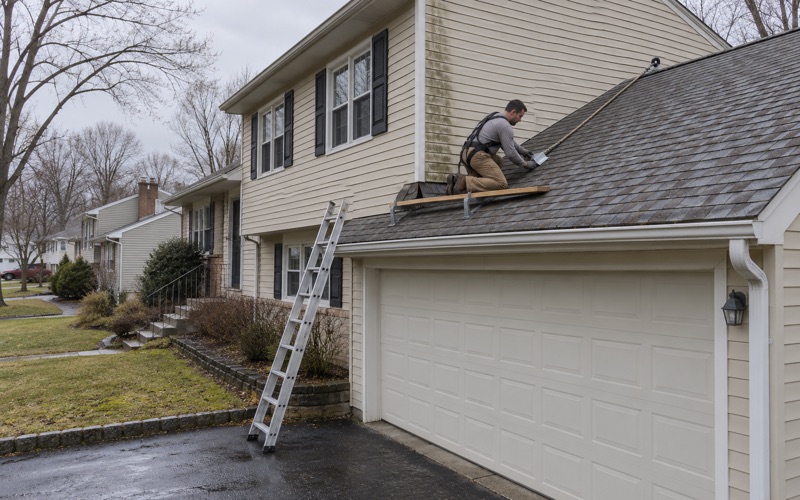
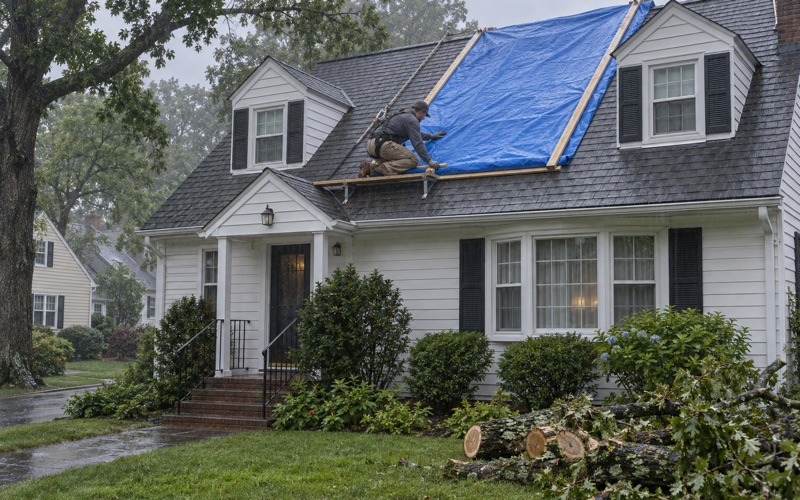
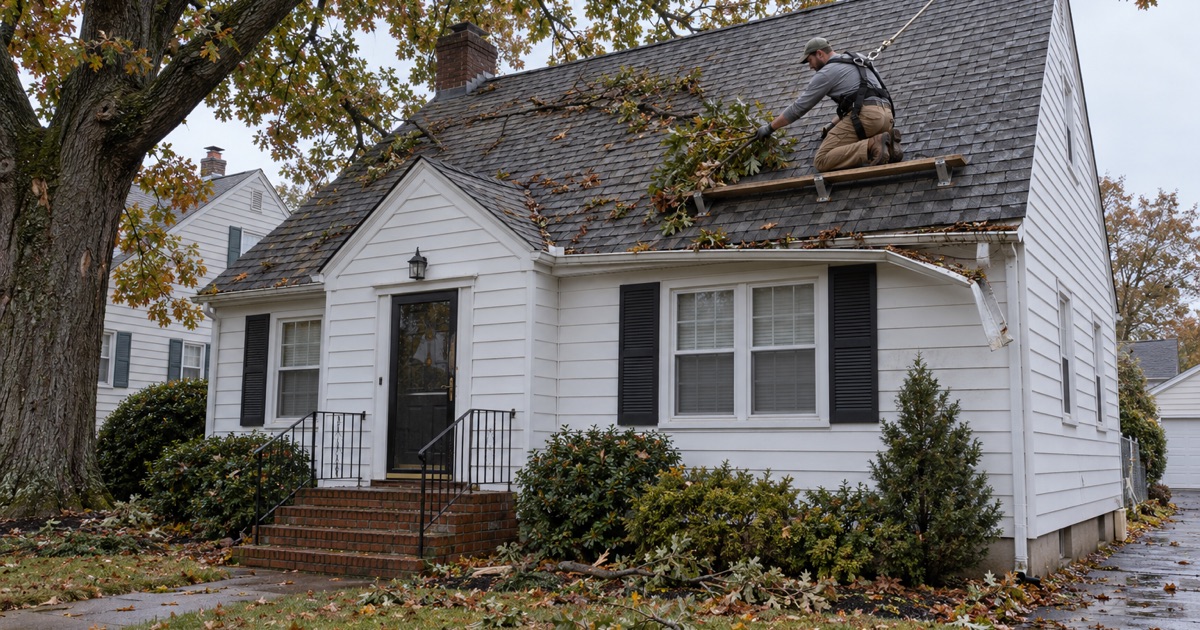
After a wind storm we put tarps and temporary repairs on the same day, and we photograph the damage before anything is moved. Those photos matter later, because once the limb is cut away and the hole is covered, the original scene is gone. Securing the opening quickly also keeps a deck repair from turning into a ceiling and insulation job.
If a tree is still resting on the house, the limb comes off first, by a tree crew, before anyone works on the roof. We will not walk a slope that is still carrying a trunk. Once the weight is off, we cover the opening, check the attic for active water and tell you what the permanent repair looks like.
Opening the Deck and Checking Rafters
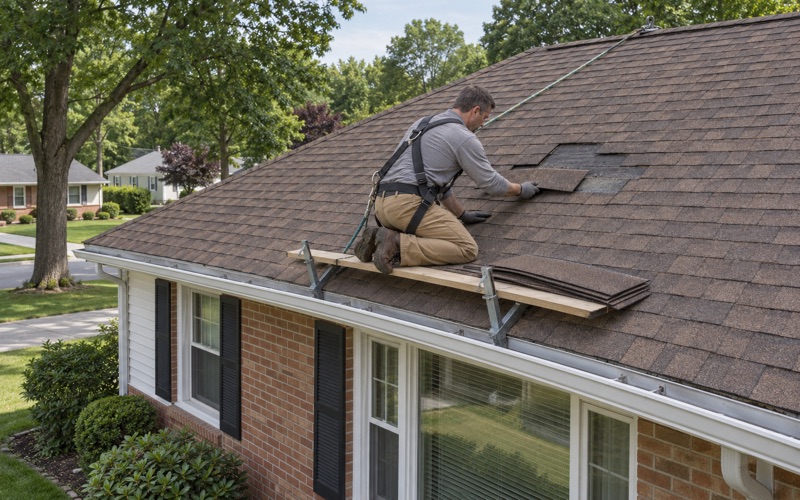
The permanent repair starts by stripping shingles well beyond the impact so we can see the full extent of cracked or soaked sheathing. From the attic side, we check each rafter near the strike for splits, crushed ends and fasteners pulled loose. A split rafter gets sistered or replaced before new decking goes over it, never simply covered.
Damaged decking that turns up once the old roof is off is photographed and shown to you before we replace it, at a per-sheet price already set in the contract. You see the board, you see the price, and nothing is added to the bill as a surprise. On older Wood-Ridge houses, that clause tends to get used.
Flashing, Underlayment and the Finished Patch
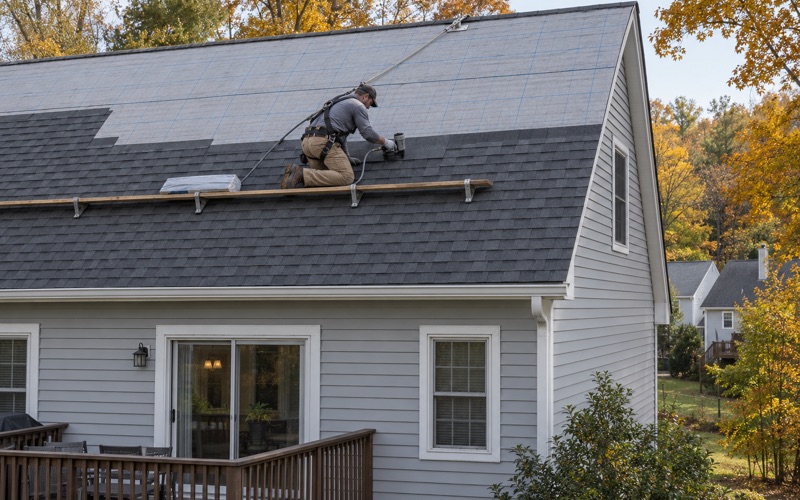
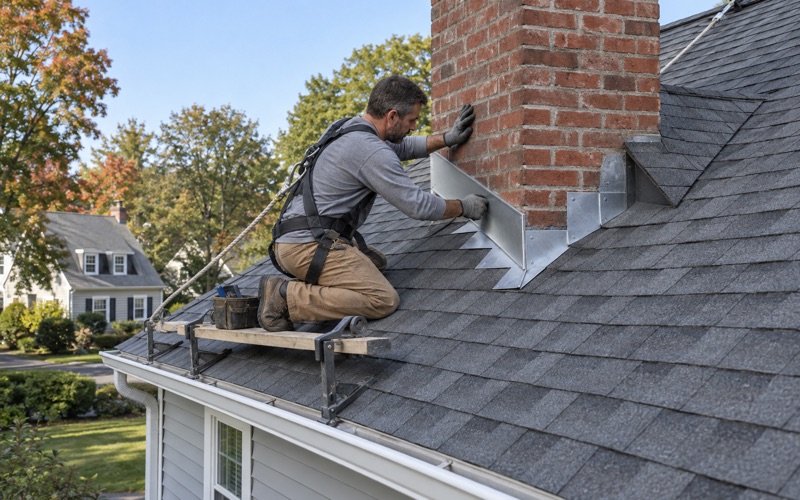
Where the strike reaches a wall or chimney, we replace the step, counter and chimney flashing rather than bending the old metal back into place. New sections get self-adhering ice and water barrier at the eaves and valleys and synthetic underlayment over the open deck. The shingles go back to match the surrounding roof as closely as the existing material allows.
If the strike lands on a roof that was already near the end of its life, we will say so plainly and price both options. Sometimes a patch buys several good years, and sometimes it means paying twice. Either way, you decide with both numbers in front of you, and the Borough of Wood-Ridge Construction Department can tell you whether that particular job needs a permit.
Sandy’s Deductible Lesson and the Next Big Wind
Why the Hurricane Deductible Never Applied
A hurricane deductible typically runs two to five percent of a property’s insured value. After Sandy, Governor Christie signed Executive Order 107 on November 2, 2012, barring insurers from imposing hurricane deductibles on New Jersey homeowners. The reason was classification: the National Weather Service had labeled the storm post-tropical before landfall, so it never met the first regulatory threshold.
The order removed that one deductible for that one storm; the ordinary deductible still applied, and coverage still depended on each policy. The standing New Jersey trigger, under Department of Banking and Insurance Bulletin 11-16, is a hurricane named by the National Weather Service with sustained winds of 74 mph or more measured in New Jersey. Whether a policy pays for a tree strike is a question for the policy, not for us.
Documenting Damage for Your Own Claim
What we do after a strike is photograph the damage and write it up so you have a clear record for your own claim. The claim stays yours to file and manage. When you ask, a member of the crew will meet the insurance adjuster at the house to walk the roof and point out what the photos show.
Any repair or replacement contract we write follows New Jersey’s home improvement rules, including the three-day cancellation notice. After a storm, when decisions get made fast, that window gives you room to read the scope line by line and compare it with another estimate before you commit.
Checking Roofs and Trees Before the Next Big Wind
The borough’s 2012 approach, clearing decayed trees before the storm rather than after, works at the scale of one house too. Have a tree service look at anything leaning over the roof, especially trees shedding bark or showing roots at the surface. Then have the roof itself checked for soft deck, lifted shingles and tired flashing while the weather is calm.
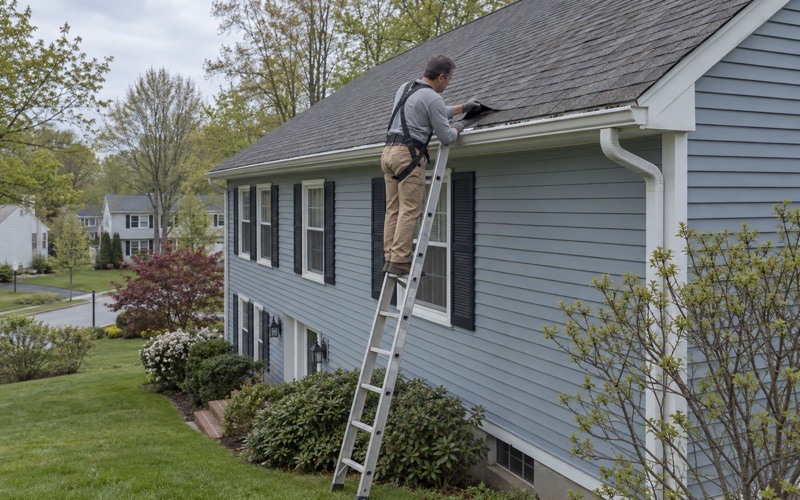
On a pre-storm visit we look from the attic and the roof, clear leaf-packed valleys and gutters, and tell you whether anything needs fixing now or can wait. If a replacement is due, we check attic ventilation as part of it, because a roof that cannot breathe ages from underneath. A sound deck and fresh flashing will not stop a falling trunk, but they keep a near miss from becoming a leak.
- 20+ Years on Local Roofs
- Itemized Written Scopes
- Same-Day Storm Tarping