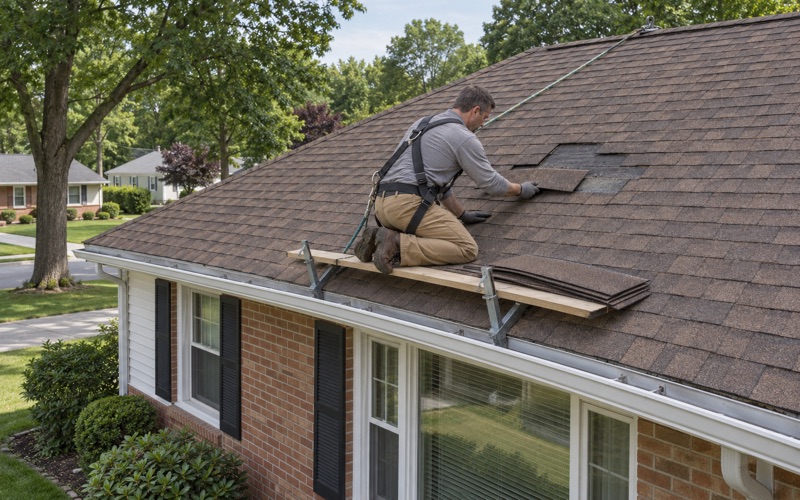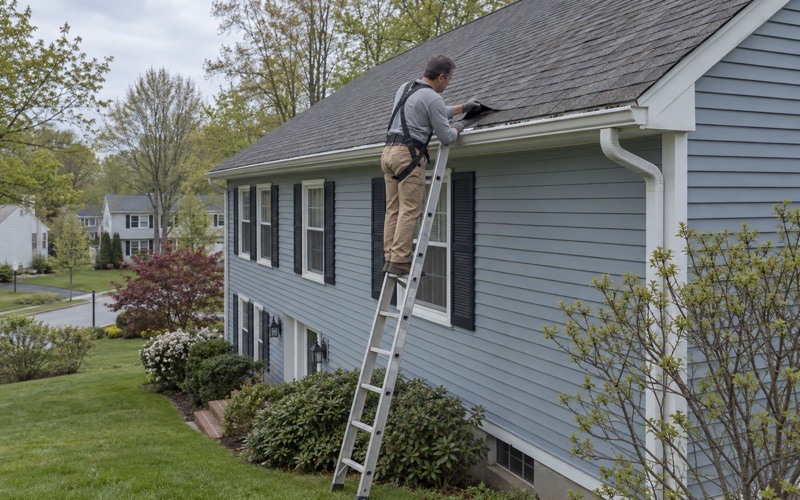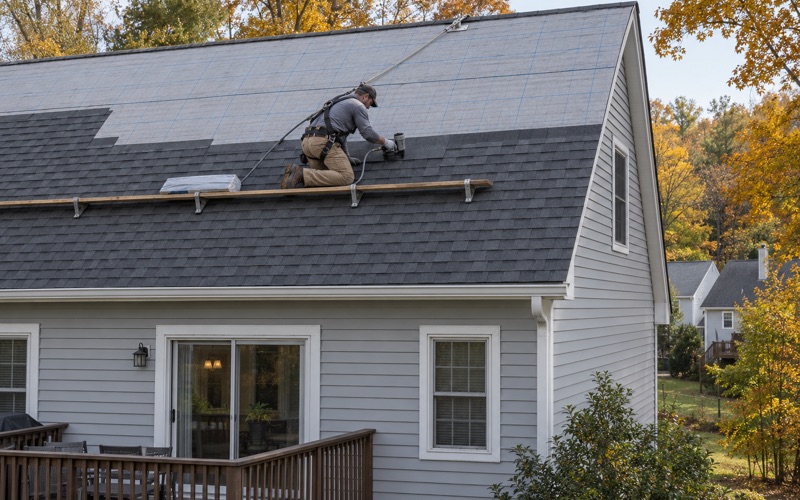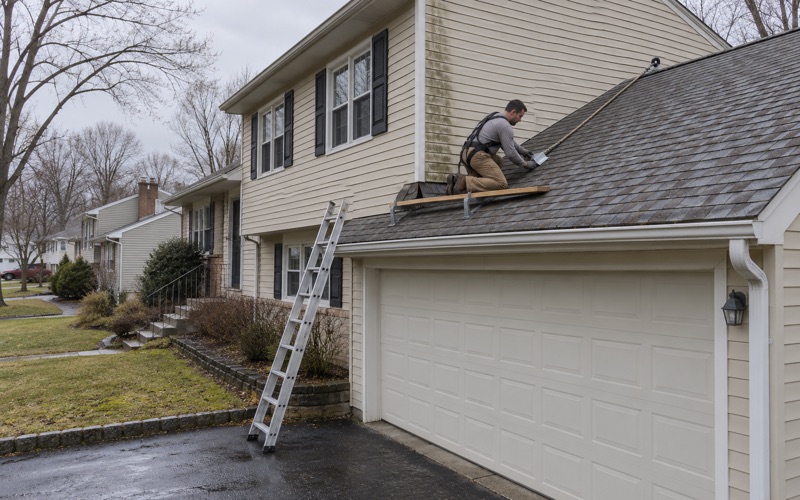
Parsippany Elite Roofing brings more than 20 years of experience to roofing in Woodland Park, and the work here follows a rhythm most towns do not have. A roof in this borough gets looked at by someone other than its owner every time the house is sold or a new tenant moves in. That shapes when repairs make sense, how a scope should be written, and what a seller or landlord needs in hand.
Every leak call starts in the attic as well as on the roof, so the water is traced back to where it actually enters before a price goes on anything. Owners get a plain answer about whether the roof can be repaired before anyone raises replacement. When replacement is the right call, our written scope breaks out tear-off, decking, underlayment, flashing, ventilation and gutters as separate lines, so any two estimates can be compared item by item.
Sellers get one more thing from us: a written roof condition report they can hand to the buyer’s inspector. Landlords between tenants get the same honest read on what the roof needs now and what can wait. Neither replaces the borough’s own inspection, but both put the roof’s real condition on paper before a closing or a lease date starts dictating the schedule.
A Certificate of Occupancy at Every Sale and Every New Tenant
What Ordinance 14-14 Sets in Motion
Woodland Park requires a new Certificate of Occupancy before any residential property is sold and before a home or apartment is rented, under Borough Ordinance 14-14. The borough lists a fee of $100 for the resale of a one- or two-family home and $100 per unit for each rental unit. Applications go through the Department of Inspections at the Municipal Building, 5 Brophy Lane.
That puts the roof on a list someone else reads at the exact moment an owner is trying to close or fill a vacancy. It is no longer a private matter that waits until something leaks. We would much rather an owner hear about a tired roof from us weeks ahead than discover it on inspection morning.
Items 3 and 4 on the Borough Checklist
The Department of Inspections’ Checklist for Certificate of Occupancy, a form updated October 18, 2018, runs to 22 items. Item 3 reads ‘All roofs to be in good condition.’ Item 4 reads ‘Gutters and leaders must be in good condition.’ Those two sit beside exterior paint, overgrowth that has to be cut back, and smoke detectors on each level.
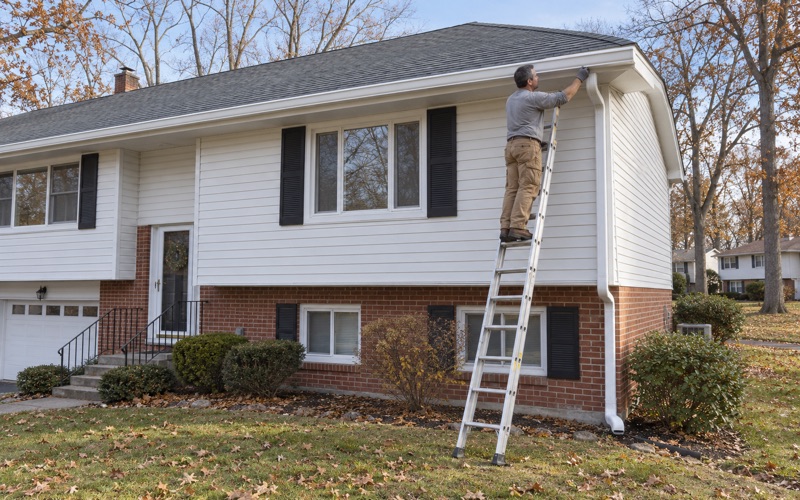
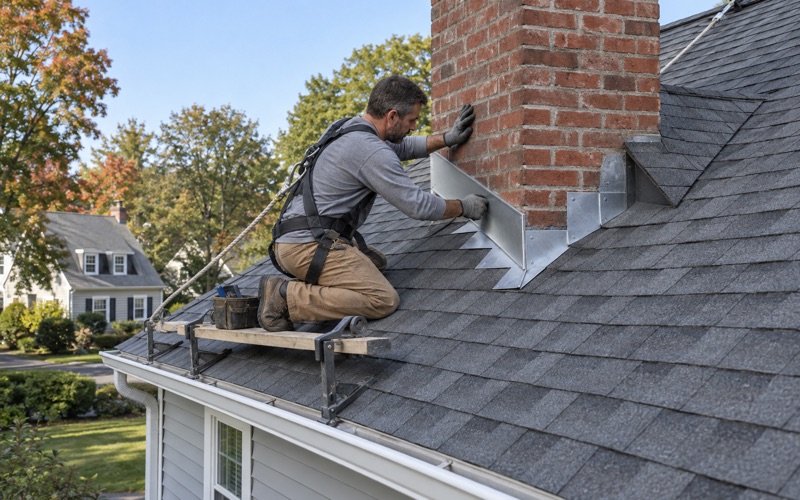
The checklist does not define good condition, and we will not guess at how any particular inspector reads it. What we can do is look at the roof the way a careful outsider would: lifted or missing shingles, cracked pipe boots, open seams at flashing, a gutter pulling off the fascia, a leader that is crushed or disconnected. Those are the details that read as neglect from the driveway.
Gutters and Leaders Get Their Own Line
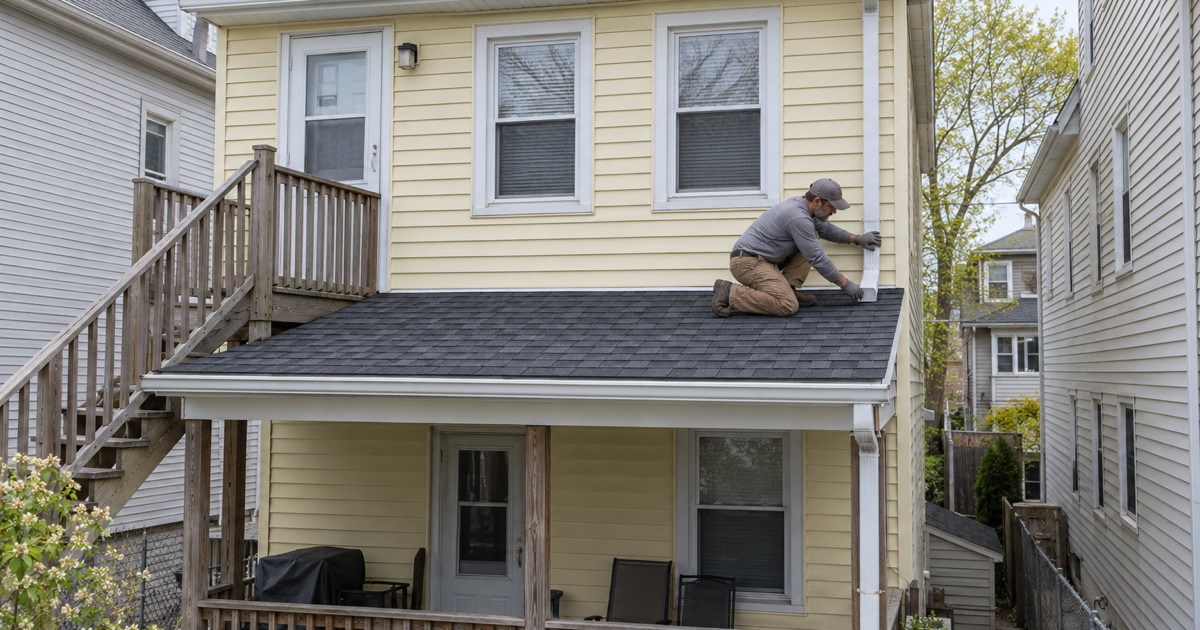
Because the checklist names gutters and leaders apart from the roof, our estimates treat them apart too. A sagging run, a leader dumping water against the foundation, or a trough packed with leaves is a visible item that has nothing to do with the shingles above it. Seamless aluminum gutters and leaders are priced as a separate line, so an owner can fix that item alone when the roof itself is sound.
The borough describes itself as a town of mountain and river edge neighborhoods, with a significant share of its land held as parkland and open space. Houses near that woodland tend to collect leaves and needles in valleys and gutters faster than a single street tree would deliver them. On those lots we call out overhanging limbs and leaf-packed valleys in the estimate, so the gutter line has a plan behind it rather than a hope.
Looking for roofing closer to Ringwood? See Roofing Services in Ringwood.
Open Permits Close Before the Certificate Issues
Why an Unfinished Permit Can Hold Up a Closing
The borough’s CO application letter says the office checks whether any open permits exist, and that they need to be closed out and inspected before the CO is issued. A certificate for a sale is written up once the house passes the borough inspection, the fire inspection is done, the water meter is compliant and no open permits remain. Roof work that needed a permit years ago and never got its final inspection can surface at exactly that point.
If you are unsure whether past work on your house was finaled, the Department of Inspections is the place to ask. We can explain which kinds of roof jobs typically involve a permit, but the borough’s records settle the question, not our memory or a previous owner’s.
Which Roof Jobs Go Through the Department of Inspections
Under New Jersey Administrative Code 5:23-2.7, replacing the roof covering on a detached one- or two-family dwelling counts as ordinary maintenance. Work beyond that is a different matter. Structural deck or framing repairs, roofs on attached homes and roofs on multifamily buildings are the kinds of jobs that run through the borough’s Department of Inspections, and when our scope crosses into that territory we say so in writing before work begins.
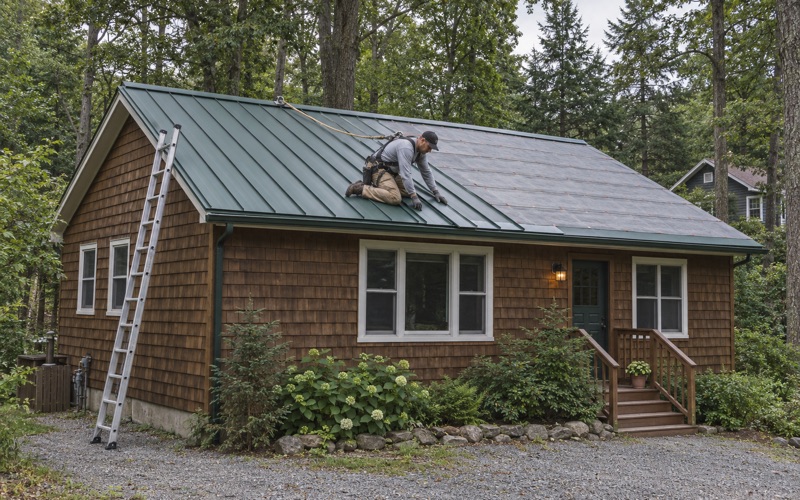
The state rehabilitation subcode adds a re-roofing rule of its own: where the existing roof already carries two or more layers, or is slate, wood shake or tile, the old material comes off rather than being covered over. We count layers on every estimate. A hidden second layer can conceal a soft deck, and a closing is a bad time to discover one.
Finals Happen on a Morning Schedule
A borough sheet dated December 2024 lists inspections Monday through Friday from 10:00 a.m. to 12:00 p.m., booked by phone with the Department of Inspections. Where a roof job did need a permit, its final inspection has to fit that morning window. Owners working toward a closing date should leave room for it rather than counting on a final the day before.
Two-Family Rentals and Tenant Turnover
A New Lease Means a New Certificate
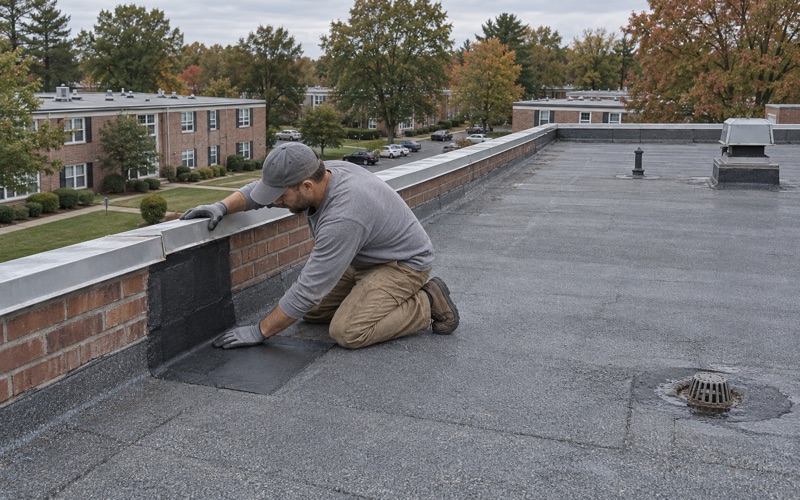
Much of Woodland Park’s rental housing is let by the floor. The 2024 American Community Survey counts 938 renter households in two-unit buildings, out of 1,997 renter households in the borough. Because the borough’s rule ties a new Certificate of Occupancy to the rental of a home or apartment, the roof over a rental unit comes under review far more often than the roof over a house that stays with one owner.
For a landlord, that turns the roof from a once-a-decade concern into something that comes up with every lease. A worn ridge or a gutter hanging off one corner can go unremarked by a tenant for years, yet it falls squarely under checklist items 3 and 4 the next time the unit turns over. A two-family rental with two turnovers on different calendars faces that question twice as often.
The Rest of the Rental Sign-Off
The roof is one item among many. For rentals of homes built before 1978, the borough also requires a lead-safe or lead-free certificate, and its notice says new certificates will not be issued without a valid lead-safe certificate or an exemption. Landlords also show proof of liability insurance, and a wireless water meter sign-off is part of the package.
Lead matters to roof work as well. On pre-1978 homes, the EPA Renovation, Repair and Painting rule governs disturbing painted trim and fascia, which happens whenever drip edge, gutters or fascia boards are replaced, so we plan for it in the scope. The lead certificate itself is a separate inspection by a separate provider, not something a roofer issues.
Working in the Gap Between Leases
The best window for roof work on a rental is often the stretch between one lease and the next, when nobody is living under the deck being opened. We schedule around move-out dates wherever we can. At the end of every work day the driveway, yard and gutters are cleaned, including a magnet sweep for roofing nails, so the unit is ready to show.
If a new lease starts before a full replacement can be scheduled, targeted repairs to the worst areas and a clean gutter line are often a reasonable bridge. We will say plainly when a roof is past that point, and what a replacement would involve once the unit is empty.
Timing Roof Work Before a Listing or a New Lease
Repair or Replace, Decided Early
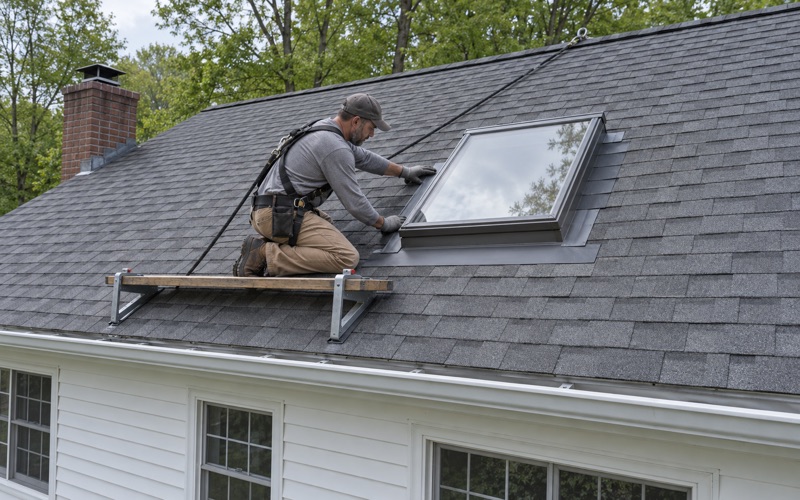
A roof that is sound but scruffy usually needs targeted work: a few shingles, new pipe boots, resealed flashing at a chimney or sidewall. A roof near the end of its life is a harder question for a seller, because a buyer’s inspector will notice it whether or not anyone else does. We lay out both paths with prices so the owner can decide well before the closing.
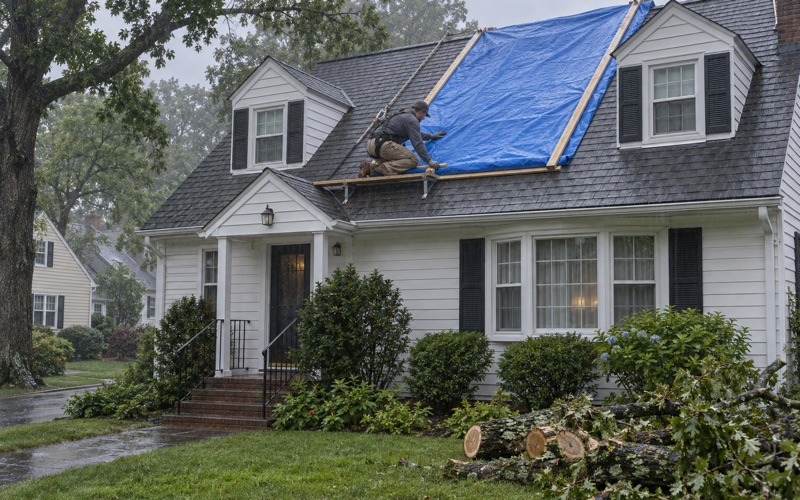
Storm damage found during that review is photographed and written up for the owner’s own claim, and we will meet the insurance adjuster on site if asked. Whether a policy responds is between the owner and the insurer. Our part is an accurate record of what is on the roof.
Leave Room for the Borough’s Sequence
The water meter compliance application is due at least two weeks before the closing date or any change in occupancy, and the certificate for a sale also waits on the fire inspection and the permit check. Finishing roof work early keeps the roof off the critical path while those other pieces fall into place. We would rather wrap up a month ahead than watch a closing date absorb a weather delay.
Weather is part of that timing. The 1991-2020 normals for a nearby climate station, which sits outside the borough, record 117.4 days a year with a low at or below 32 degrees. Self-sealing shingles bond best in warm weather, so a seller aiming at a spring listing is usually better served by roof work in early fall than by a rushed job in January.
What a Replacement Includes
When the roof is replaced, step, counter and chimney flashing comes off with it instead of being reused under new material. Attic ventilation is checked every time, because a roof that cannot breathe ages from underneath. Rotten decking found after tear-off is photographed and shown to the owner before it is replaced, at a per-sheet price already set in the contract.
Our contracts follow New Jersey’s home improvement rules, including the three-business-day cancellation notice. For a seller or landlord on a deadline, those three days belong in the plan, so a signed contract is not mistaken for a start date. Woodland Park owners who call early get the most choices about when the crew arrives.
- 20+ Years on Local Roofs
- Itemized Written Scopes
- Same-Day Storm Tarping